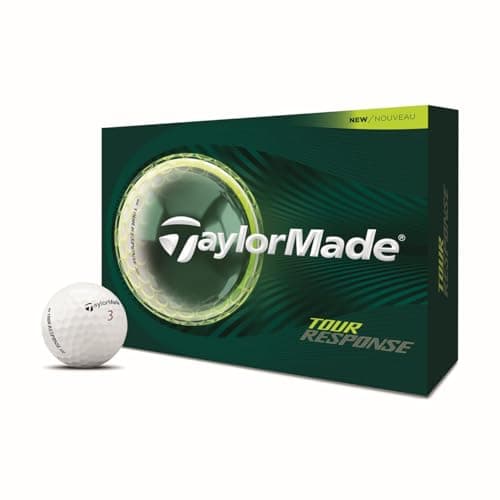
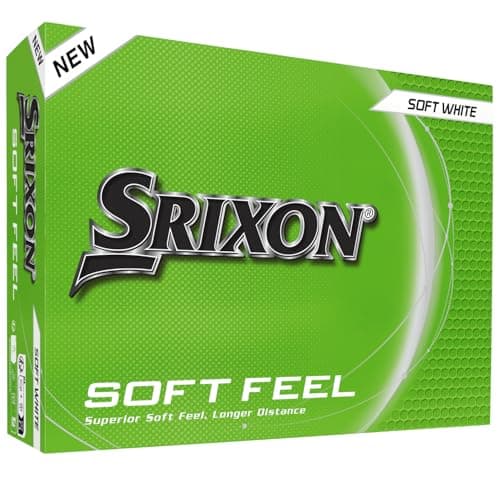
Golf balls are sold on layer count — two-piece, three-piece, even five-piece — but for a senior that number is one of the leastimportant things on the box. What actually decides how a ball performs for a slower swing is compression, not piece count. Still, the layers do something, so here’s what changes, using a classic two-piece value ball (the Srixon Soft Feel) against a three-piece one (the TaylorMade Tour Response) to show it.
What the layers actually do
Two-pieceballs have a large solid core and a durable cover. They’re built for distance and straightness with low spin, they’re tough, and they’re cheap — which is exactly what most slower swings want. The great majority of the best senior value balls are two-piece for good reason.
Three-pieceballs add a thin mantle layer between the core and cover. In a urethane ball like the TaylorMade Tour Response that extra layer lets engineers separate low driver spin from high wedge spin — long off the tee, grabby around the green. Worth knowing before you go shopping for layers: the cheap ionomer-covered three-piece has all but vanished from the shelves, so in practice choosing three layers now means choosing a urethane cover and paying premium money for it.
Why piece count barely matters for a slow swing
The multi-layer magic of a premium ball only switches on at speed. A three-piece urethane tour ball’s greenside bite needs a fast, steep wedge strike to appear; a slower, shorter game rarely produces it. So paying up for extra layers you can’t activate is the same mistake as paying up for a firm core you can’t compress — the reasoning is in do expensive balls help a slow swing? For a senior, compression is the spec that decides distance; piece count is a footnote.
So which should a senior buy?
Buy on compression and price, not layers. If two balls are in the same low-compression tier, a three-piece might feel a touch softer and a two-piece might be a touch cheaper and more durable — both are fine, and the difference is small. Match your swing speed on the compression chart, then pick the best-value ball in your tier from the value roundup. The one time layers earn their keep is if you have real speed and a sharp short game — then a three-piece urethane ball’s separated spin is worth it, and only then.
How we picked this
We haven't hit this gear — and we say so
We compiled the published manufacturer specifications — shaft weight and flex, loft, grip diameter, ball compression, cart weight — did the swing-speed and compression arithmetic, cross-read the owner manuals, and scored each pick against a published rubric. The scores are judgments from documented research — they are notlab measurements we took, because we don't have a lab and we're not going to pretend we do. Where somebody has genuinely measured this, we link them. You can check every number we publish.