Skip to content
Fairway&Fescue

The Swing · Clubs, Sets & Shafts

Senior Flex vs Regular Flex

What shaft flex really does, the swing-speed line that separates the two, and why the wrong one quietly costs a slower swing its distance.

By Stephen V.Updated How we pick
#ad

We earn a commission when you buy through our Amazon links, at no extra cost to you. It never changes our rankings — and we'll tell you when the cheaper ball or club is the better buy. How this works.

The short version: if your driver swing is under about 90 mph, a senior (A) flex will almost certainly launch the ball higher and farther than a regular flex — and if you’re still fast, a regular holds up better. Flex describes how much a shaft bends under your swing. Too stiff for your speed and it never loads, so the ball flies low and short; matched to your speed, it flexes and recoils to help sling the head through impact.

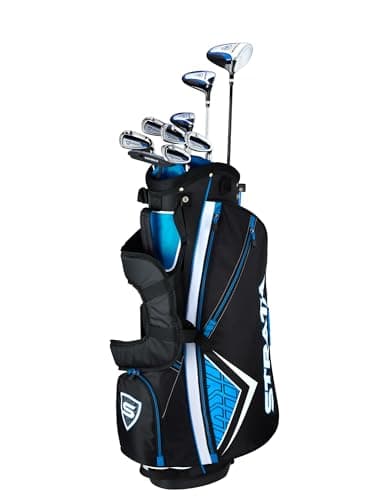
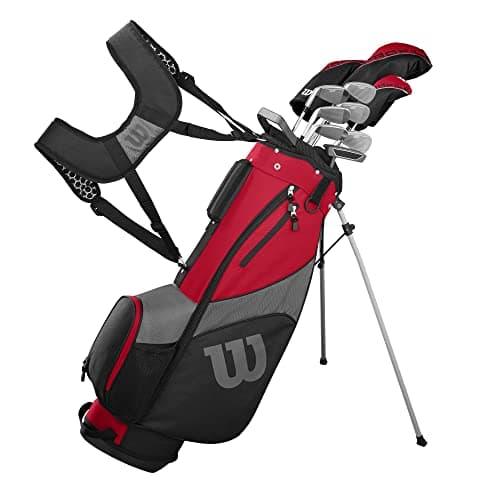
The two sets below bracket the choice: the Wilson Profile SGI ships in a genuine senior flex built for a slower tempo, while the Callaway Strata’s stock build is a regular flex aimed at an average swing. Neither is “better” — they’re tuned for different swing speeds. To see where yours falls, run your carry through the swing speed & shaft flex chart, and if the difference between light-flex and light-weight confuses you, our shaft weight guide untangles the two. It all feeds the bigger question of choosing clubs for a slower swing.

The short answer

Quick picks

#ProductBest forScorePrice
01
Wilson Wilson Profile SGI Complete Set
Wilson Profile SGI Complete Set

The one mainstream set actually built around 'Super Game Improvement' — and it ships in a genuine senior flex, which almost nothing else at this price does.

A true senior-flex set off the shelf
8.5
$449.99Amazon
02
Callaway Callaway Strata Complete Set
Callaway Strata Complete Set

The sensible starting point for a senior coming back to golf: light, forgiving, and priced so you're not gambling a fortune on a body that's changed.

A forgiving, all-in first set
8.5
$499.00Amazon

#ad · Live prices from the Amazon Product API, as of Jul 23, 2026. Where we have no verified live price, we show none — we would rather leave a gap than print a number that has rotted.

In detail

The picks, in full

01
Wilson Wilson Profile SGI Complete Set

A true senior-flex set off the shelf

Wilson Profile SGI Complete Set

Senior flex optionGraphite shaftsSGI oversized headsFitted by height
8.5/10

The one mainstream set actually built around 'Super Game Improvement' — and it ships in a genuine senior flex, which almost nothing else at this price does.

Forgiveness
9
Ease for a slow swing
9
Set completeness
8
Value
8

Pros

  • Offered in an actual senior flex, not just 'regular' relabelled — the rarest thing in a boxed set
  • Super-game-improvement heads are among the most forgiving made
  • Sold in length options fitted to your height, which matters more than golfers think

Cons

  • Utilitarian looks; this set is chosen for help, not for the pro-shop shine
  • The very light build that helps a slow swing can feel whippy to a stronger one

Skip this if…

your swing is still strong and fast. The senior flex and ultra-light build that help most seniors will feel loose and unstable behind a swing that hasn't slowed down — buy the regular or stiff build instead.

$449.99View on Amazon

Price as of Jul 23, 2026. Prices change — Amazon's is the one that counts.

#ad · we may earn a commission from this link to Wilson Profile SGI Complete Set

02
Callaway Callaway Strata Complete Set

A forgiving, all-in first set

Callaway Strata Complete Set

Graphite woodsOversized driver headCavity-back irons12-piece + bag
8.5/10

The sensible starting point for a senior coming back to golf: light, forgiving, and priced so you're not gambling a fortune on a body that's changed.

Forgiveness
8
Ease for a slow swing
8
Set completeness
9
Value
9

Pros

  • Graphite shafts in the woods keep swing weight down for a slower tempo
  • A big, forgiving driver head and cavity-back irons flatter an off-center strike
  • One purchase gets a matched, sensible set instead of a mismatched bag of hand-me-downs

Cons

  • The stock flex is regular, not a true senior/light flex — a slow swing may want a reshaft later
  • Not a set a low-handicapper will grow into; it is aimed at forgiveness, not workability

Skip this if…

you already own decent irons and only your driver has let you down. A single forgiving driver is a cheaper, better fix than replacing clubs that still work for you.

$499.00View on Amazon

Price as of Jul 23, 2026. Prices change — Amazon's is the one that counts.

#ad · we may earn a commission from this link to Callaway Strata Complete Set

What each flex does well

Senior (A) flex (softer): loads and recoils at a slower swing speed, adding launch height and clubhead speed for a slower player; helps get the ball airborne; usually paired with a lighter shaft. The cost is that a fast swing will over-flex it and lose control.

Regular flex (firmer):more stable and consistent for an average-to-strong swing; holds its line when you deliver real speed. The cost is that a genuinely slow swing can’t load it, so it launches low and leaves distance behind.

The line that decides it

Roughly 90 mph of driver clubhead speed is the usual dividing line, with a wide gray zone on either side. Under it, lean senior flex; well over it, regular. Don’t know your number? Your honest driver carry is a fair proxy — around 200 yards of carry suggests a senior flex, around 230 a regular. The swing speed & shaft flex chart breaks it into finer bands, including the ladies (L) and stiff (S) flexes on either end.

The mistake that costs the most

Ego. Plenty of golfers play a regular or even stiff flex because a softer one sounds like a step down, and it quietly costs them height and carry every drive. Flex isn’t a skill grade — it’s a spec matched to your speed, the same way ball compression is. If the flex idea makes sense, the identical logic on the ball side is worth a read: what compression do I need?

The honest caveat

Flex labels aren’t standardized — one brand’s regular can be another’s senior, and shaft weight muddies it further. So treat the letters as a starting point, not a guarantee, and lean softer if you’re on the border: too-soft costs a little control, while too-stiff robs a slow swing of distance, which is the bigger loss.

How we picked this

We haven't hit this gear — and we say so

We compiled the published manufacturer specifications — shaft weight and flex, loft, grip diameter, ball compression, cart weight — did the swing-speed and compression arithmetic, cross-read the owner manuals, and scored each pick against a published rubric. The scores are judgments from documented research — they are notlab measurements we took, because we don't have a lab and we're not going to pretend we do. Where somebody has genuinely measured this, we link them. You can check every number we publish.
Questions

Frequently asked

Should a senior use senior flex or regular flex?
For most seniors, a senior (A) flex — if your driver swing is under about 90 mph, it launches higher and farther than a regular. Only a still-fast senior should stay in regular. Check your speed on the shaft flex chart.
What swing speed needs a senior flex?
Broadly, a driver swing under about 90 mph suits a senior (A) flex; under about 75 mph often suits a ladies (L) flex. Above 90 mph, a regular is usually right.
Will senior flex add distance?
If your swing is slow enough that a regular shaft never loads, yes — the softer shaft flexes and recoils to launch the ball higher and carry farther. If you already load a regular flex fully, switching won’t help.

Keep reading

Receipts

Sources

We do not run a testing lab, and we do not pretend to. Every spec number here comes from a manufacturer's published sheet or an official standard, cited above. Where we could not verify something, we say so on the page rather than quietly leaving it out. Read our full method.