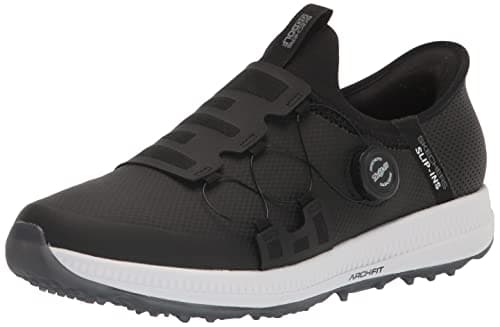
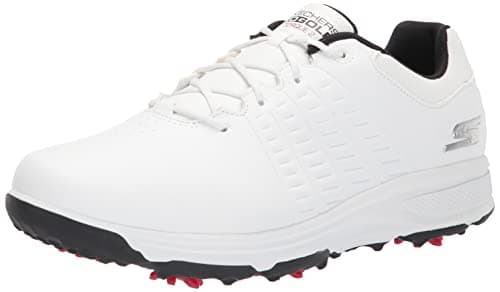
The short version: spikeless suits most senior golfers most of the time, and soft spikes earn their place if your course is wet and steep. Spikeless shoes use a molded, cleat-patterned outsole — comfortable, quiet, and grippy enough for dry, gentle ground. Soft-spike shoes add replaceable studs that bite harder on slick, sloping lies. Below we put a representative soft-spike shoe (the waterproof Skechers Go Torque Pro) next to a representative spikeless one (the Skechers Go Golf Elite 5 Arch Fit) to show the choice.
If you already lean one way, jump ahead: our best spikeless shoes and the soft-spike picks in the main shoes for seniorsroundup both wait at the foot of this page. And whichever traction you choose, remember that the bigger lever on tired feet is often load rather than studs — a push cart spares your feet more than any outsole can.
What each does well
Spikeless:more comfortable to walk in, no studs pressing up through the sole, and you can wear them from the car to the range to the clubhouse without a second thought. Grip is more than enough on dry, flat-to-rolling courses. The cost is traction on the worst ground — a wet, steep downhill lie is where you notice the missing bite.
Soft spikes:replaceable studs dig into wet, sloping turf for confident footing, which matters most on a hilly course or an early tee time in heavy dew. The cost is everyday convenience — you can’t wander freely off the course, and many players find studs slightly less plush underfoot. The Torque Pro keeps the Skechers cushioning, which narrows that comfort gap.
The line that decides it
Ask two questions about your home course: is it hilly, and is it often wet? If the answer to both is yes, lean soft spike — the traction is a safety and stability benefit, not just a scoring one, and steady footing protects your balance. If your course is flat to gently rolling and usually dry, spikeless is the more comfortable, more versatile buy, and you give up nothing you’ll miss. Most senior golfers, on most courses, land on spikeless; the best spikeless shoes list is where to go next. If you decided you want grip, the soft-spike picks live in the main shoes for seniors roundup.
The honest caveat
This isn’t all-or-nothing. Modern spikeless outsoles have closed much of the old traction gap, so unless your course is genuinely treacherous, the comfort of spikeless usually wins. And whichever you choose, the bigger lever on tired feet may be load, not studs: a push carttakes the bag off your back and does more for a sore back nine than any outsole. Balance and steadiness matter too — the stability guide covers how the shoe helps there.
Skip this decision entirely if...
...you play the same dry, flat municipal course every week. Then there’s no real decision to agonize over — buy the comfortable spikeless shoe, spend nothing on traction you’ll never call on, and move on. The spiked-versus-spikeless debate only matters when your course actually challenges your footing.
How we picked this
We haven't hit this gear — and we say so
We compiled the published manufacturer specifications — shaft weight and flex, loft, grip diameter, ball compression, cart weight — did the swing-speed and compression arithmetic, cross-read the owner manuals, and scored each pick against a published rubric. The scores are judgments from documented research — they are notlab measurements we took, because we don't have a lab and we're not going to pretend we do. Where somebody has genuinely measured this, we link them. You can check every number we publish.