Golf is not bad for your back. Parts of a round are hard on a back that already hurts, and most of those parts are optional. The most-cited recent number comes from a 2023 cross-sectional study of 1,170 male golfers published in BMJ Open Sport & Exercise Medicine, in which 37.3% reported low back pain in the previous seven days. The same study found that the prevalence and severity of complaints was similar in everyday life and when playing golf — which is the finding the headline usually leaves out.
We are not doctors, and nothing on this page is medical advice; if your back hurts, the people to ask are your physician and a physical therapist, and the Arthritis Foundation’s guidance on golfing with arthritis is the source we lean on for the body side of the question. What we can do is read the research honestly and read the spec sheets carefully, because the parts of a round that load a back most are not the swing. They are the bag, the bends, and the walk.
What the research actually says
The Murray study is worth reading closely because it is large, recent and about ordinary golfers: 1,170 men in the United States, mean age 55, ranging from 22 to 84. Just over a third had low back pain in the past week. That is higher than general-population estimates, the authors note, but in line with other athletic populations — in other words, people who use their bodies report their bodies. The study also found that the golfers doing prevention exercises were older, had prior injuries and reported more complaints, which the authors read as exercises being started after an injury rather than before one. It did not examine whether players carried, pushed or rode, so it cannot tell you which part of the round to change. That is where the spec sheets come in.
The three loads a round puts on a back
1. The bag. A loaded stand bag on one shoulder is a sustained, one-sided load carried for four hours, and the body balances it by leaning the other way. This is the one load a golfer can remove entirely, today, without changing anything about the swing: put the bag on a push cart, or carry the lightest bag made on two straps. Our carrying vs pushing and your back page goes through the Arthritis Foundation’s reasoning, and the bags and carts hub is where the gear lives.
2. The bends. Forty putts, a dozen retrievals from the cup, every tee pushed in and every ball marked. Bending over a putt for a minute at a time is the longest sustained flexion in the round, and it repeats on every green. A longer putter lets you stand taller; a ball retriever on the grip end removes the reach into the hole. The clubs that address this are ranked on best golf clubs for bad backs.
3. The swing. A full swing rotates the spine hard, and a fat strike with a narrow-soled iron sends a jolt up the shaft. Whether your particular swing is a problem is a question for a coach or a physical therapist who can watch it. What equipment can do is make the jolt rarer: a wide or railed sole that skids rather than digs, and a lighter club that the trunk does not have to fight.
What to change first
In order of effect per dollar: stop carrying, stop bending for the ball, and only then look at the swing. The four items below are the gear for the first two — the two push carts we would buy, the lightest carry bag for the days you still carry, and the long putter. If you already ride a golf cart, the first two are solved and the putter is the whole list. And if you want to keep walking for years, our guide to walking 18 holes after 70 puts pacing, footwear and the cart together.
The gear, and what each one changes
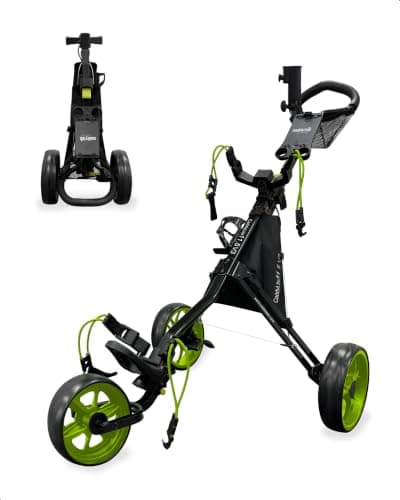
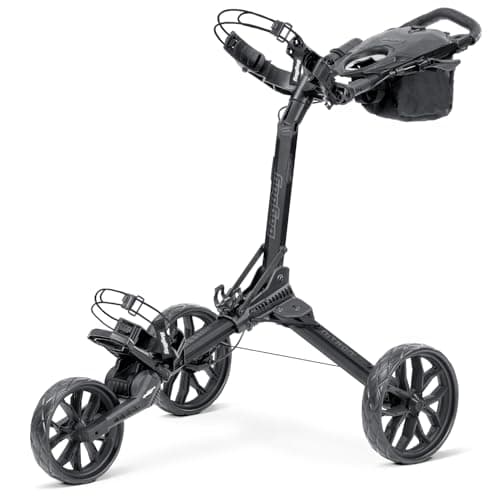
The Bag Boy Nitron is the push cart that opens itself: a gas-strut, one-pull unfold, so you do not wrestle a folded cart in the parking lot, which is its own bend and lift. It takes the entire bag off your body for all 18 holes. It is our top pick on best push carts for seniors; the CaddyTek CaddyLite 11.5 V3 does the same job for a fraction of the price with a two-step fold, and are push carts worth it makes the case if you are still unconvinced.
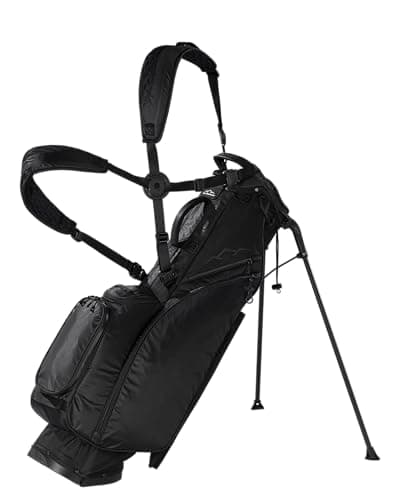
The Sun Mountain Eclipse 2.5+ is for the days you still carry: about as light as a full-featured stand bag gets, with a balanced dual strap that spreads the load across both shoulders instead of one. It is the top pick on best lightweight golf bags.
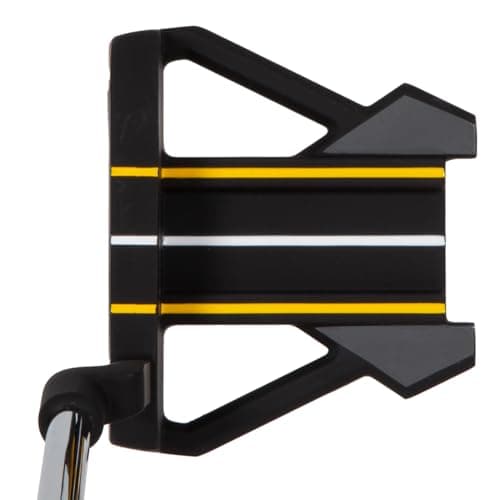
The Pinemeadow PGX MB3 at 38 inches is the long putter: four inches longer than standard with a 17-inch grip, so you stand taller over every putt. It is legal as long as you do not anchor it against your body, which the USGA explains in plain language in the sources below.
What we would not do
Do not diagnose the swing from a website. Including this one. The research says back pain is common among golfers and among active people generally; it does not say your swing is the cause. A physical therapist who watches you swing can tell you what a study of 1,170 other people cannot.
Do not buy a “back-friendly” club before you have stopped carrying. A lighter driver saves a few grams a swing. A push cart saves thirty pounds for four hours. Fix the big load first.
Do not quit walking to save your back without asking whether the cart would do it. The Arthritis Foundation names a wheeled cart as one of the concrete ways to keep playing as the body ages. Walking with a push cart is a different activity from walking with a bag on your shoulder, and most golfers who quit the walk never tried the first one.