The best golf club for a bad back is a longer putter: the Pinemeadow PGX MB3 at 38 inches with a 17-inch grip, because putting is the one part of golf where you stand bent over for minutes at a time, forty or more times a round. After that come the Cleveland HB Soft 2 Retreve, a putter that lifts the ball out of the cup so you never bend for it, the Cleveland HiBore XL Lite, the lightest driver a major brand sells, and the Cleveland Launcher Halo XL hybrid, whose rail sole skids through turf instead of jarring into it.
Back pain is not a rare complaint among golfers. In a 2023 cross-sectional study of 1,170 male golfers published in BMJ Open Sport & Exercise Medicine, Murray and colleagues found that 37.3% reported low back pain in the previous seven days, with a mean age of 55 and a range up to 84. We are not doctors and this page is not medical advice — if your back hurts, the person to ask is your physician or physical therapist, and the Arthritis Foundation’s guidance on golfing with arthritis is the source we lean on for the body side of the question. What we can do is read the specs, and there are three things on a spec sheet a sore back genuinely notices: how far you bend to use the club, how much the club weighs, and how the sole meets the ground.
What we ranked on, in order
1. How often you bend, and how far. A round of golf includes something like forty putts and a dozen or more retrievals from the cup, plus every tee you push in and every ball you mark. Over four hours that is more bending than any other single thing you do. A putter you can stand taller over cuts the depth of every one of those bends; a putter that lifts the ball out of the hole removes a dozen of them entirely. The swing itself is a separate question, and we cover that on is golf bad for your back.
2. Total club weight. Not swing weight, not shaft weight — the number on the scale for the whole club. A heavy driver has to be accelerated by your trunk on every drive, and a tired back compensates by throwing the arms instead. Cleveland publishes the HiBore XL Lite at 291 grams in senior flex (292 in regular, 294 in stiff), which is why it is here and the higher-MOI Launcher XL 2 is not. Our shaft weight guide explains why the shaft is most of that story.
3. How the sole meets the ground. A fat strike with a narrow-soled iron sends a shock up the shaft and into your hands, arms and back, and a slower swing makes that strike more often. A rail or wide sole turns a dig into a skid. That is why the hybrid is here, and why the other three picks are clubs that either never hit the ground hard (the driver) or never hit it at all (the putters).
4. Adjustment you can make without a fitter. A longer putter with a long grip lets you choose your own hand position and posture; a light driver and a rail hybrid work with the swing you have. None of these picks require a bend-at-the-waist setup you are told to “get used to.”
The picks
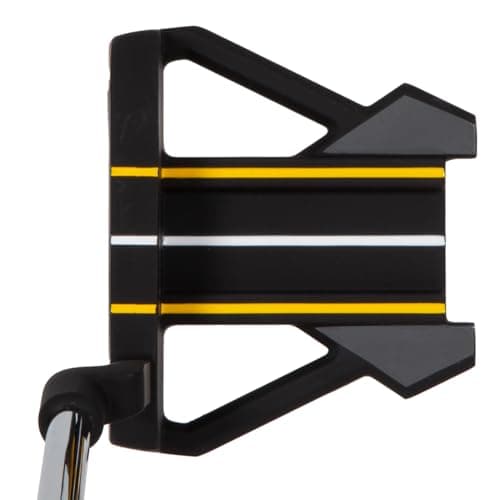
The Pinemeadow PGX MB3 at 38 inches is the cheapest, most direct fix on the page. It is a mallet with toe hang and a 17-inch grip, four inches longer than a standard putter, so you can stand taller, grip lower on the long handle if you want, and quiet the wrists in the bargain. It costs a fraction of a branded long putter. It is the top pick here and the “back that won’t bend” pick on our best putters for seniors list. One rule to know: since 2016 the Rules of Golf prohibit anchoring the club against your body during a stroke, and the USGA publishes a plain explanation of what counts. A long putter held away from the body is fine; braced against the chest is not.
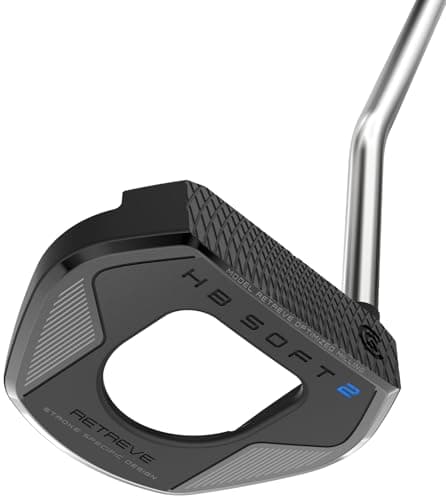
The Cleveland HB Soft 2 Retreve is a proper forgiving mallet whose head is shaped to lift the ball out of the cup, so the dozen or so retrievals a round disappear. It ships with an oversize grip already fitted, which sore hands will also thank you for. It is a standard 34 inches, so it does not help with the bend over the putt itself — that is why the long putter ranks above it. If you would rather have a longer putter and stop bending for the ball, buy the MB3 and a suction-cup ball pickup for the grip end; that is a cheaper combination than any single putter that does both.
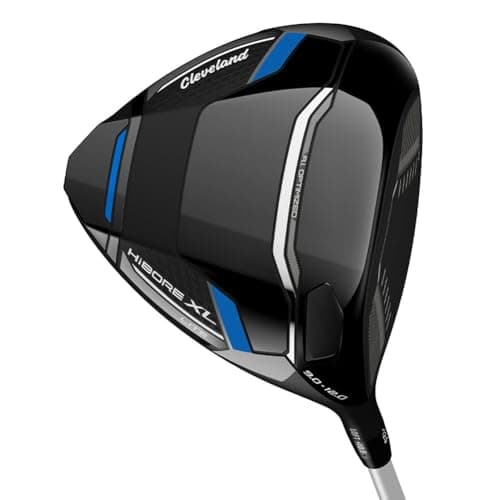
The Cleveland HiBore XL Lite is the lightest driver a major brand will sell you off the shelf: a published 291 grams in senior flex on the 40-gram Aldila Ascent PL 40 shaft, with a Tour Velvet 360 Lite grip and a draw-biased 460cc head. Every gram you do not have to accelerate is work your trunk does not do. It gives up a little forgiveness to the Launcher XL 2, which is the trade this page is built around; we put both on the best drivers for seniors list if you want to weigh them directly.
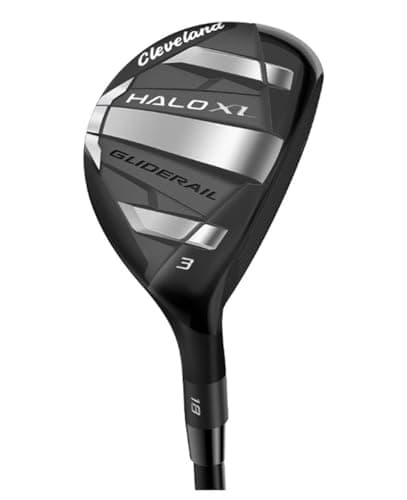
The Launcher Halo XL hybrid replaces the long iron whose fat strikes you feel the next morning. Twenty-four degrees, A-flex graphite, and three rails on the sole that Cleveland designed to stop the club digging on a shallow, sweeping strike. It is on this page for the sole; it is on our best hybrids for seniors page for everything else.
How to choose clubs when your back is the problem
Fix the bending before the swing. Most of the back complaints we read about in owner reviews are not about the swing at all — they are about the two hundred small bends a round asks for. A longer putter and a ball retriever address more of those than any club with a swing-friendly head. Start there; it is also the cheapest place to start.
Then take the weight out of the bag, not just the club. A 291-gram driver saves you a few grams a swing. A push cart saves you carrying thirty pounds for four hours. If you still carry, the single biggest thing you can do for your back is on our best push carts for seniors page, and carrying vs pushing and your back explains why.
Go lighter across the set, in graphite. If the driver’s weight matters, so does the iron shaft’s. A steel iron shaft can weigh twice what a graphite one does, and you swing an iron more often than a driver. Graphite vs steel shafts lays out the numbers.
Do not chase length in a long putter past what your posture needs. Thirty-eight inches suits most golfers who want to stand taller. Go longer only if you are tall or plan a genuinely upright stance; a putter you cannot control is a different problem.
Skip this
Skip “longer clubs for back problems” as a whole-set idea. Adding half an inch to every iron changes lie angle, swing weight and where the club strikes the ground, and a longer iron that digs harder is worse for a back, not better. Length helps in the one club you stand over without swinging — the putter. Elsewhere, fix posture with a fitting, not with longer shafts bought blind.
Skip any club marketed as “back-friendly” that will not publish its weight. Weight is the one spec a back notices that a manufacturer can measure. If a listing sells the idea and hides the number, it is selling the idea.