The average male golfer in his 70s drives the ball 194 yards. In his 60s, 205. In his 50s, 216. Those figures come from Arccos Golf’s 2022 driving-distance report, drawn from 20 million tracked driver swings, as reported by GOLF.com — they are measured, not estimated, and they are the only club-distance numbers for older golfers we have found that are. Everything else on this page is arithmetic built on top of them, and we say where the arithmetic ends.
Average driver distance by age
Arccos’s figures below are for the average golfer in its data, a 14.1 handicap, and come from 3.5 million rounds and 184 million tracked shots. The pattern is steadier than most people expect: roughly seven yards a decade, with a slightly steeper step through the 60s.
| Age | Average driver distance | Change from previous decade |
|---|
| 20s | 237 yards | — |
| 30s | 234 yards | −3 |
| 40s | 225 yards | −9 |
| 50s | 216 yards | −9 |
| 60s | 205 yards | −11 |
| 70s | 194 yards | −11 |
Handicap moves the numbers as much as age does. In the same report a scratch golfer in his 60s averaged 227 yards and 209 in his 70s, while a 30-plus handicapper in his 70s averaged 157. And there is one figure in the data that flatters older golfers: players in their 70s hit 56% of fairways, against 39% for players in their 20s. Shorter and straighter is not a consolation prize; it is a different way to score.
What a mile an hour is worth
TrackMan, whose launch monitors produce most of the tour data you see on television, publishes a simple rule: adding one mile an hour of driver club speed is worth about three yards. It also publishes average driver club speeds for male amateurs by ability — 92 mph for a bogey golfer, 94 for the average 14.5 handicap, 95 for a 10 handicap, 101 for a 5 and 110 for scratch — and for women, 79 mph at a 15 handicap rising to 90 at scratch. Run the arithmetic backward from the Arccos table and an average 70-year-old driving 194 yards is swinging somewhere in the high 70s to low 80s, which is exactly the band a senior-flex shaft is built for. Our swing speed and shaft flex chart turns that speed into a flex.
The chart we will not publish
You will find club-by-club distance tables for seniors all over the internet — 7-iron 125, 5-wood 160, pitching wedge 90 — and every one we traced back was derived by applying a percentage to a driver number, not measured. The one article that was candid about it said so plainly: “the published numbers by age are sparse.” We are not going to invent a table and put a source line under it. What we can tell you is how to get your own numbers in one afternoon, which is more useful than anyone else’s average anyway.
How to find your own club distances
Use carry, not total. Total distance includes roll, which depends on the fairway that day. Carry is what you need to clear a bunker or hold a green, and it is the number a GPS watch or laser gives you when you range your ball from where you hit it.
Hit ten with each club on a flat hole and throw out the worst three. Your distance is not your best strike, and it is not your average including the chunks. It is the number you can rely on seven times in ten. A rangefinder or GPS watch from our easy-to-read rangefinders list does this without a launch monitor; range your ball from your divot and write it down.
Expect the long end to compress. As speed drops, the gaps between the driver, fairway wood and long irons shrink first, which is why a 70-year-old often finds a 3-wood and a 4-iron go the same distance. That is not a fault in the clubs. It is the reason to replace the long irons with a hybrid you can launch — the argument in hybrid vs long iron for seniors.
What actually gets yards back
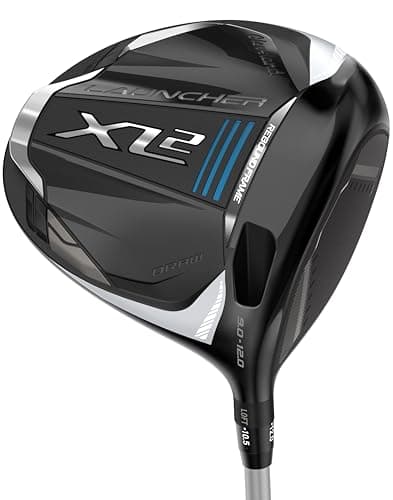
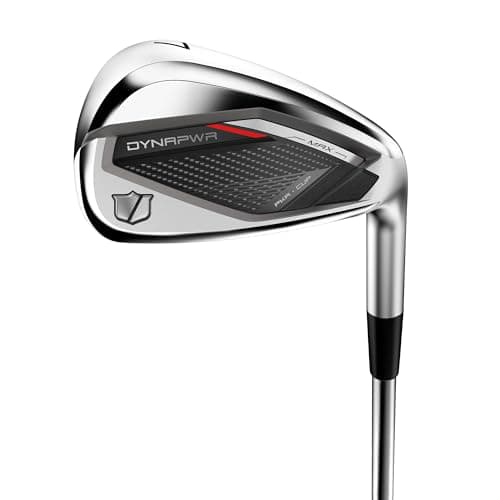
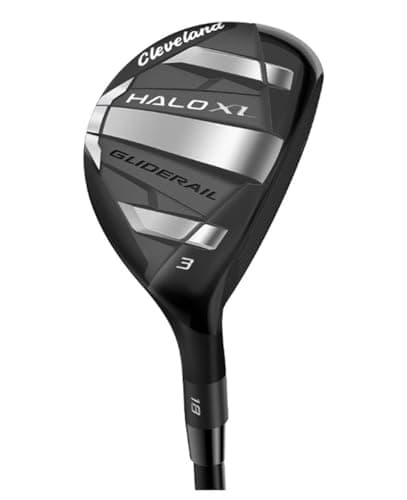
The Arccos data says age costs the average golfer about 43 yards between his 20s and 70s. Some of that is speed you cannot buy back. Some of it is equipment that was fitted to the swing you had twenty years ago. In rough order of return on money: a ball you can actually compress (the best golf balls for seniors), a driver with more loft and a lighter shaft (what loft driver should a senior use and best driver shaft for seniors), and a hybrid in place of the long irons that no longer launch. The three clubs below are the ones we would look at first, each chosen because it does the launching for you rather than asking your swing to.
Reading the numbers honestly
Averages are not targets. The Arccos figure for a 70-year-old is the mean of every 70-year-old in its data, most of whom were not fitted, many of whom play once a month. Landing under it means nothing. Landing consistently in the fairway at whatever distance you have is worth more strokes than ten extra yards, which the fairway-percentage data quietly confirms.
Speed and distance are not the same lever. TrackMan’s three yards per mile an hour assumes a reasonably struck ball. A slower swing that launches too low or spins too much loses more than the speed alone explains, which is why loft, shaft weight and ball compression matter more at 78 mph than at 105. Our guide to choosing clubs for a slower swing works through them in order.
Do not fit to the driver alone. A driver number tells you what shaft flex to buy. It does not tell you which iron will be your 150-yard club now, and guessing that from a chart is how gapping goes wrong. Measure the irons you have before you buy the ones you think you need.