Skip to content
Fairway&Fescue

The Compression · Golf Balls

The Best High-Visibility Golf Balls

A ball you can see is a ball you don't lose. Bright yellow and matte low-compression balls, ranked so older eyes track them in the air and find them in the rough.

By Stephen V.Updated How we pick
#ad

We earn a commission when you buy through our Amazon links, at no extra cost to you. It never changes our rankings — and we'll tell you when the cheaper ball or club is the better buy. How this works.

As eyesight fades, the hardest part of golf can be simply keeping track of the ball — watching it against a bright sky, then finding it in the rough. A high-visibility ball fixes both, and the good news is you don’t give up anything to get it: every ball here is a soft, low-compression ball a slower swing can compress, just finished in a color you can actually see. The Maxfli SoftFli leads because it’s built around bright matte colors; the Callaway Supersoft and Wilson Duo Soft are the value picks with excellent yellow options.

We’ve ranked on visibility first — how easy the color and finish are to track and find — then on the same things that matter to any senior ball: distance for a slow swing, feel and value. Matte finishes tend to read best against a bright sky and green grass; a gloss optic-yellow is a close second and often cheaper. Match your swing speed on the compression chart and any of these will suit.

The short answer

Quick picks

#ProductBest forScorePrice
01
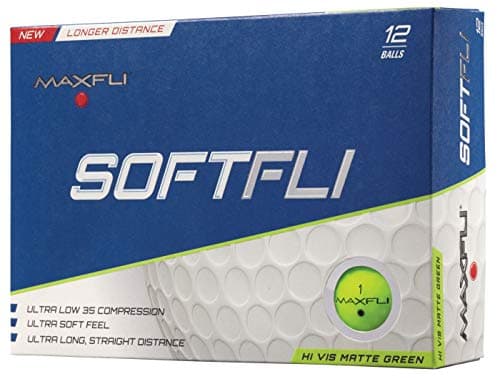
Maxfli Maxfli SoftFli
Maxfli SoftFli

A low-compression value ball that shows up cheap and comes in high-visibility matte colors — genuinely useful when your eyes need help finding the ball.

Soft value in a high-visibility color
7.0
$26.99Amazon
02
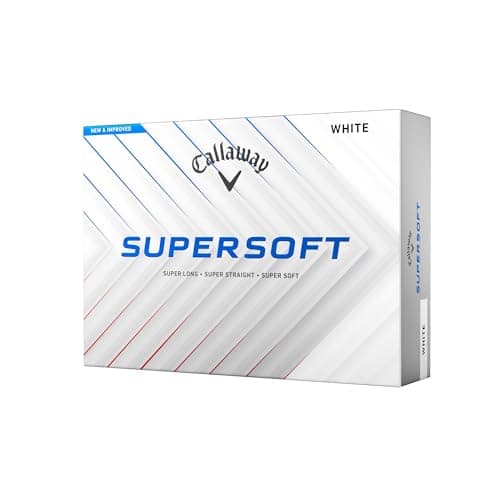
Callaway Callaway Supersoft
Callaway Supersoft

The senior default. One of the lowest compressions in golf, so a slower swing actually flattens it — which is where the distance you've lost comes back.

Slow-to-moderate swings
7.8
$26.97Amazon
03
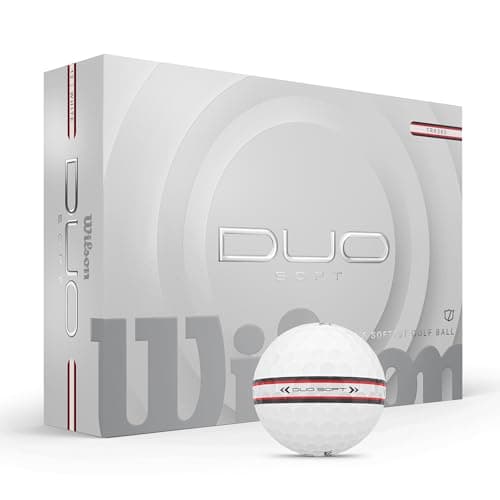
Wilson Wilson Duo Soft
Wilson Duo Soft

Wilson markets this as the softest ball in golf, and for a genuinely slow swing that ultra-low compression is exactly the point — it compresses when a firm ball just sits there.

The slowest swing speeds
7.6
$24.99Amazon
04
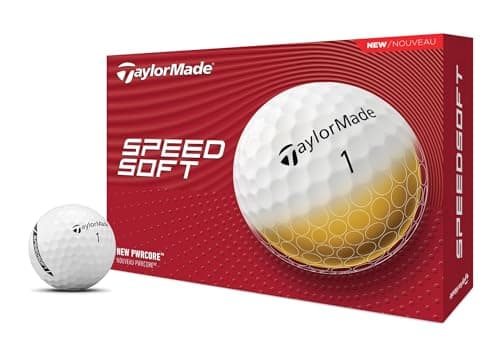
TaylorMade TaylorMade SpeedSoft
TaylorMade SpeedSoft

TaylorMade's replacement for the discontinued Soft Response, and softer than the ball it replaces — a 35-compression two-piece that a slow swing flattens completely, at a value price.

The softest value ball
7.6
$24.98Amazon

#ad · Live prices from the Amazon Product API, as of Sep 6, 2026. Where we have no verified live price, we show none — we would rather leave a gap than print a number that has rotted.

In detail

The picks, in full

01
Maxfli Maxfli SoftFli

Soft value in a high-visibility color

Maxfli SoftFli

Low compression2-pieceMatte coverValue tier
7.0/10

A low-compression value ball that shows up cheap and comes in high-visibility matte colors — genuinely useful when your eyes need help finding the ball.

Distance (slow swing)
7
Softness / feel
7
Straightness
8
Greenside spin
4
Value
9

Pros

  • Matte high-visibility colors are easier for older eyes to track and find
  • Low compression for easy distance off a slow swing
  • Frequently the cheapest soft ball on the shelf

Cons

  • Not as refined in feel as the Supersoft or Soft Feel
  • Value-ball greenside spin ceiling

Skip this if…

you play a white ball fine and want the best feel for the money. The SoftFli's edge is visibility and price — for pure feel the Soft Feel is a step up.

$26.99View on Amazon

Price as of Sep 6, 2026. Prices change — Amazon's is the one that counts.

#ad · we may earn a commission from this link to Maxfli SoftFli

02
Callaway Callaway Supersoft

Slow-to-moderate swings

Callaway Supersoft

Very low compression2-pieceIonomer coverValue tier
7.8/10

The senior default. One of the lowest compressions in golf, so a slower swing actually flattens it — which is where the distance you've lost comes back.

Distance (slow swing)
9
Softness / feel
8
Straightness
8
Greenside spin
5
Value
9

Pros

  • A very low compression a slow swing can fully compress — that's what turns swing speed into carry
  • Straight, forgiving flight that flatters a slice
  • Priced so losing a couple doesn't sting

Cons

  • The ionomer cover can't produce tour-level greenside bite — it releases on chips
  • The very soft feel isn't to everyone's taste off the putter

Skip this if…

your swing is still quick and your short game lives on one-hop-and-stop spin. You'll compress this too easily and miss the greenside bite a urethane ball gives you.

$26.97View on Amazon

Price as of Sep 6, 2026. Prices change — Amazon's is the one that counts.

#ad · we may earn a commission from this link to Callaway Supersoft

03
Wilson Wilson Duo Soft

The slowest swing speeds

Wilson Duo Soft

Ultra-low compression2-pieceSoft coverValue tier
7.6/10

Wilson markets this as the softest ball in golf, and for a genuinely slow swing that ultra-low compression is exactly the point — it compresses when a firm ball just sits there.

Distance (slow swing)
8
Softness / feel
9
Straightness
8
Greenside spin
4
Value
9

Pros

  • About the lowest compression on the market — a real help for the slowest swings
  • Extremely soft feel off putter and irons
  • Value pricing

Cons

  • The soft, low-spin design that helps a slow swing costs greenside control
  • An average-or-faster swing over-compresses it and loses the benefit

Skip this if…

your swing speed is average or above. Past roughly 90 mph of driver speed you'll flatten this too easily and give up control for a softness you didn't need.

$24.99View on Amazon

Price as of Sep 6, 2026. Prices change — Amazon's is the one that counts.

#ad · we may earn a commission from this link to Wilson Duo Soft

04
TaylorMade TaylorMade SpeedSoft

The softest value ball

TaylorMade SpeedSoft

35 compression2-pieceIonomer coverValue tier
7.6/10

TaylorMade's replacement for the discontinued Soft Response, and softer than the ball it replaces — a 35-compression two-piece that a slow swing flattens completely, at a value price.

Distance (slow swing)
9
Softness / feel
9
Straightness
8
Greenside spin
4
Value
8

Pros

  • At 35 compression it is the first TaylorMade ball to go under 50 — a slower swing compresses it fully, which is where the distance comes from
  • Low spin off the driver and a straight flight, so a fade stays a fade instead of becoming a slice
  • Sold in a matching optic yellow if a white ball is getting hard to track

Cons

  • The ionomer cover means a modest greenside spin ceiling — it will not check like a urethane tour ball
  • So soft that a golfer still swinging near 90 mph will over-compress it and give up control

Skip this if…

you still generate real clubhead speed. Under roughly 90 mph this ball is a genuine gain; above it, a firmer ball holds its shape better and gives you more control.

$24.98View on Amazon

Price as of Sep 6, 2026. Prices change — Amazon's is the one that counts.

#ad · we may earn a commission from this link to TaylorMade SpeedSoft

Why a colored ball genuinely helps

Contrast is what aging eyes lose first, and a white ball offers almost none against a pale sky or a frosty morning. A high-visibility yellow or matte finish restores that contrast, so you pick the ball up sooner off the clubface, hold it longer in flight, and spot it faster once it lands. The practical payoff is fewer lost balls — which saves both strokes and money, since a ball you find is a ball you keep playing.

Matte vs gloss

Mattefinishes (like the SoftFli’s) diffuse light rather than reflect it, which most players find easiest to track against a bright background — the color looks solid rather than glinting. Gloss optic yellow (the Supersoft and Duo Soft options) is nearly as visible and often a little cheaper. Both beat white comfortably; pick on price and personal preference.

Color doesn't cost you performance

A common worry is that a colored ball is somehow a lesser ball. It isn’t — these are the same low-compression models as their white versions, with the same core and cover, just a different finish. You get the easy distance a slow swing needs and the visibility your eyes want, with no trade-off. If you also fight a slice, note that most of these are low-spin, straight-flying balls; our balls for a slice list ranks them for that.

Who can skip a colored ball

If your eyesight is still sharp and you simply prefer a traditional white ball, there’s no performance reason to switch — buy the white version of any of these from the general seniors roundup. Visibility is the whole point here; if you don’t need it, you don’t need this list.

How we picked this

We haven't hit this gear — and we say so

We compiled the published manufacturer specifications — shaft weight and flex, loft, grip diameter, ball compression, cart weight — did the swing-speed and compression arithmetic, cross-read the owner manuals, and scored each pick against a published rubric. The scores are judgments from documented research — they are notlab measurements we took, because we don't have a lab and we're not going to pretend we do. Where somebody has genuinely measured this, we link them. You can check every number we publish.
Questions

Frequently asked

Are high-visibility golf balls better for seniors?
For many, yes. As contrast sensitivity fades with age, a bright yellow or matte ball is easier to track in flight and find in the rough — which means fewer lost balls and less squinting, with no loss of distance versus the white version.
Is a matte or yellow golf ball easier to see?
Both beat white. Matte finishes diffuse light and look solid against a bright sky, which many find easiest to track; gloss optic yellow is nearly as visible and often cheaper. Either is a big improvement for older eyes.
Do colored golf balls perform worse than white ones?
No — a colored ball is the same model as its white counterpart, with the same core and cover and only a different finish. You lose nothing in distance or feel by choosing the visible version.

Keep reading

Receipts

Sources

We do not run a testing lab, and we do not pretend to. Every spec number here comes from a manufacturer's published sheet or an official standard, cited above. Where we could not verify something, we say so on the page rather than quietly leaving it out. Read our full method.