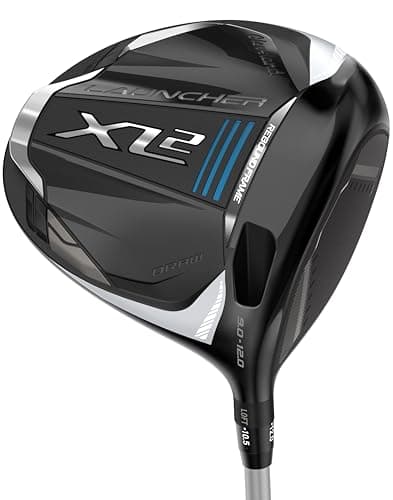
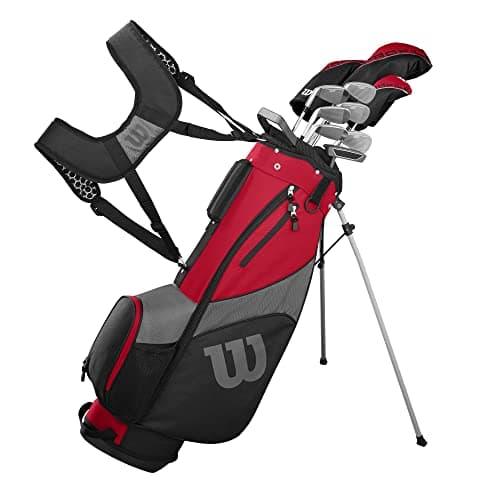
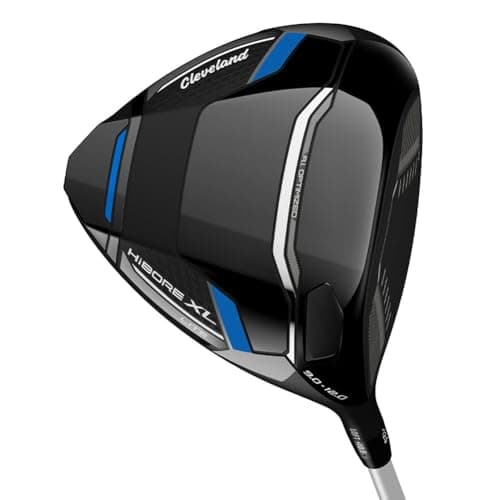
For most senior golfers the answer is yes for the driver, probably not for the whole bag— and the reason is arithmetic rather than principle. A driver fitting is the cheapest tier on the price list and it addresses the club where loft, shaft weight and face angle matter most at your speed. A full-bag fitting costs more than several of the clubs this site recommends. If you are buying one club, buy the Cleveland HiBore XL Lite or the Launcher XL 2 in senior flex and put the fitting money into the club; if you are rebuilding the whole bag, get fitted first.
What it costs, from published 2026 prices
MyGolfSpy collected the current retail numbers. Golf Galaxy lists a driver fitting at $79.99, irons at $99.99, a putter at $59.99 and a full bag at $299.99; PGA TOUR Superstore lists $99.99 for a driver, $99.99 for irons and $299.99 for a full bag. The specialist fitters are a tier above: Club Champion at $175 for a driver and $400 for a full bag, True Spec from $175 for a driver to $475 for a full bag with putter. Prices change, and many retailers credit the fitting fee against a purchase — ask before you book, because that single question often makes the decision for you.
Plugged In Golf’s breakdown of fitting levels is the useful mental model: there is a real difference between twenty minutes with whatever shafts a shop happens to stock and a full session on a launch monitor with a fitting cart, and the price roughly tracks it.
The four things a fitting changes for a slower swing
Shaft flex and weight.This is the big one, and the one most senior golfers get wrong on their own. A shaft too stiff and too heavy for your speed costs launch and costs consistency. True Spec’s published bands, as reported by GOLF.com, put senior flex at roughly 72 to 83 mph of driver speed and regular at 84 to 96. Our swing speed and shaft flex chart turns a speed or a carry number into a flex band for free, which is most of what a cheap fitting tells you.
Loft.Slower swings need more of it, and the difference between a 9° and a 12° head at 80 mph is not subtle. A fitting measures your launch and spin and picks; without one, default upward. See what loft driver should a senior use.
Lie angle and length.Worth more than people think if your posture has changed — and posture does change with age. A lie angle that was right for you at fifty may be pushing shots right at seventy.
Grip size. Often the cheapest change in the whole session and frequently the one that makes the most difference to arthritic hands. You can measure it at home: see how to measure golf grip size.
The honest test: do you need one?
| Your situation | Our read |
|---|
| Buying one new driver, swing speed roughly known | Buy a senior-flex head off the rack. A driver fitting is a bonus, not a gate. |
| Buying one new driver, no idea of your speed | Worth the driver fitting - you get the number as well as the club. |
| Replacing the whole set | Get fitted. It is a small fraction of what the set costs. |
| Playing clubs you were fitted for fifteen years ago | Get fitted. Your speed and your posture have both moved since. |
| Hands hurting, clubs otherwise fine | Skip the fitting, change the grips. Far cheaper, bigger effect. |
| Tight budget, starting from nothing | Buy a senior complete set. The fitting decisions are built into it. |
What a fitting cannot do
It cannot give you back swing speed; that is a different page. It cannot make a 3-iron playable at 75 mph — the honest fitter will hand you a hybrid instead, which is the same conclusion as hybrid vs long iron for seniors. And it cannot fix a ball you cannot compress, which is free to fix yourself.
There is also a quieter benefit worth naming. A good fitter will tell you what your swing speed actually is, measured rather than guessed, and that single number makes every other decision on this site easier — shaft flex, driver loft, ball compression. If you get nothing else out of the session, write it down.
If you are not getting fitted, buy these
The three picks above are the clubs a fitting would most likely steer a 75 to 85 mph swing toward anyway: a light, draw-biased driver with a 40-gram senior shaft; a larger, more forgiving head for the same speed band; and a complete set in senior flex for someone starting over. None of them needs a fitting to be the right call, which is exactly why they are here. The deeper rankings are in best drivers for seniors and best complete golf sets for seniors.
How we picked this
We haven't hit this gear — and we say so
We compiled the published manufacturer specifications — shaft weight and flex, loft, grip diameter, ball compression, cart weight — did the swing-speed and compression arithmetic, cross-read the owner manuals, and scored each pick against a published rubric. The scores are judgments from documented research — they are notlab measurements we took, because we don't have a lab and we're not going to pretend we do. Where somebody has genuinely measured this, we link them. You can check every number we publish.