Skip to content
Fairway&Fescue

The Swing · Clubs, Sets & Shafts

How to Increase Swing Speed After 60

Roughly seven yards a decade, on measured data. What a mile an hour of club speed is worth, the one training intervention with published evidence in golfers this age, and the equipment levers that need no training at all.

By Stephen V.Updated How we pick
#ad

We earn a commission when you buy through our Amazon links, at no extra cost to you. It never changes our rankings — and we'll tell you when the cheaper ball or club is the better buy. How this works.

You can get some of it back, and the honest ranking of what works is probably the reverse of what you expect. The intervention with real published evidence behind it in golfers your age is strength and stability training, not a new driver. The equipment levers are real but small. And the cheapest yards on this page come from a ball you can actually compress, which costs nothing extra at all.

How much speed you have actually lost

Arccos Golf’s 2022 driving-distance report, built from twenty million tracked driver swings, gives the measured shape of it: the average male golfer drives it 216 yards in his 50s, 205 in his 60s and 194 in his 70s. That is roughly seven yards a decade, with a slightly steeper step through the 60s. It is a real decline, and it is also smaller than the locker room makes it sound.

TrackMan publishes the conversion that turns speed into yards: about three yards of carry for each mile an hour of driver club speed. Run that backwards and the eleven yards an average golfer loses between his 50s and his 70s is something like three to four miles an hour of club speed across twenty years. That is the size of the problem, and it is useful to know, because it tells you that nothing on this page will give you back what you had at forty — and that two or three miles an hour is a genuinely significant recovery.

The one thing with published evidence in golfers your age

Meira and Brumitt’s 2010 review in Sports Healthsurveys the training literature for golf. The study in it that matters most here is Thompson’s: eighteen male recreational golfers with a mean age of 70.7 years, training three times a week for eight weeks, ninety minutes a session, on a periodized program of spinal stabilization, balance exercises and strength training. The experimental group showed significant improvements in clubhead speed, and in several components of the Senior Fitness Test as well.

Note what that program was and was not. It was not swinging a weighted club. It was not stretching. It was eight weeks of structured strength and stability work, three times a week. That is a real commitment, and it is the one with a trial behind it. Our golf exercises for seniorspage covers the warm-up side of the same question — including why the static stretching you were taught at school appears to make you slower, not faster, in the ten minutes before you tee off.

The four levers, ranked

1. Train. Biggest effect, highest cost in time, and the only one with evidence in this age group.

2. Take weight out of the club.A lighter head and a lighter shaft are weight you no longer have to accelerate. The effect is modest — a mile or two an hour, so a handful of yards at TrackMan’s conversion — but it costs you no effort at all once you have bought the club. The full argument is in what shaft weight actually does, and the flex band you want is in the swing speed and shaft flex chart.

3. Add loft. This does not add speed; it converts the speed you have into carry, which is the number you actually care about. Slower swings need more loft to reach an efficient launch angle, and plenty of golfers over sixty are playing a driver with two degrees too little. See what loft driver should a senior use.

4. Play a ball you can compress. The cheapest item on the list. A firm tour ball needs speed you no longer have to flatten properly; a low-compression ball transfers your energy efficiently and goes further for you than the premium ball does. Start at best golf balls for a slow swing speed.

The short answer

Quick picks

#ProductBest forScorePrice
01
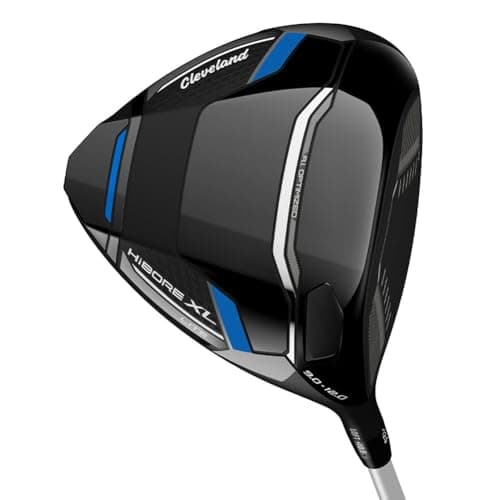
Cleveland Cleveland HiBore XL Lite Driver (Senior, 10.5°)
Cleveland HiBore XL Lite Driver (Senior, 10.5°)

The lightest driver a major brand will sell you off the shelf — a published 291 grams in senior flex, light at the shaft AND the grip, which is the combination that spares sore wrists.

The lightest name-brand driver
8.8
$240.80Amazon
02
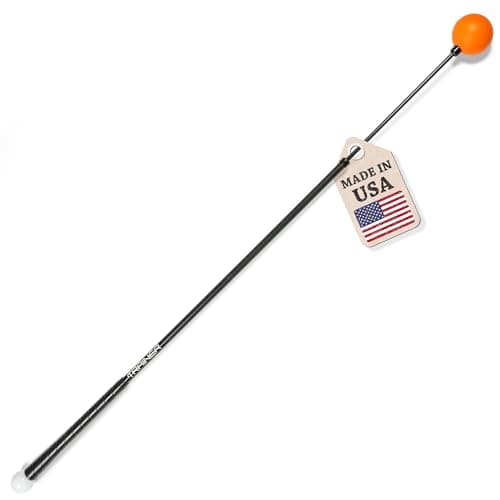
Orange Whip Orange Whip Golf Swing Trainer (47 in)
Orange Whip Golf Swing Trainer (47 in)

The counterbalanced swing trainer the range rats use, and a very good warm-up tool. It is also the most expensive thing here and does a job the Gold Flex does for less.

Tempo, if you will use it properly
7.3
$119.99Amazon
03
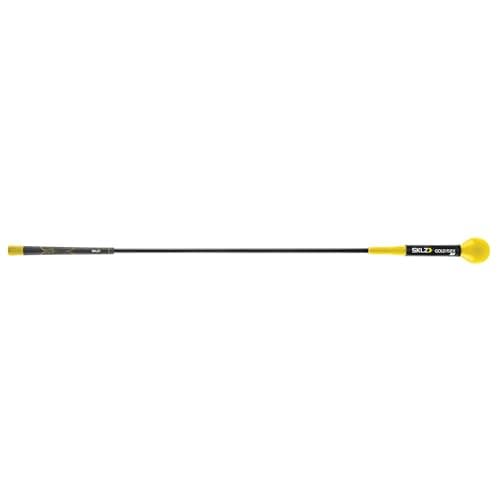
SKLZ SKLZ Gold Flex Warm-Up Stick
SKLZ Gold Flex Warm-Up Stick

The one piece of kit on this page that goes to the course with you. A weighted, whippy shaft you swing for two minutes on the first tee to loosen the shoulders and find a tempo.

Warming up on the first tee
9.0
$49.99Amazon

#ad · Live prices from the Amazon Product API, as of October 5, 2026. Where we have no verified live price, we show none — we would rather leave a gap than print a number that has rotted.

In detail

The picks, in full

01
Cleveland Cleveland HiBore XL Lite Driver (Senior, 10.5°)

The lightest name-brand driver

Cleveland HiBore XL Lite Driver (Senior, 10.5°)

291 g total (senior flex)Aldila Ascent PL 40 shaftTour Velvet 360 Lite grip460cc, draw-biased
8.8/10

The lightest driver a major brand will sell you off the shelf — a published 291 grams in senior flex, light at the shaft AND the grip, which is the combination that spares sore wrists.

Forgiveness
9
Ease for a slow swing
9
Hand comfort
9
Value
8

Pros

  • At a published 291 grams in senior flex it is among the lightest drivers any major brand builds — the spec that matters when the wrists object
  • The stock build is light at both ends: a 40-gram-class Aldila Ascent PL shaft and Golf Pride's Tour Velvet 360 Lite grip
  • Internal draw-biased weighting and the MainFrame XL variable-thickness face target the slice and the off-center strike a shorter swing produces

Cons

  • A very light head can feel vague and hard to time if your swing still has real speed in it
  • The draw bias is built in, not adjustable — if you already hook the ball this is the wrong driver
  • The stock Lite grip is thin, so arthritic hands will still want it built up or replaced

Skip this if…

…the driver is not the club that hurts. You swing it a dozen times a round; the irons and the putter are where a sore hand does most of its work, and that is where the money should go first.

$240.80View on Amazon

Price as of October 5, 2026. Prices change — Amazon's is the one that counts.

#ad · we may earn a commission from this link to Cleveland HiBore XL Lite Driver (Senior, 10.5°)

02
Orange Whip Orange Whip Golf Swing Trainer (47 in)

Tempo, if you will use it properly

Orange Whip Golf Swing Trainer (47 in)

47 in, counterbalancedWeighted head and counterweightFlexible shaftMade in the USA
7.3/10

The counterbalanced swing trainer the range rats use, and a very good warm-up tool. It is also the most expensive thing here and does a job the Gold Flex does for less.

Helps the golf swing
9
Takes it to the course
8
Easy on an older body
7
Value
5

Pros

  • The counterweight at the grip end is the real difference from a plain weighted stick — it loads both ends, so the swing stays balanced rather than being dragged around by the head
  • Swinging it for a couple of minutes is a genuine warm-up for the shoulders, trunk and hips together, which is more than any single stretch gives you
  • Well enough made that it survives years of being thrown in a trunk

Cons

  • Several times the price of the SKLZ Gold Flex for a difference most senior golfers will not feel
  • At 47 inches it is long. It fits a bag, but it is one more long thing to carry and it does not fit a small trunk neatly
  • It is a swing trainer first. If you want mobility rather than tempo, the strap, the bands and the roller all do more per dollar

Skip this if…

…you are buying one thing off this page. Buy the Gold Flex for the course or the strap for the house — both do more for a senior golfer per dollar than this does.

$119.99View on Amazon

Price as of October 5, 2026. Prices change — Amazon's is the one that counts.

#ad · we may earn a commission from this link to Orange Whip Golf Swing Trainer (47 in)

03
SKLZ SKLZ Gold Flex Warm-Up Stick

Warming up on the first tee

SKLZ Gold Flex Warm-Up Stick

48 in and 40 in lengthsWeighted head, flexible shaftCourse-legal as a warm-up aidDoubles as a tempo trainer
9.0/10

The one piece of kit on this page that goes to the course with you. A weighted, whippy shaft you swing for two minutes on the first tee to loosen the shoulders and find a tempo.

Helps the golf swing
9
Easy on an older body
8
Takes it to the course
10
Value
9

Pros

  • It is the warm-up tool you will actually use, because it lives in the bag and takes two minutes beside the first tee rather than twenty at home
  • The flexible shaft forces a smooth, unhurried swing — rushing it makes the head lag visibly, so it teaches tempo without anyone having to tell you
  • Cheap enough that it is an easy first purchase if you are not sure any of this will stick

Cons

  • It is a warm-up and tempo tool, not a mobility program — it will loosen a shoulder, it will not make a stiff thoracic spine rotate further
  • The weighted head is enough load to aggravate a shoulder that is already sore, so ease into it rather than taking full swings cold

Skip this if…

…your problem is stiffness at home rather than looseness on the first tee. A strap and a roller will do more for range of motion than any swing aid.

$49.99View on Amazon

Price as of October 5, 2026. Prices change — Amazon's is the one that counts.

#ad · we may earn a commission from this link to SKLZ Gold Flex Warm-Up Stick

What we are not claiming about the swing trainers

Two of the three picks above are swing trainers, and we want to be precise about why. The Orange Whip and the SKLZ Gold Flex are flexible-shaft trainers sold for tempo, sequencing and warm-up. We have not found a published trial measuring what either one does to clubhead speed in golfers over sixty, and we are not going to imply there is one. What the evidence in this age group supports is structured strength and stability work; a flexible trainer is a convenient way to do some loaded rotational movement at home and to warm up before a round, which is a sensible role and a much smaller claim.

If you want the kit for the kind of program Thompson’s trial actually used — bands, a strap, a roller — that list is on golf exercises for seniors, with the same honesty about what each piece is for.

Why the lighter driver is the equipment pick here

The Cleveland HiBore XL Lite is on this page rather than a bigger name for one specification: 2nd Swing lists the senior build at 291 grams total, with an Aldila Ascent PL 40 shaft and a Tour Velvet 360 Lite grip. Total club weight is the number that matters when the problem is accelerating the thing, and almost nobody publishes it. It is also draw-biased, which matters because the slice most golfers develop as they slow down costs more yards than the speed loss does. The alternatives are ranked in best drivers for seniors, and the shaft question on its own is in best driver shaft for seniors.

The arithmetic, so you can do it yourself

ChangeEffect on club speedAt 3 yards per mphBasis
8 weeks of strength and stability trainingSignificant improvement reportedNot quantified in the sourceThompson, in Meira & Brumitt 2010
Lighter total club weightAround 1-2 mphRoughly 3-6 yardsOur arithmetic on TrackMan’s conversion
More driver loftNone - changes launch, not speedVaries with your launchLaunch geometry
Lower-compression ballNone - changes energy transferVaries with your speedCompression behavior

Two of those four rows say “none” in the speed column and still add yards. That is the point. Carry is what you want; club speed is only one of the things that produces it.

The thing nobody sells you

In the same Arccos data, golfers in their 70s hit 56% of fairways against 39% for golfers in their 20s. Slower and straighter is a different way to score, not a consolation prize. Chase the two or three miles an hour that are available to you, by all means — and then build the rest of the bag around the swing you have. That is what the whole of best golf clubs for seniors is for, and the measured distance tables are in golf club distances for seniors.
How we picked this

We haven't hit this gear — and we say so

We compiled the published manufacturer specifications — shaft weight and flex, loft, grip diameter, ball compression, cart weight — did the swing-speed and compression arithmetic, cross-read the owner manuals, and scored each pick against a published rubric. The scores are judgments from documented research — they are notlab measurements we took, because we don't have a lab and we're not going to pretend we do. Where somebody has genuinely measured this, we link them. You can check every number we publish.

Questions

Frequently asked

Can you increase swing speed after 60?
Yes, modestly. The intervention with published evidence in this age group is structured strength and stability training: in a trial of golfers averaging 70.7 years, three sessions a week for eight weeks produced significant improvements in clubhead speed.
How much distance do golfers lose with age?
About seven yards a decade on Arccos’s measured data — 216 yards in the 50s, 205 in the 60s and 194 in the 70s for the average male golfer.
How many yards is one mph of swing speed worth?
About three yards of carry for each mile an hour of driver club speed, on TrackMan’s published figure.
Do swing speed trainers work for seniors?
We have not found a published trial measuring what a flexible-shaft trainer does to clubhead speed in golfers over sixty, so we will not claim one works. They are a reasonable way to warm up and to do some loaded rotation at home. The evidence in this age group is for strength and stability training.

Keep reading

Receipts

Sources

We do not run a testing lab, and we do not pretend to. Every spec number here comes from a manufacturer's published sheet or an official standard, cited above. Where we could not verify something, we say so on the page rather than quietly leaving it out. Read our full method.