Senior flex (A) is the second-softest shaft; ladies flex (L) is the softest. Neither has anything to do with age or sex beyond the marketing name: they are swing-speed bands, and the bands overlap. GOLF.com’s fitting chart, drawn from True Spec Golf, puts ladies flex at driver speeds slower than 72 mph and senior flex between 72 and 83. If you are a man swinging 68 mph, L is your flex. If you are a woman swinging 80, A is. The letter on the shaft is a starting point, not a verdict.
What the letters mean
Shaft flex is how much the shaft bends under the load of the swing. A slower swing loads the shaft less, so it needs a softer shaft to bend the same amount and unload through impact; a stiffer shaft on a slow swing stays rigid, launches low and feels dead. The common flexes run L (ladies), A (senior — sometimes printed as “amateur,” “soft regular” or “intermediate”), R (regular), S (stiff) and X (extra stiff). We cover the A-versus-R decision most seniors face in senior flex vs regular flex; this page is for the golfer whose speed has dropped below that and is wondering whether the next shaft down is really “for women.”
The speed bands, and why they disagree
There is no industry standard for flex. One maker’s A can measure as stiff as another’s R, and the published swing-speed guides differ accordingly. GOLF.com’s chart says L below 72 mph and A from 72 to 83. The general reference on Wikipedia’s shaft entry puts A at 70–79. Our own swing speed and shaft flex chart uses a wider band that starts A at 60 mph, because the shafts that actually ship on senior-marketed clubs tend to be built softer than the after-market charts assume. None of these is wrong; they are describing different shafts. What they agree on is the order and the rough middle: L is for driver speeds in the 60s, A for the 70s and low 80s, and the border between them sits somewhere around 70 mph depending on the shaft in question.
Weight matters as much as flex
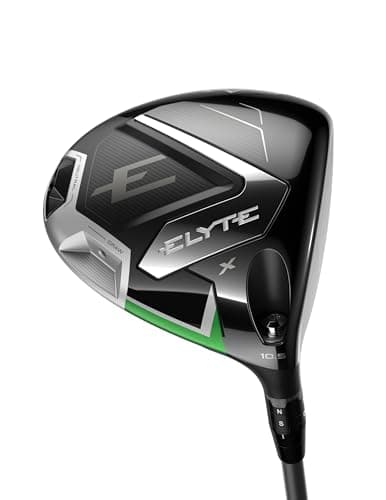
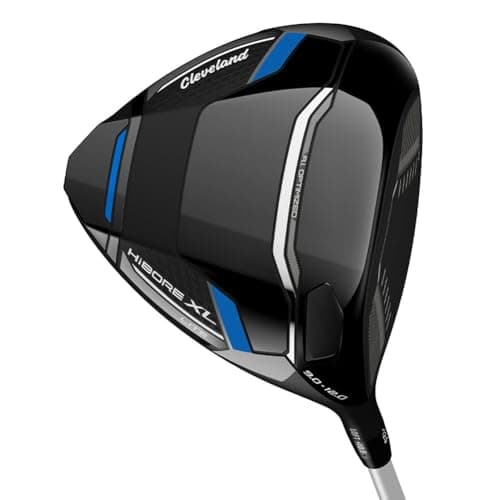
The other thing a slow swing needs is a light shaft, and this is where the L and A shafts on modern clubs quietly converge. Graphite driver shafts now weigh under 50 grams in these flexes: Cleveland ships the HiBore XL Lite in senior flex on the 40-gram Aldila Ascent PL 40, for a published total club weight of 291 grams; Callaway ships the Elyte X in light flex on the Mitsubishi Vanquish PL 40. Same weight class, different letter. Once the shafts weigh the same, the flex letter is doing less work than the label suggests, and what shaft weight actually does explains why weight is often the bigger lever.
Why men end up in L and women in A
Two reasons. First, the ranges overlap, and a man in his late 70s with a 66 mph swing is squarely in L territory whatever the shaft is called. Second, women’s clubs are not just a softer shaft — they are usually built shorter and with more loft, on lighter shafts, for a shorter player with a slower swing. A tall man who wants only the softer shaft may be better served by a senior-marketed club with an L shaft fitted, or by the lightest A-flex club he can find. A senior woman whose swing is still in the high 70s is often better served by an A-flex club than by a women’s set built for a slower swing than hers — the case we make on best golf clubs for senior women.
How to decide
Measure the speed, not the age. A launch monitor at any store takes ten minutes. Failing that, your carry distance is a fair proxy: TrackMan puts about three yards on every mile an hour of driver speed, and our senior club distance page shows what real golfers at each age actually carry. Then read the number off the chart, and if you land near 70 mph, try both.
Buy the whole club for the swing, not just the shaft. The four clubs below are the ones we rank that ship in a genuine L or A flex off the shelf, chosen because the head, length and loft were designed around that shaft rather than a stiff club with a soft shaft screwed in. If your driver is fine and only the shaft is wrong, a regrip-and-reshaft at a club builder is cheaper than any of them.
The picks, and who each suits
The Cleveland HiBore XL Lite in senior flex is the A-flex reference: the lightest driver a major brand publishes a weight for, 291 grams, on a 40-gram shaft with a lightweight grip. For a man or woman swinging in the 70s who wants a full-length, full-loft driver with the soft shaft built in.
The Callaway Elyte X women’s driver is the L-flex reference: 12 degrees of loft, a light-flex graphite shaft and a switchable draw weight. It is Callaway’s women’s build of the head rather than the men’s club with a softer shaft screwed in, which is the point — for the slowest swings the whole club should be designed for the swing, not just the shaft.
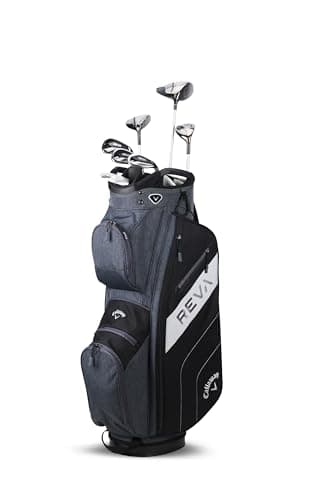
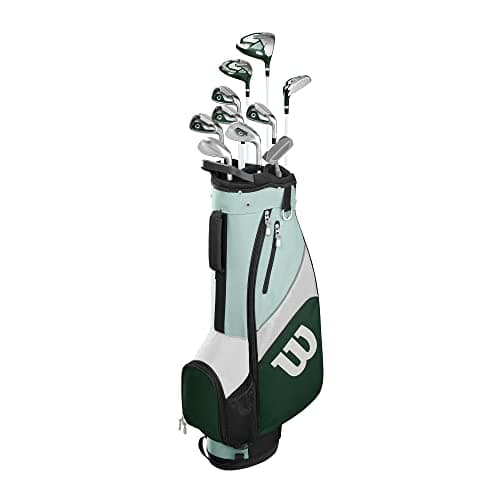
The Callaway Reva complete set and the Wilson Profile SGI women’s set are the L-flex sets for a player starting again or replacing everything at once: light graphite shafts, high lofts and oversized heads throughout. The Reva is the better-regarded set; the Profile SGI is the value pick, and both are ranked on best complete golf sets for seniors.
Skip this
Skip choosing by the picture on the box. A shaft does not know who is holding it. If the chart says L, buy L; the only thing you lose by refusing is launch and distance.
Skip going softer than the chart to “get more whip.” A shaft too soft for your speed launches too high, spins too much and closes the face early, which turns a straight shot into a hook. If you are on the border, the lighter shaft in the stiffer flex usually beats the softer one — and are senior flex shafts worth it works through when the softer shaft genuinely pays.