Most of this site is about buying the right gear, because gear is what we can read specifications for. This page is the exception, and it belongs on the site for a blunt reason: for a lot of senior golfers, five minutes of the right movement before a round does more for the next drive than a new driver does. That is not our opinion. The Titleist Performance Institute’s summary of the warm-up literature puts it plainly — an appropriate warm-up can yield performance improvement comparable to an equipment upgrade.
It also comes with a warning that cuts against what most people over sixty were taught in school. Static stretching — holding a stretch still for thirty seconds — immediately before you swing appears to make you worse, not better. TPI cites research in which strength was reduced by up to 28% immediately after a static stretch and was still down 9% an hour later. In golf-specific work, adding static stretching to an active dynamic warm-up impaired clubhead speed, driving distance, accuracy and self-reported shot quality. Meanwhile dynamic stretching produced significantly greater clubhead speed than both static stretching and no stretching at all.
So the short version is: move before you play, stretch after. Dynamic movement and a resistance-band routine before you tee off; the long, held stretches at home on a day you are not playing. Below we set out what that looks like for an older body, what the research does and does not support, and the handful of inexpensive things worth owning to do it with.
One honest caveat before any of it. This is a summary of published research and manufacturer information, not medical advice, and we have not tested anything on anybody — see how we pick. If you have a diagnosed back, hip or shoulder problem, or you are recovering from surgery, the program your clinician gave you beats anything on this page. The Arthritis Foundation’s own golf guidance is the better starting point if arthritis is the issue, and we cover the gear side of that in golf with arthritis.
The five minutes before you tee off
The evidence favors movement that looks like golf, done at increasing speed, rather than stretches held still. The practical shape of it, in the order the research supports:
1. Two minutes of walking.Not a stretch, just general warming. TPI’s review of what tour players actually do found that of 25 Ladies European Tour players observed, only 2 did any form of aerobic activity at all, and their dynamic stretching averaged under 30 seconds. If the professionals are skipping this, an amateur over sixty-five certainly is. Walking from the car counts, if you walk it rather than ride it.
2. Dynamic rotations, arm swings and trunk turns. Movement through range, not holding at the end of it: slow torso turns with a club across the shoulders, arm circles, gentle side bends, hip swings. This is the part that showed the clubhead-speed benefit over both static stretching and nothing.
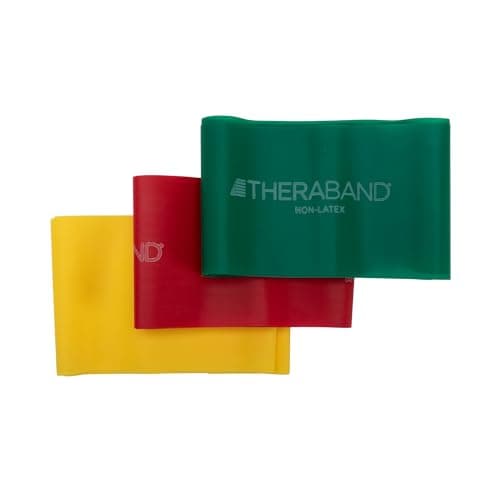
3. A resistance-band set, if you will carry one. In the study TPI summarizes, both a dynamic-stretch protocol and a resistance-band protocol produced significant increases in clubhead speed and ball speed, with one case showing carry-distance gains of 37.5 yards from the dynamic stretches and 44.5 yards from the band protocol. Treat the individual yardage figures as one person on one day rather than a promise, but the direction of the finding is consistent.
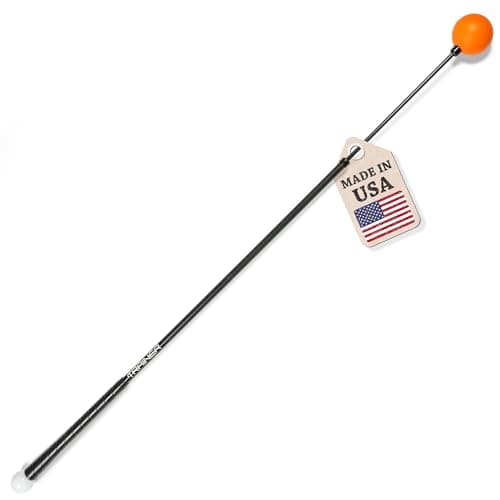
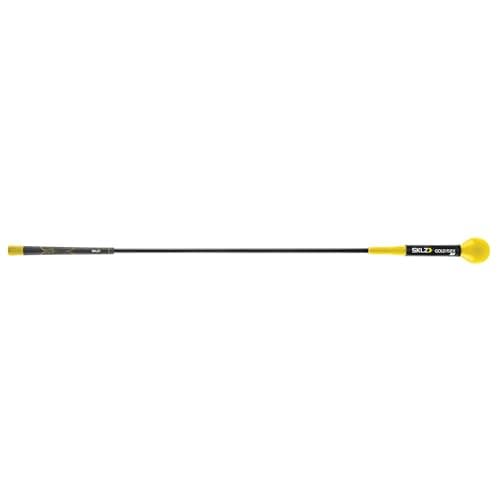
4. Swings, building up. Half swings with a wedge, then longer clubs, then the driver. A weighted warm-up stick does this in a smaller space and in less time, which is why it is the one item on this page that lives in a golf bag.
The two restrictions that actually cost an older golfer distance
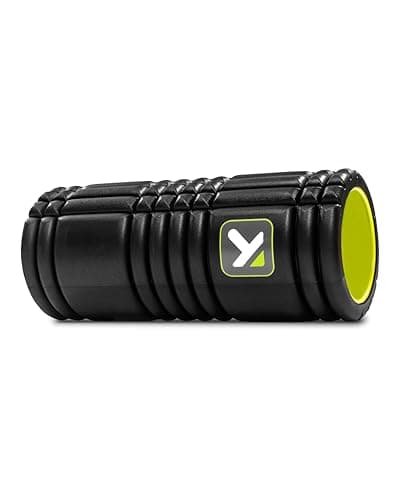
The mid-back. Thoracic rotation is usually the first thing to stiffen, and it is the joint a golf backswing depends on most. When it will not turn, the shoulders stop short, the hips over-rotate to compensate, and the swing gets shorter and less repeatable. This is the restriction most worth working on, and the one a foam roller addresses directly.
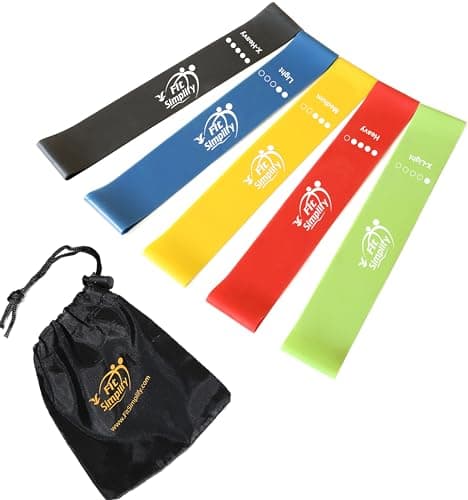
The hips. Hip mobility and glute strength are what let you turn through a shot rather than sway past it. Senior golf-fitness advice overwhelmingly concentrates on shoulders and skips hips, which is backwards for most people. A set of loop bands and ten minutes twice a week is the cheapest fix available in golf.
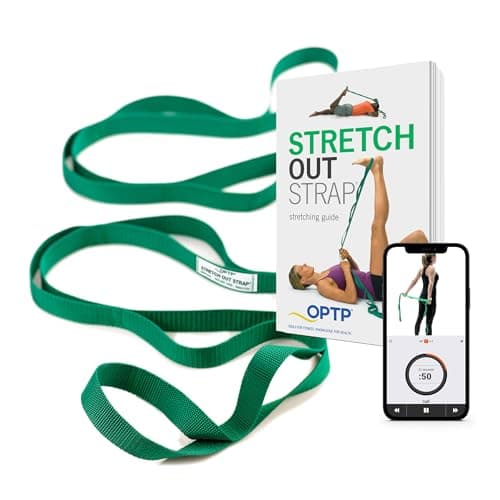
Note which of these is a mobility problem and which is a strength problem, because the tools are different and buying the wrong one is the usual mistake. A strap and a roller buy you range of motion. Bands buy you strength. Most golfers over seventy need some of both and buy neither.
What the research does not say
We are not going to oversell this. The evidence base for golf warm-ups is real but modest, and it is weakest for exactly the group this site is written for. One study of 36 amateur golfers with a mean age of 64 found that a rotation-specific dynamic warm-up did not increase X-Factor or X-Factor Stretch compared with a sham warm-up once age was controlled for, and its authors called for further study of the long-term effects across ages. Most of the encouraging clubhead-speed findings come from small groups, often younger than you.
What that means in practice: a warm-up is cheap, has no real downside, and the balance of evidence says it helps. It is not a guaranteed 20 yards, and anyone selling it to you as one is overstating the literature. The static-stretching finding is the firmer half of the story, and it is a finding about what not to do, which costs nothing to act on.
What to buy, and in what order
If you buy one thing, make it the warm-up stick or the stretch strap, depending on where the problem is. The stick is for the first tee; the strap is for the living room. Both cost less than a round of golf.
If you buy two, add loop bands for the hips. They are the cheapest item here and they address the restriction most guides ignore.
Buy the roller only if you can get down to the floor and back up again comfortably. If you cannot, it is not a compromise worth making — the mid-back work can be approached standing with a strap and a doorframe, and a roller you cannot safely use is money wasted. That caveat is on the roller’s own entry above, too.
Do not buy all six. Nothing on this page works unless it gets used, and six pieces of kit in a cupboard is the most common outcome in this category. One item used twice a week beats a full set used once.
When gear is the better answer than exercise
Be honest about which problem you have. If your swing has slowed and the ball has stopped carrying, a warm-up gets you some of that back, but a lighter shaft in a more forgiving head gets you more of it — that is the argument of how to choose clubs for a slower swing. If your hands hurt, no stretch fixes that as cheaply as a bigger, softer grip. And if what hurts is your back after four hours of walking with a bag on your shoulder, the fix is not an exercise at all: it is a push cart, or an electric caddy if pushing has become the hard part.