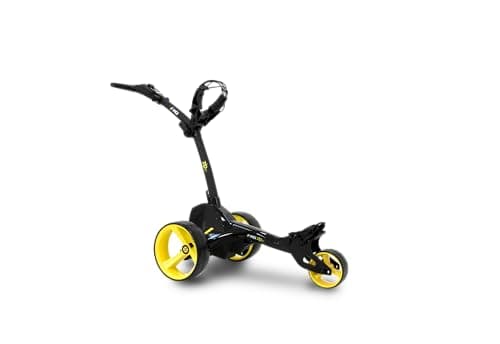
This hub exists to make one argument: stop carrying, start pushing. An electric caddy is the next rung up, and it is the right rung when pushing itself has become the hard part — a long uphill second nine, a soft wet course, a shoulder that complains at the handle. The motor takes over the pushing. What almost nobody tells you is that it hands you a different problem in exchange: an electric caddy is a 22-to-35-pound machine you have to get into the back of a car twice a round. Solve walking, create lifting. That trade is the whole decision, so we have ranked these on the published weight and the folded size first, and the feature list second.
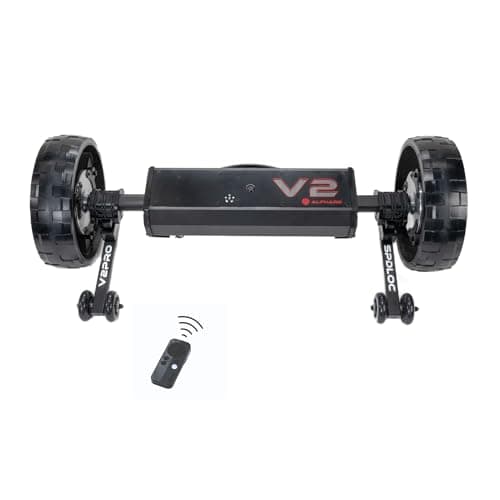
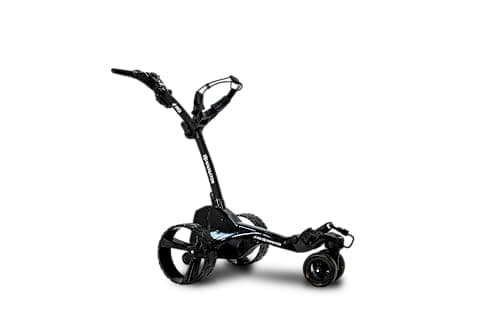
Our top pick is the MGI Zip X1, and it is the cheapest and simplest thing here on purpose: 22 pounds bare, a removable battery so the heaviest piece comes out before you lift, a 36-hole battery, and no remote to learn. If you already own a push cart you like — a Clicgear, a Bag Boy Nitron, a CaddyTek — skip to number two, the Alphard Club Booster V2Pro, which is a motor base that turns the cart you already own into a remote-controlled electric one for about the same money.
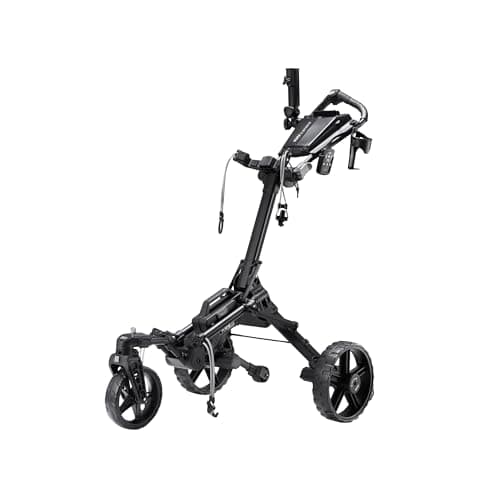
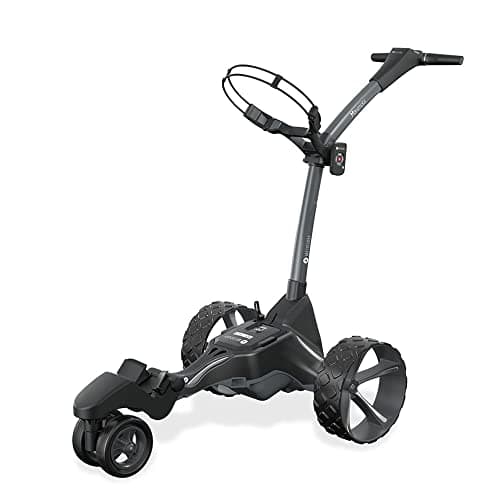
If you do want a remote and an empty pair of hands, the KVV at number three is the cheapest honest route and folds smallest, and it is the only one here that still works as a plain manual push cart when the battery dies. The Motocaddy M7 at number four is the better machine and the one to buy for a hilly course, because automatic downhill control stops a loaded cart running away from you on a slope. The MGI Zip Navigator at number five is the most capable of the lot and also the heaviest and dearest, which on this page counts against it.
A word on what we have not done: we have not pushed any of these around a golf course, and we are not going to pretend we have — see how we pick. Every weight, battery rating and folded dimension below is a manufacturer-published figure, cited at the foot of the page. The judgments about which of those numbers matter to a 72-year-old loading a car alone are ours, and they are the reason this page reads differently from the rest of the category. If you are not sure you need a motor at all, start with the manual push carts— most golfers who think they need electric actually need a better push cart.
Start with the lift, not the motor
Every spec sheet in this category leads with battery capacity and motor wattage. For a senior golfer the first number that matters is the one you handle twice a round in a parking lot. An electric caddy is heavier than a manual push cart — the frame, the motors, the gearbox and the battery all add up — and the range here runs from 22 pounds bare on the MGI Zip X1 to 31 pounds on the Motocaddy M7. That gap is the difference between an awkward lift and a two-handed heave.
Two things shrink the lift. The first is a removable battery: every unit on this page lets you take the battery out, which means the heaviest single object is the frame without it, not the whole machine. Take the battery out before you lift, every time — it is the single most useful habit in this category and nothing in the manual tells you to. The second is the folded size, because a trunk lip is a fixed height and a cart that folds smaller goes over it at a kinder angle. KVV publishes a folded size of 17.5 by 18.7 by 22 inches, the smallest here, and we have weighted that heavily.
Do you actually need a remote?
A remote lets you send the cart ahead and walk with nothing in your hands. It is the headline feature of the category and it is roughly half the price. Be honest about whether you want it.
Buy a remote ifgripping and steering a handle for four hours is itself the problem — an arthritic hand, a bad shoulder on one side, a wrist that aches by the turn. Walking genuinely empty-handed is a different experience from walking with one hand on a cart, and if your hands are the limitation then that is the whole point. If that is you, our arthritis grip guide is the companion purchase.
Skip the remote ifyour legs and back are the limitation and your hands are fine. A non-remote electric caddy — the Zip X1 here — still carries the entire weight and still climbs the hill for you. You walk beside it with a hand resting on the handle, which most people find natural rather than a compromise. You save several hundred dollars, several pounds of weight, and a device that can be dropped, lost or left flat.
The three features that earn their money, and the ones that don't
Downhill speed control earns its money on a hill. A loaded cart on a slope wants to run, and on the steeper stuff you end up holding it back, which is the opposite of what you bought it for. The Motocaddy M7's Automatic Downhill Control and the Alphard kit's downhill control both hold the set speed going down. If your course is genuinely hilly this moves from nice to necessary.
A straight-line tracker earns its money on a side slope. Any single-driven or twin-driven cart drifts across a cambered fairway, and correcting it constantly is tiring. MGI's Gyroscope Straight Tracker on the Zip Navigator and the Alphard kit's 6-axis gyroscope both exist to cancel that drift.
A manual fallback earns its money once. It will matter exactly one time: the day you forget to charge. The KVV switches to plain push mode; the premium units effectively do not. Whether that is worth anything depends on how organized you are.
What does not earn its money:battery capacity beyond your actual golf. Every unit here is rated for at least 18 holes and most for 36. If you play one round at a time and charge it when you get home, the 36-hole rating is a number on a box. Likewise remote range — the difference between 100 feet and 328 feet only matters if you are in the habit of sending the cart to the next tee while you putt, which many clubs would rather you did not do anyway.
What an electric caddy will not fix
It will not reduce the number of times you bend to the ground, because that was never the cart. It will not make 18 holes shorter. And it will not help a back that hurts from the golf swing rather than from the walking — that is a different problem, and the honest version of it is in is golf bad for your back? and in our golf exercises for seniors guide. If the walking itself is what has become too much, a caddy of any kind is the wrong answer and a ride is the right one.
Who should skip this page
If you are still carrying a bag, do not buy an electric caddy. Buy a push cart first — it is a fifth of the price, a third of the weight, and it captures almost all of the benefit. Our best push carts for seniors and are golf push carts worth it? make that case with the numbers. Come back here when pushing the cart up the hill is the part of the round you have started to dread. That is the moment this purchase makes sense, and not before.