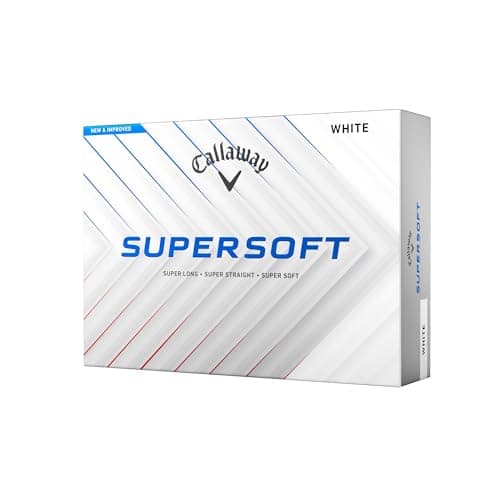
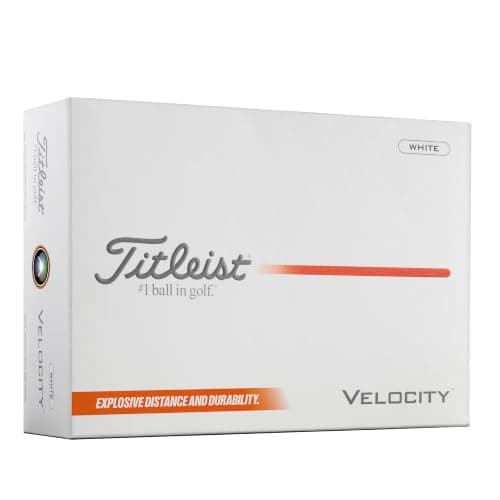
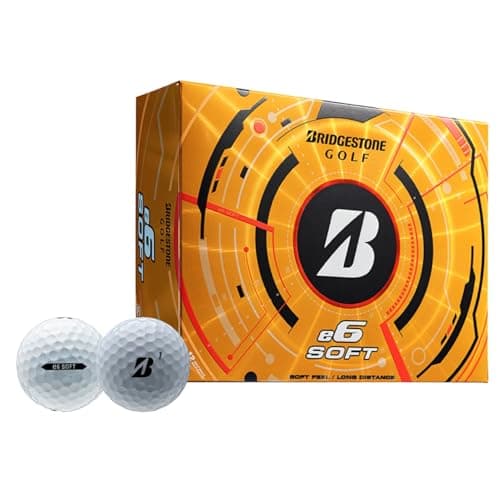
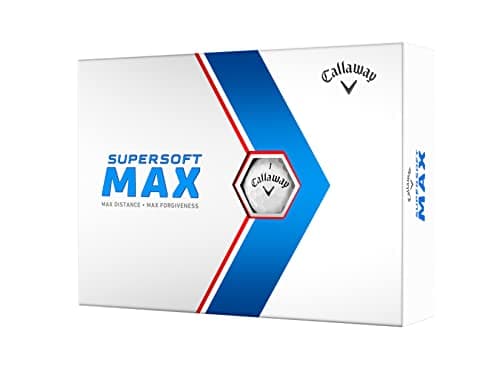
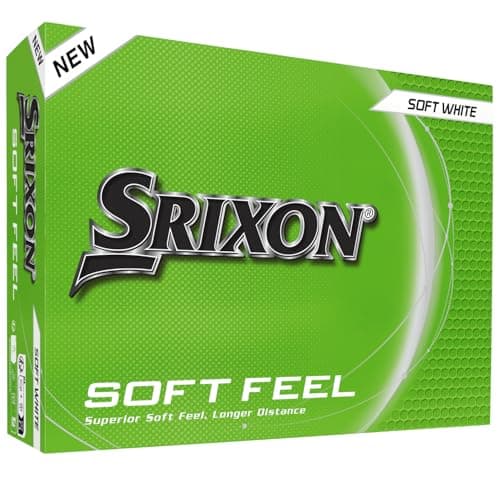
Here’s the counterintuitive truth about distance for a senior: the ball marketed as a “distance” ball is often firm, and a firm ball a slow swing can’t compress fliesshorter, not farther. Real distance for a slower swing comes from a compression you can actually flatten — that’s where energy transfer, and carry, come from. So this list ranks low- and mid-compression balls on how far they genuinely fly for a moderate-to-slow swing. The Srixon Soft Feel and Callaway Supersoft top it because they compress easily and fly long and straight; the Titleist Velocity is the pick if you still swing decently and want a firmer, high-launch distance ball.
Distance also depends on straightness — a ball that curves into the rough loses more yards than any core ever gains — so a low-driver-spin, straight flight is part of the ranking too. Match your swing speed to a compression tier on the ball compression chartfirst, then read on. If your swing is genuinely slow, the softest balls carry farthest for you; that’s the slow-swing list.
Where distance really comes from for a slow swing
Compression you can flatten. A ball only returns the energy you put in if you compress it fully. A fast swing flattens a firm ball; a slow swing does not, so on a firm ball a slower player leaves carry on the table every drive. The fix is a lower-compression ball your swingcancompress — the “soft” ball is, for you, the long ball.
Low driver spin. Too much backspin balloons a drive and kills roll; a low-spin ball flies flatter and more penetrating, which adds carry and run for a slower swing and helps a slice fly straighter into the bargain. Most of the balls here are built low-spin off the tee for exactly that.
Straightness.The longest ball is the one that stays in play. A straight-flying, low-sidespin ball keeps a drive on the short grass instead of curving into trouble, which is where a slower swing’s real distance is won or lost. If a slice is your issue, our balls for a slice list ranks for that specifically.
The one exception: a still-decent swing
If you haven’t slowed all the way down — say you still carry a driver 210–230 yards — a firmer, high-launch mid-compression ball like the Titleist Velocity can genuinely be the longest for you, because you generate enough speed to use it. That’s the one case where a “distance” ball earns the name for a senior. Below that speed, stay with the soft low-compression picks.
Who should skip a distance-first ball
If you have real speed and a sharp short game that lives on greenside spin, a low-spin distance ball will feel unresponsive around the green — you’re the rare senior who should play a firmer urethane ball and accept a little less roll for more bite. For everyone whose swing has slowed, the distance is in a ball you can compress.
How we picked this
We haven't hit this gear — and we say so
We compiled the published manufacturer specifications — shaft weight and flex, loft, grip diameter, ball compression, cart weight — did the swing-speed and compression arithmetic, cross-read the owner manuals, and scored each pick against a published rubric. The scores are judgments from documented research — they are notlab measurements we took, because we don't have a lab and we're not going to pretend we do. Where somebody has genuinely measured this, we link them. You can check every number we publish.