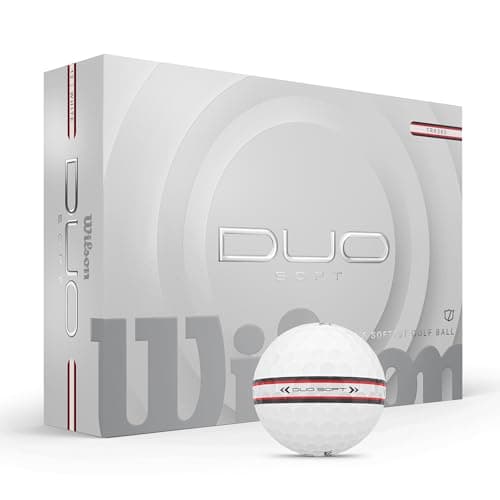
If your driver swing is genuinely slow — under about 85 mph — you want the softest, lowest-compression balls made, because those are the only ones you’ll fully compress. The Wilson Duo Soft is about the lowest compression on the market, the Callaway Supersoft is the all-round value pick, and the Srixon Soft Feel Lady is tuned softer still for the slowest swings.
These are ranked purely on how much distance a slow swing gets back, plus feel and straightness. If your swing is more moderate, the broader best golf balls for seniors list has picks with a touch more control.
The short answer
Quick picks
| # | Product | Best for | Score | Price |
|---|
| 01 | Wilson Duo SoftWilson markets this as the softest ball in golf, and for a genuinely slow swing that ultra-low compression is exactly the point — it compresses when a firm ball just sits there. | The slowest swing speeds | | $24.99·Amazon |
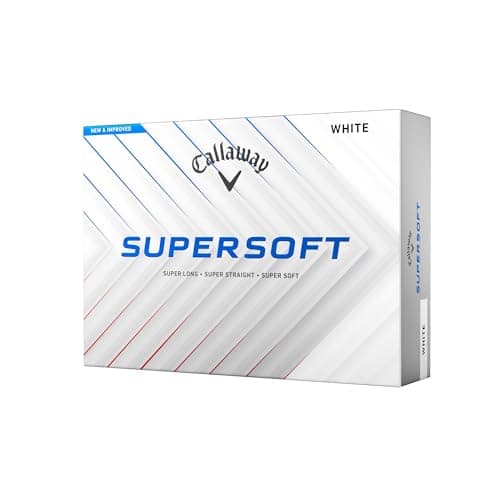
| 02 | Callaway SupersoftThe senior default. One of the lowest compressions in golf, so a slower swing actually flattens it — which is where the distance you've lost comes back. | Slow-to-moderate swings | | $26.97·Amazon |
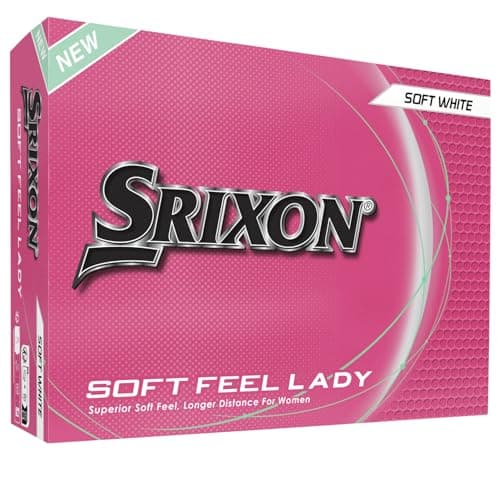
| 03 | Srixon Soft Feel LadyThe Soft Feel tuned even softer for the slowest swings — the value pick for senior women and anyone whose swing speed is genuinely low. | Senior women and the slowest swings | | $24.99·Amazon |
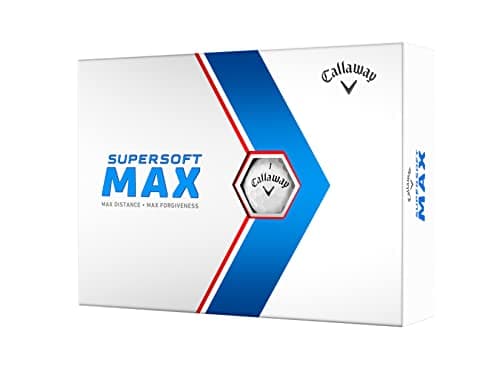
| 04 | Callaway Supersoft MaxA larger, extra-forgiving take on the Supersoft — a bigger ball that's easier to launch and get airborne for a very slow swing. | Extra launch for a very slow swing | | $24.97·Amazon |
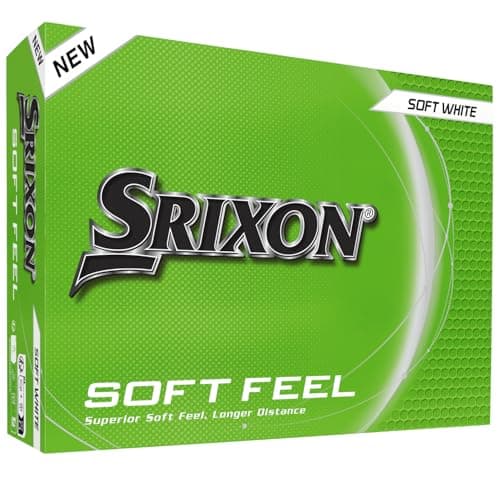
| 05 | Srixon Soft FeelThe value ball we'd actually put in the bag. Low compression a moderate swing can use, a touch more feedback than the very softest balls, and consistently well priced. | The best all-round value | | $24.97·Amazon |
#ad · Live prices from the Amazon Product API, as of Sep 6, 2026. Where we have no verified live price, we show none — we would rather leave a gap than print a number that has rotted.
In detail
The picks, in full
The slowest swing speeds
Wilson Duo Soft
Ultra-low compression2-pieceSoft coverValue tier
Wilson markets this as the softest ball in golf, and for a genuinely slow swing that ultra-low compression is exactly the point — it compresses when a firm ball just sits there.
- Distance (slow swing)
- 8
- Softness / feel
- 9
- Straightness
- 8
- Greenside spin
- 4
- Value
- 9
Pros
- +About the lowest compression on the market — a real help for the slowest swings
- +Extremely soft feel off putter and irons
- +Value pricing
Cons
- −The soft, low-spin design that helps a slow swing costs greenside control
- −An average-or-faster swing over-compresses it and loses the benefit
Skip this if…
…your swing speed is average or above. Past roughly 90 mph of driver speed you'll flatten this too easily and give up control for a softness you didn't need.
Slow-to-moderate swings
Callaway Supersoft
Very low compression2-pieceIonomer coverValue tier
The senior default. One of the lowest compressions in golf, so a slower swing actually flattens it — which is where the distance you've lost comes back.
- Distance (slow swing)
- 9
- Softness / feel
- 8
- Straightness
- 8
- Greenside spin
- 5
- Value
- 9
Pros
- +A very low compression a slow swing can fully compress — that's what turns swing speed into carry
- +Straight, forgiving flight that flatters a slice
- +Priced so losing a couple doesn't sting
Cons
- −The ionomer cover can't produce tour-level greenside bite — it releases on chips
- −The very soft feel isn't to everyone's taste off the putter
Skip this if…
…your swing is still quick and your short game lives on one-hop-and-stop spin. You'll compress this too easily and miss the greenside bite a urethane ball gives you.
Senior women and the slowest swings
Srixon Soft Feel Lady
Ultra-low compression2-pieceIonomer coverValue tier
The Soft Feel tuned even softer for the slowest swings — the value pick for senior women and anyone whose swing speed is genuinely low.
- Distance (slow swing)
- 8
- Softness / feel
- 9
- Straightness
- 8
- Greenside spin
- 4
- Value
- 9
Pros
- +An even lower compression than the standard Soft Feel, tuned for a slow swing
- +Soft feel and straight flight
- +Same excellent value pricing as the men's Soft Feel
Cons
- −A faster swing will over-compress it
- −Value-ball greenside ceiling
Skip this if…
…you swing at an average speed or faster. The extra-low compression is wasted — and slightly counterproductive — behind a swing that isn't genuinely slow.
Extra launch for a very slow swing
Callaway Supersoft Max
Very low compressionOversized 2-pieceIonomer coverHigh launch
A larger, extra-forgiving take on the Supersoft — a bigger ball that's easier to launch and get airborne for a very slow swing.
- Distance (slow swing)
- 8
- Softness / feel
- 8
- Straightness
- 8
- Greenside spin
- 5
- Value
- 8
Pros
- +The slightly larger size is easier to get up in the air for a struggling swing
- +All the low-compression, easy-distance benefit of the standard Supersoft
- +Straight, anti-slice flight
Cons
- −The bigger ball is a niche fix; most players do fine with the standard Supersoft
- −Same value-ball greenside ceiling
Skip this if…
…you have no trouble getting the ball airborne. The oversized design solves a launch problem you don't have — the regular Supersoft is the more sensible buy.
The best all-round value
Srixon Soft Feel
Low compression2-pieceIonomer coverValue tier
The value ball we'd actually put in the bag. Low compression a moderate swing can use, a touch more feedback than the very softest balls, and consistently well priced.
- Distance (slow swing)
- 8
- Softness / feel
- 8
- Straightness
- 8
- Greenside spin
- 5
- Value
- 10
Pros
- +Low compression a moderate swing can flatten for real distance
- +A slightly firmer, more responsive feel than the softest value balls — a good middle ground
- +Usually one of the best price-per-dozen in the category
Cons
- −Ionomer cover, so limited full greenside spin
- −Nothing flashy about it — which is exactly right for a value ball
Skip this if…
…you genuinely spin your wedges and still play to a low handicap. You'll feel the missing greenside bite; step up to a urethane ball.
Why the softest ball wins for a slow swing
A firm ball needs a fast, forceful strike to compress. A genuinely slow swing never delivers that, so on a firm ball the energy transfer is incomplete and the ball flies short. Drop to an ultra-low-compression ball and even a slow swing flattens it, transferring energy efficiently — more carry, for less money. The trade is greenside spin, which a slow, short game rarely uses anyway.
The one caution: if your swing is only slightlyslow (say 85–90 mph), you can over-compress the very softest balls and lose a little control. In that case step up one tier to the standard Soft Feel or a mid ball. Check the compression chart to place yourself.
Skip this
Don’t buy an oversized or specialty ball to solve a launch problem you don’t have. The Supersoft Max, for instance, is a genuinely useful larger ball for someone who can’t get the ball airborne — but if you already launch fine, the standard Supersoft is the smarter, cheaper buy.
How we picked this
We haven't hit this gear — and we say so
We compiled the published manufacturer specifications — shaft weight and flex, loft, grip diameter, ball compression, cart weight — did the swing-speed and compression arithmetic, cross-read the owner manuals, and scored each pick against a published rubric. The scores are judgments from documented research — they are notlab measurements we took, because we don't have a lab and we're not going to pretend we do. Where somebody has genuinely measured this, we link them. You can check every number we publish.
Questions
Frequently asked
What golf ball should I use with a slow swing speed?+
The softest, lowest-compression ball you can find — a Wilson Duo Soft, Callaway Supersoft or Srixon Soft Feel. A slow swing compresses these fully, which a firm ball never lets it do.
Do low-compression balls really add distance?+
For a slow swing, yes — because you compress them fully and transfer energy efficiently, where a firm ball leaves distance on the table. The gain is real, not marketing.
Receipts
Sources
We do not run a testing lab, and we do not pretend to. Every spec number here comes from a manufacturer's published sheet or an official standard, cited above. Where we could not verify something, we say so on the page rather than quietly leaving it out. Read our full method.