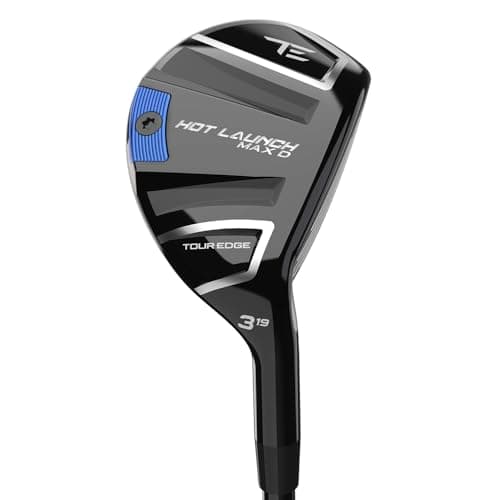
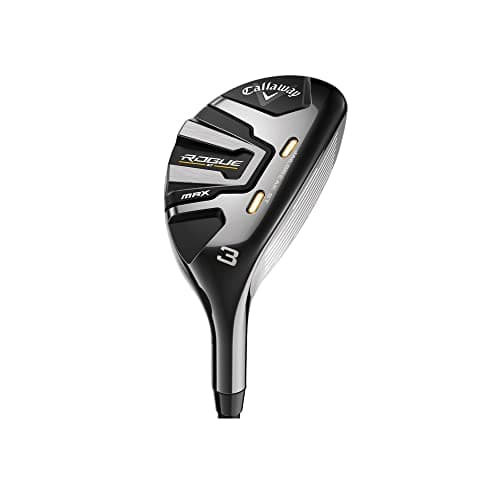
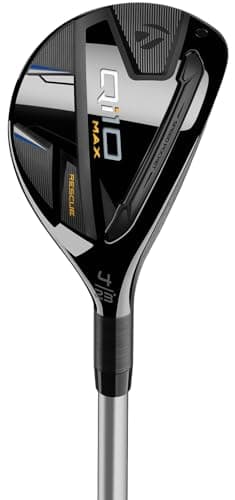
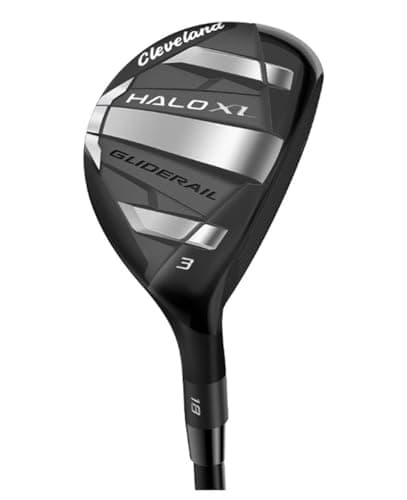
If your long irons come off low and short no matter how cleanly you catch them, a rescue hybrid is the cheapest genuinely effective fix in golf — and the Cleveland Launcher Halo XL Hybridis the one we’d put in most senior bags first. It is one of the few hybrids you can buy in a real A (senior) flex without a custom order, and the three rails across its sole keep it gliding rather than digging on the shallow, sweeping strike a slower swing tends to make. If your miss has drifted from a fade into a slice, the offset Tour Edge Hot Launch Max D is the better buy. If nothing you own gets high enough, the TaylorMade Qi10 Max Rescue launches highest of the six.
What we ranked on, before any product
A hybrid is an easy club to sell and a hard club to buy well, because most “best hybrid” lists rank heads that a senior can only get in a regular or stiff shaft. That is the wrong list. Four things decide whether a hybrid actually helps a golfer whose swing has slowed, and we applied them in this order:
- Can you buy it in a senior flex at all?A hybrid head you can’t load is a long iron with a bigger face. Four of the six picks below are listed in a senior, A or light flex as a stock option, not a special order — that is the first cut, and it eliminates most of the hybrids that win magazine tests.
- How high does it launch on its own? Carry distance is launch and spin, not just clubhead speed. A low center of gravity, a shallow face and a deep, wide body do the launching for you. That is the whole point of the club.
- What does the sole do in turf?A slower swing arrives shallow and sweeping, so a sole that digs turns a decent strike into a fat one. Rails, camber and a tapered trailing edge are not marketing — they are the difference between a clean strike and a chunk.
- Does it fight your actual miss?Offset and draw bias help a slice and hurt a hook. The right hybrid depends on which of those you fight, which is why the ranking below is not a single “best” but a shortlist with the miss it suits named on each pick.
One thing we won’t pretend: we haven’t hit any of these clubs and we don’t own a launch monitor. What we do is read the published manufacturer specs — loft, flex, sole design, crown material — put them next to each other and do the arithmetic on what a slower swing needs. Every loft, flex and hand quoted below comes off the live retail listing for the exact club we link to. If you don’t know your swing speed, start with the swing speed & shaft flex chart— it turns an honest carry distance into the flex you should be shopping for, and it is the decision every pick here hangs on.
Which loft do you actually need?
This is the question that trips up most first-time hybrid buyers, and it has a simple answer: buy the hybrid that matches the iron you want to stop hitting. Hybrid lofts are numbered to line up with iron numbers, so a 3-hybrid at roughly 19 degrees replaces a 3-iron, a 4-hybrid at roughly 22 degrees replaces a 4-iron, a 5-hybrid at 24 to 27 degrees replaces a 5-iron, and so on down. The numbers vary a couple of degrees between brands, which is why we quote the actual degrees on each pick above rather than the number stamped on the sole.
The mistake to avoid is buying the lowest-lofted hybrid because it looks like the longest club. A 19-degree hybrid is still a 19-degree club, and if you can’t launch a 3-iron you will struggle to launch that too. Most seniors get more out of starting at the 4- or 5-hybrid, where the extra loft does real work, and only adding the 3-hybrid later if the gap to their fairway wood is genuinely too big. Our fairway wood vs hybrid guide covers that top-of-the-bag decision in full.
Senior flex is the whole ballgame
A hybrid works by letting the shaft load and unload — the head is deep and heavy for its size, so a shaft you can flex delivers it with speed to spare. Put a stiff shaft in the same head and you get a club that feels like a board and launches like a long iron, which is exactly the problem you were trying to solve. This is why the first cut in the ranking above was availability of a senior flex, not brand.
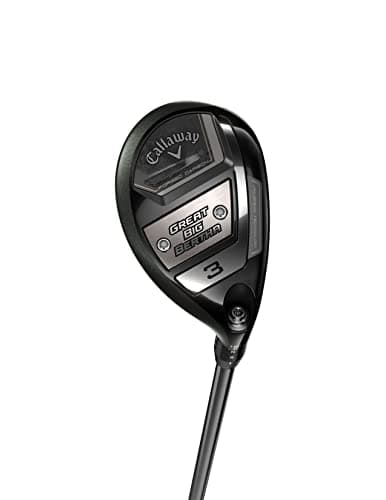
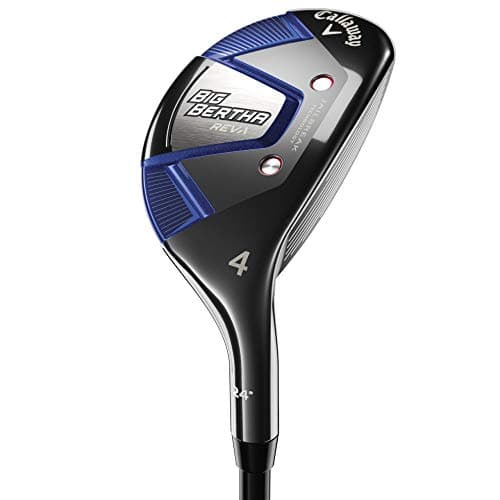
Flex naming is inconsistent and it matters. “A” flex, “senior” flex and “M” flex usually mean the same band; “light” or “L” flex is softer again, and is the right call only for the slowest swings. Callaway’s light-flex Great Big Bertha above is genuinely soft, which is a feature at 70 mph and a liability at 85. Our senior flex vs regular flex guide sets out the speed bands, and graphite vs steel shafts explains why every hybrid worth buying is graphite anyway.
How many hybrids should a senior carry?
One to three, and you should add them one at a time. Start with the single iron you dread most — for most golfers past sixty that is the 4-iron — and play the replacement for a few rounds before buying another. Plenty of senior bags end up with hybrids where the 3-, 4- and 5-iron used to be and game-improvement irons from the 6 down, and that is a perfectly good bag. But you get the biggest single jump from the first one, and buying three at once is how people end up with two clubs that fly the same distance.
If the honest answer is that the whole set feels heavy and low rather than just the top of it, a hybrid is a patch on a bigger problem. In that case read the best golf irons for seniorsroundup instead — a light, high-launch set fixes the bag properly — or the best complete sets for seniors if the whole bag is due.
Offset, draw bias and the slice
Offset sets the face slightly behind the shaft, which buys your hands a fraction more time to square the club before impact. On a hybrid it is a real, measurable help for a slice, and Tour Edge builds it into the Max D deliberately — the D stands for draw. It is also the one feature on this page that can actively hurt you: if your bad shot is a hook, offset adds to it. Buy the neutral head.
What offset will not do is fix a swing path. It moves the face a few degrees at impact, which turns a slice into a fade — useful, and worth the money — but a genuine over-the-top slice needs a lesson, not a club. Be honest about which one you have. If the ball starts left and curves hard right, that is path, and no hybrid on this page will rescue it.
What a hybrid gives up
Two things, and both are worth naming. First, workability: a hybrid’s deep, wide body wants to launch the ball high and land it soft, which is the opposite of what you want punching under a tree or holding a low ball into wind. Second, feel out of thick rough — a hybrid is far better than a long iron there, but the wide sole can bounce off a really heavy lie where a steeper club would dig through it.
Neither trade is close to a reason to skip one if your long irons have gone cold. They are reasons to keep expectations honest: you are buying height and forgiveness, not shot-shaping. Our hybrid vs long iron comparison lays the two side by side if you are still deciding.
Who should skip a hybrid entirely
If you still flight a 4-iron the way you always did, keep it — you are not the golfer this club was designed for, and the money is better spent on the short game or on a ball your swing can actually compress. And if the driver is the club that has really let you down, fix that first: the best drivers for seniors roundup is a bigger win per dollar than a hybrid for a golfer who has lost tee-shot distance rather than iron height.