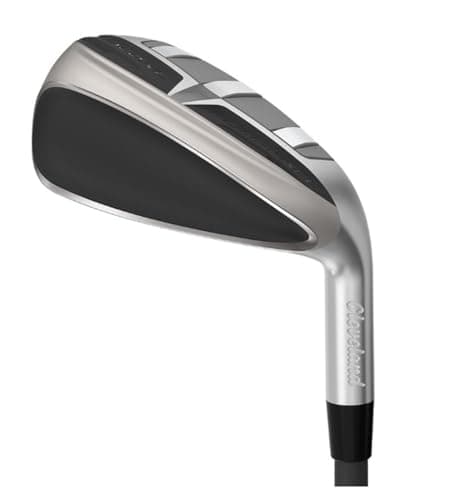
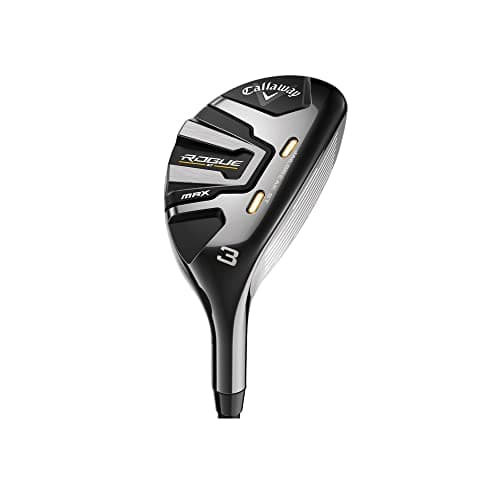
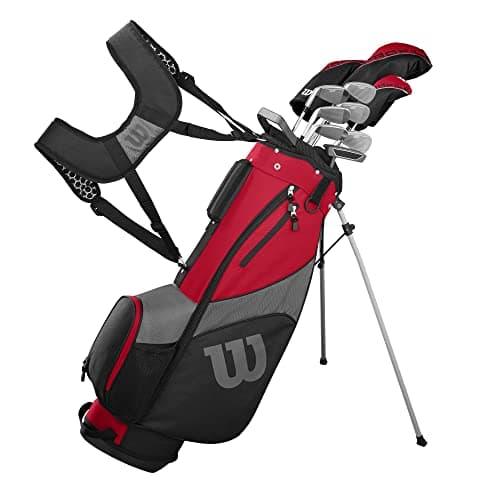
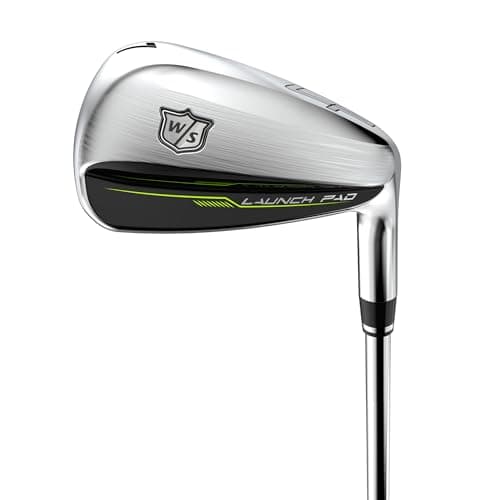
The irons that suit a senior are the ones that do the launching for you — hollow or wide-soled heads on light graphite shafts, so a slower swing still gets the ball up and out. The Wilson Launch Pad 2 set is the one we’d point most people to first: a hollow-body, ultralight game-improvement iron built specifically to fly high with almost no effort. The Cleveland Halo XL is the iron-hybrid alternative for anyone who finds a normal iron too demanding, and a single rescue hybrid is the cheapest fix of all if it’s only your longest irons that have gone cold.
Here is the thing to understand before you spend a penny: as swing speed drops, the long irons stop launching first. A 4- or 5-iron needs speed and a precise, descending strike to get airborne, and a slower, shallower swing gives it neither — so the ball comes off low and short no matter how cleanly you catch it. The answer isn’t to swing harder; it’s an iron (or a hybrid) built to launch high on its own. We’ve ranked these on exactly that: how easily each gets the ball up for a slow swing, forgiveness across the face, and value. Not sure of your speed? The swing speed & shaft flex chart turns an honest carry distance into the shaft you should be shopping for.
How to choose senior irons
Start with the shaft, not the head.A light graphite shaft in a genuine senior (A) flex is what lets a slower swing deliver the head with speed to spare — a steel-shafted iron you can’t load will fly low and short however forgiving the head is. Almost every set here is offered with a senior graphite option; buy that one. Our graphite vs steel and senior flex vs regular flex guides walk through why.
Look for a wide, rounded sole.The broad sole on a game-improvement iron glides through turf instead of digging, which forgives the shallow, sweeping strike a slower swing tends to make and rescues the fat shots that creep in as timing changes. It’s the single most forgiving feature an iron can have for an older golfer, and every pick above has it.
Decide between a whole set and a partial fix.If your mid and short irons still fly fine and only the 4- and 5-iron let you down, you don’t need a new set — you need to retire those two clubs for rescue hybrids. That’s cheaper and it fixes the exact clubs that stop launching first. If the whole set feels heavy and low, replace the lot. Our hybrid vs long iron guide is the decision in full, the best hybrids for seniors roundup ranks the rescue clubs themselves, and fairway wood vs hybrid covers the longest clubs above them.
Don’t forget the scoring clubs.Irons get the ball to the green; a forgiving, wide-soled wedge gets it close once you’re there. If chunked and thin chips are costing you shots, read Smart Sole vs CBX before you finish rebuilding the bag, or the full best wedges for seniors ranking if you want the wide-soled options compared against a budget blade.
Who should skip a new iron set
If you strike your irons cleanly and like to flight and shape them, the launch-first designs here give up the control a better ball-striker would actually use — a more traditional iron suits you. And if the budget is tight, resist buying a full set when two rescue hybrids would fix the clubs you actually struggle with for a fraction of the money.
How we picked this
We haven't hit this gear — and we say so
We compiled the published manufacturer specifications — shaft weight and flex, loft, grip diameter, ball compression, cart weight — did the swing-speed and compression arithmetic, cross-read the owner manuals, and scored each pick against a published rubric. The scores are judgments from documented research — they are notlab measurements we took, because we don't have a lab and we're not going to pretend we do. Where somebody has genuinely measured this, we link them. You can check every number we publish.