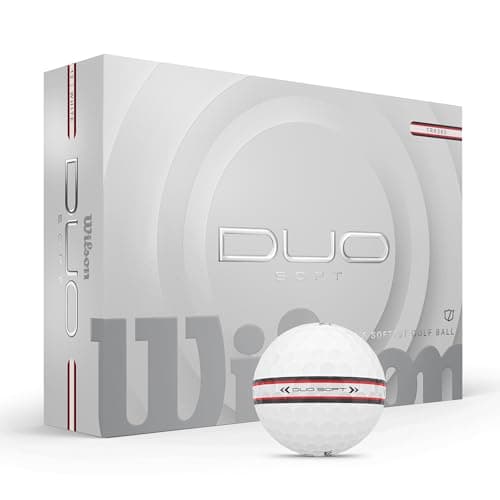
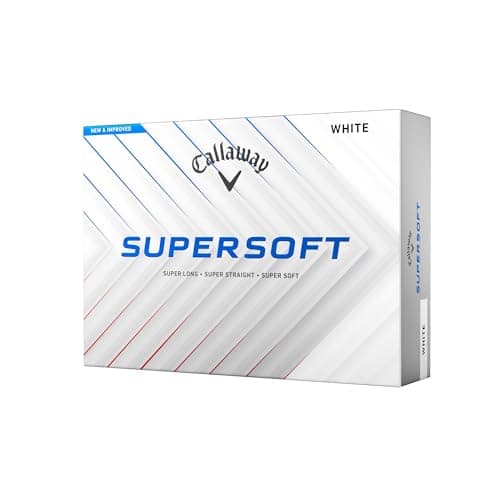
If your swing is genuinely slow, these are the two balls you’re most likely choosing between — and you can’t go wrong, because both are among the lowest-compression balls made and both compress easily for a slow swing. Wilson markets the Duo Soft as the softest ball in golf; the Callaway Supersoft is nearly as soft and the more established all-round value pick. Below we put them side by side so you can decide on the small differences that remain.
Where they differ
Compression and feel:both are ultra-low compression, but the Duo Soft edges the Supersoft as the softer of the two — the plushest feel off the putter and irons, and the easiest for the very slowest swings to flatten. The Supersoft is a hair firmer, which some players prefer for a touch more feedback. If your swing is at the slow end, lean Duo Soft; if you want a fraction more responsiveness, lean Supersoft.
Distance and flight:there’s no meaningful carry gap between them for a slow swing — both fly straight with low driver spin that flatters a slice. The differences here are feel, not yards. Both are two-piece ionomer balls with the modest greenside-spin ceiling that comes with the type.
Price, colors and availability: both are consistently among the best-value balls in golf and both offer a high-visibility yellow. The Supersoft is the more widely stocked and more often on a shelf near you; the Duo Soft is just as cheap when you find it. As with any two balls this close, buy whichever is cheaper the week you shop.
The line that decides it
The very slowest swings and a love of the softest possible feel: Duo Soft. A slightly firmer feel with a bit more feedback, and the easier ball to find on a shelf: Supersoft. Everyone else: price decides. If your swing is only mildly slow, note that you can over-compress the very softest balls and lose a little control — in that case step up to a Srixon Soft Feel from the seniors roundup. Place your speed on the compression chartif you’re unsure.
The honest caveat
Neither is the ball for a fast swing with a sharp short game — both give up the greenside bite of a urethane tour ball. If that describes you, you’re the rare senior who should look firmer. For a genuinely slow swing, these two are the right shortlist, and the choice between them is small.
How we picked this
We haven't hit this gear — and we say so
We compiled the published manufacturer specifications — shaft weight and flex, loft, grip diameter, ball compression, cart weight — did the swing-speed and compression arithmetic, cross-read the owner manuals, and scored each pick against a published rubric. The scores are judgments from documented research — they are notlab measurements we took, because we don't have a lab and we're not going to pretend we do. Where somebody has genuinely measured this, we link them. You can check every number we publish.