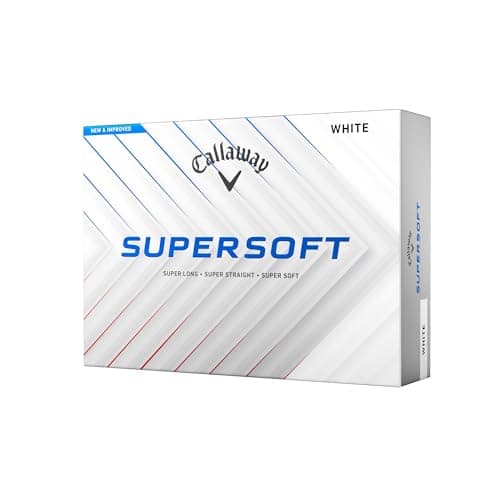
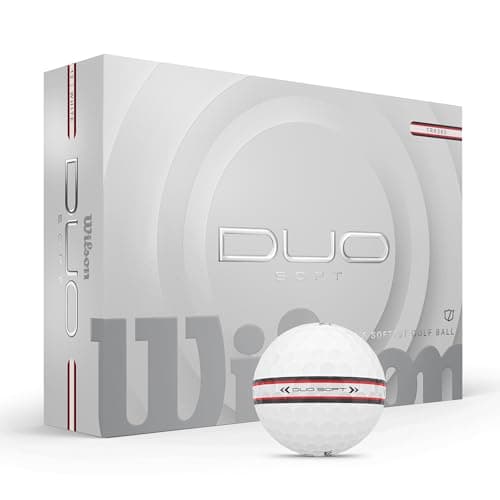
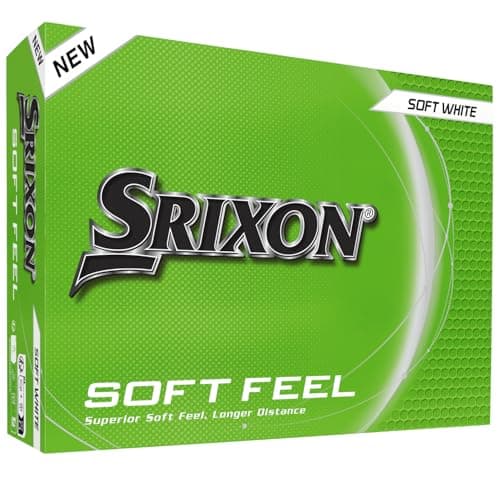
A modern golf ball kept in a cupboard is fine for years. Titleist’s golf ball R&D team, answering this question directly on the Team Titleist forum, says today’s balls can be safely stored for five years or more as long as they are kept away from excessive heat— and that condition is the whole story, because the two places golfers actually keep golf balls are the garage and the trunk of the car.
So the unopened sleeves at the back of your closet are almost certainly playable. The dozen that has spent three summers in the boot is a different question, and so is any ball that has been hit a few hundred times. Those are three separate problems and they get three separate answers below.
Stored, unopened: five years or more
Titleist’s guidance is to store balls in a dry place, out of direct sun, at normal indoor temperatures. Attics and cars reach temperatures in summer that can dramatically shorten a ball’s life; an indoor cupboard does not. The reason is material science rather than anything mystical — the ionomers and rubber compounds in a modern ball are stable at room temperature and are not at 140 °F.
It is worth knowing that this is a modern answer to an old problem. Wound balls, the construction most golfers over sixty grew up with, genuinely did deteriorate: the rubber thread lost its properties and the ball went off on the shelf. Solid two-, three- and four-piece construction does not behave that way, which is why the shelf-life worry you inherited is mostly obsolete. If you have a box of wound balls from the 1980s in the garage, those are a curiosity rather than a dozen.
The three questions, answered separately
| The ball | The honest answer | What we would do |
|---|
| Unopened, stored indoors, under five years | Fine, on Titleist’s own guidance | Play them |
| Unopened, but stored in a hot garage, attic or car | Heat is the documented risk; how much damage is not something anyone can tell you from the outside | Use them for practice, not for a card |
| Played, with visible scuffs or a cut cover | Cover damage affects flight; this is visible, not theoretical | Retire it from counting rounds |
| Found in the woods, origin and age unknown | No way to know its history | Shag bag |
What ages, and what does not
The ball that goes off does not look different. The reported effect over long storage is that the materials firm up— MyGolfSpy’s write-up of the question describes a ball that left the factory at one compression reading higher by the time it is teed up years later. For most golfers that is academic. For the reader of this site it is not, because the entire reason we recommend low-compression balls is that your swing can only compress so much. A soft ball that has quietly become a firmer one is a soft ball that has stopped doing the job you bought it for.
That argument only bites at the margins, though. It is a reason not to hoard five years of Supersoft in the garage, not a reason to throw out last season’s sleeve. If you want the underlying mechanism, it is in how compression actually works, and the speed-to-compression matching is in the ball compression chart.
How many rounds can you play one ball?
There is no published number we trust here, and we are not going to make one up. What we can tell you is what to look at. Run a fingernail across the cover: if you can feel the scuffing, the aerodynamics of that ball are no longer the ones the dimple pattern was designed around. A cut or a crescent from a wedge is an immediate retirement. A ball that still looks new after four rounds is still a ball.
The practical reality for most senior golfers is that balls are lost long before they wear out. If you are going through three or four a round, the money argument stops being about longevity and starts being about price per dozen, which is a different page: best value golf balls for seniors, and the same arithmetic without the age word in best golf balls for high handicappers.
Where to keep them
Indoors, dry, out of the sun, at household temperature. Not the garage in July, not the trunk, not the shelf in the conservatory. If your golf bag lives in the car, take the balls out of it — which is a small, slightly annoying habit that is nevertheless the entire actionable content of this page.
If you are buying fresh
The three picks above are the balls we would restock with, and they are the same three that top our main ranking: the Srixon Soft Feel, the Callaway Supersoft and the Wilson Duo Soft, in roughly descending order of compression. Buy a dozen rather than three dozen, play them, and buy again — the storage question stops existing if you never store anything for long. The full ranking and the reasoning behind it is best golf balls for seniors, and if your swing is genuinely slow, the softer list is best golf balls for a slow swing speed.
How we picked this
We haven't hit this gear — and we say so
We compiled the published manufacturer specifications — shaft weight and flex, loft, grip diameter, ball compression, cart weight — did the swing-speed and compression arithmetic, cross-read the owner manuals, and scored each pick against a published rubric. The scores are judgments from documented research — they are notlab measurements we took, because we don't have a lab and we're not going to pretend we do. Where somebody has genuinely measured this, we link them. You can check every number we publish.