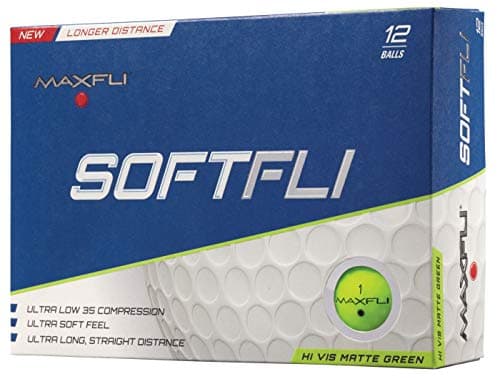
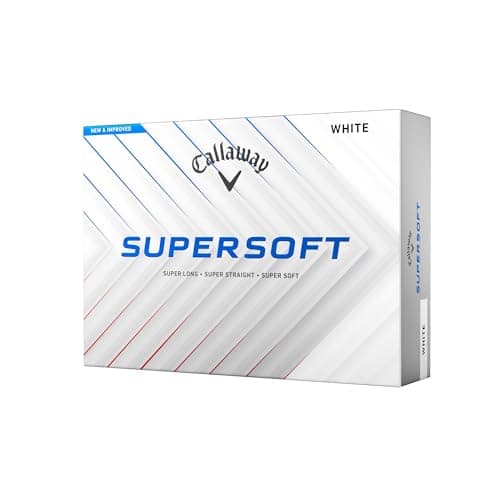
A high handicap is not a character flaw, it is a set of ball-flight facts: you hit the face off-center more often, you impart more sidespin than you mean to, and you lose a few balls a round. Every one of those facts argues for the same thing — a low-spin, soft, two- or three-piece ball with a durable cover— and every one of them argues against the urethane tour ball that golf marketing spends its entire budget on. Our top pick is the Callaway Supersoft, and it costs about a third of what a tour ball does.
This is the same physical problem this site covers for senior golfers, described without the age word. A slower swing and a high handicap both mean you cannot compress a firm ball and you do not need the spin a tour ball sells. If you are over sixty, our best golf balls for seniors is the version of this page written for you; if your scores are high because the ball keeps going right, go straight to best golf balls for a slice. This page is for the player whose misses are not all the same shape — a bit of everything, several times a round.
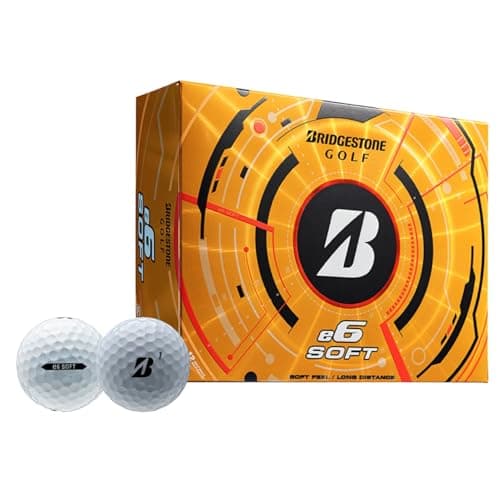
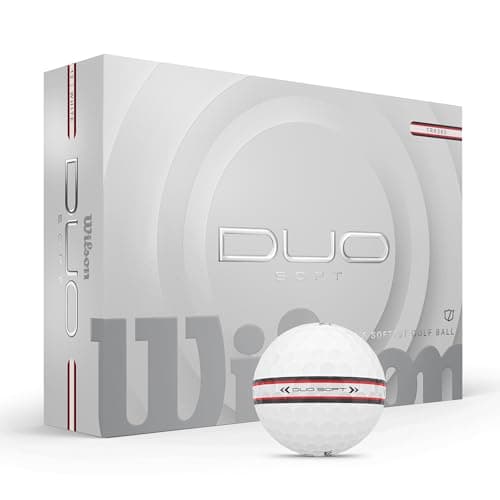
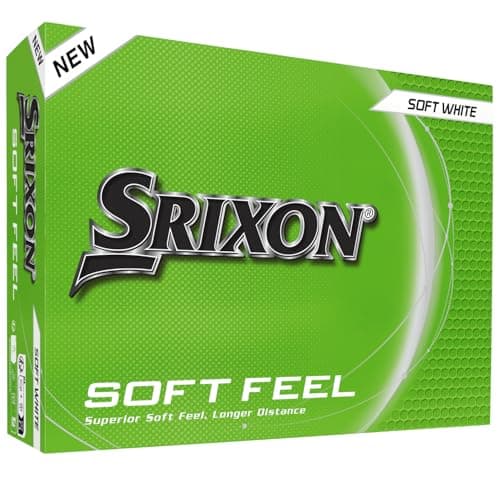
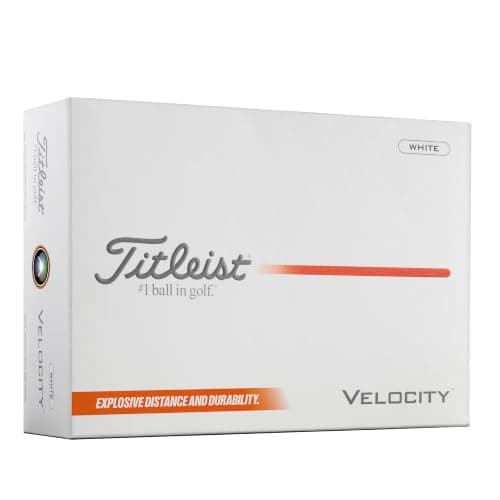
The ranking below reads: the Supersoft first, because it is the straightest-flying soft ball in wide distribution and it is cheap; the Bridgestone e6 Soft second because it is built specifically to reduce sidespin; the Wilson Duo Soft third as the softest core here for the slowest swings; the Srixon Soft Feel fourth as the best all-round feel at the price; the Titleist Velocity fifth for the player who wants distance and a tougher cover; and the Maxfli SoftFli sixth as the cheapest ball on this page that is still a real golf ball.
We have not hit any of these in a robot or a launch monitor, and we are not going to imply we have — see how we pick. What follows is the published compression and construction of each ball, read against what a mis-hitting player actually needs, plus the one piece of arithmetic that settles the argument faster than any spec: what a lost ball costs you.
The arithmetic that decides it
Start here, because it ends the debate for most people. Count the balls you genuinely lose in a round — water, trees, the long stuff, the one that never turns up. If the honest number is three or four, then over a season of thirty rounds you are losing roughly a hundred balls.
At tour-ball money that is a four-figure habit. At the price of the balls on this page it is a fraction of that, and the difference is a new driver every year or two. There is no spec on any urethane ball that returns that money to a player who cannot reliably find the fairway. The premium ball is sold on short-game spin around the green — a benefit that is real, and that requires you to be hitting enough greens to use it.
This is also why we do not quote prices in the text. The live number next to each ball below comes straight from the retailer and is stamped with the day we checked it; a price written into an article is a price that has already rotted. Work out your own cost per round from the figures you see, not from a number an article typed six months ago.
Low spin, not high spin
Spin is the one spec that separates a ball built for a good player from a ball built for the rest of us, and the direction most golfers assume is backwards. Sidespin is what turns a slightly open face into a slice; a ball that generates less spin generates less sidespin, so the same bad swing finishes closer to the fairway. A firm urethane tour ball does the opposite: it grips the face and faithfully reproduces whatever you gave it, including the mistake.
A two-piece ionomer or Surlyn-covered ball with a soft core is the low-spin recipe, and it is what most of this list is. The Bridgestone e6 Soft is the most explicit about it — straighter flight is the stated design brief rather than a side effect. Our low vs high compression explainer has the mechanism if you want it in detail, and two-piece vs three-piece covers the construction side.
Soft enough to compress, which depends on your speed and not your handicap
Compression and handicap are different things, and conflating them is the most common error in this category. A low-compression ball helps a player whose clubhead speed is modest, because a ball only returns the energy you put into it. Plenty of high handicappers swing hard and crookedly; plenty of low handicappers swing gently and straight.
So be honest about your driver speed as well as your scores. If you are under about 90 mph, the softer end of this list — the Duo Soft, the Supersoft — is doing real work for you. If you swing hard and simply miss a lot, you want the low spin and the durable cover more than the soft core, and the Velocity moves up your list. Our what compression do I need? guide and the compression chart give you the bands.
The cover has to survive you
A detail the tour-ball reviews never have to think about: when you mis-hit, you also scuff. Thin strikes off a cart path, clips off a tree, a wedge taken too steeply — a soft urethane cover shows all of it within a few holes, and a ball with a cut cover flies worse. Ionomer and Surlyn covers are harder and shrug it off, which means the ball you tee up on the 12th is the same ball you teed up on the 1st.
Durability is also why we have not stacked this list entirely with the very softest balls. There is a trade-off: the softest covers feel best on short putts and mark up fastest. The Velocity sits at number five precisely because it goes the other way — firmer, tougher, longer, less sweet off the putter.
What to ignore
Ignore the tour player on the box. They are not generating your spin, your speed, or your miss.
Ignore dimple-count claims. No manufacturer publishes a comparison you could act on, and no independent test has shown a dimple pattern that rescues a bad swing.
Ignore “tour” in a ball name under twenty-five dollars a dozen. It is a marketing word at that price, not a construction claim.
Do not ignore color.If you lose balls partly because you cannot follow them, a high-visibility ball is a genuine fix and several of these come in matte yellow — see best high-visibility golf balls.
Who should skip this page
If you are hitting most greens in regulation and your short game is where you score, you have outgrown this list — the spin a urethane ball gives you around the green is worth paying for, and you are not losing enough balls for the economics to bite. And if you genuinely only ever miss one way, a page written for that specific miss will serve you better than this general one: balls for a slice if it goes right, balls for distance if it simply does not go far enough.