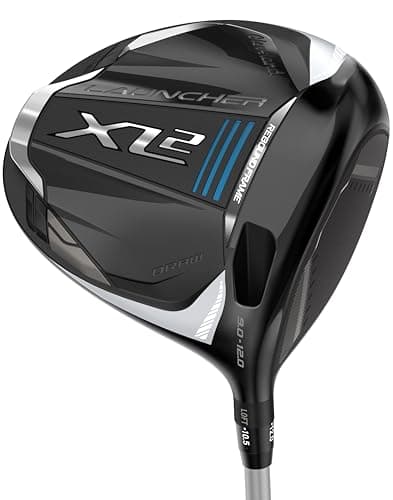
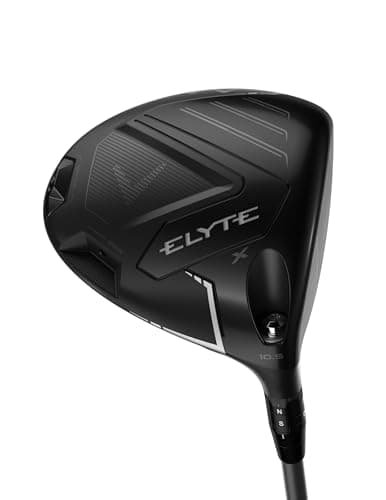
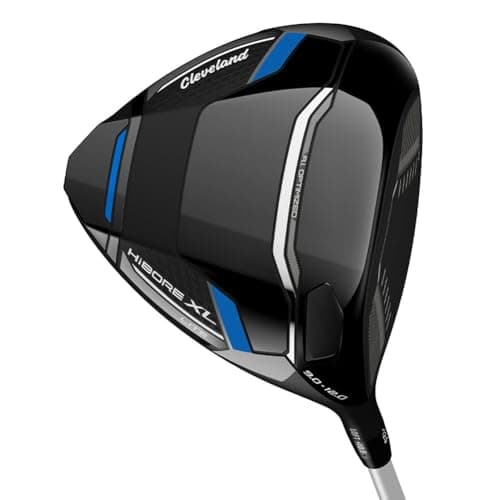
The best driver shaft for most seniors is a 40-gram-class graphite shaft in senior (A) or light flex, and you should not have to buy it separately. Cleveland fits the Aldila Ascent PL 40 to both the HiBore XL Lite and the Launcher XL 2 in senior flex; Callaway fits the Mitsubishi Vanquish PL 40 to the Elyte X in light flex. Those are the shafts a fitter would reach for at a 75 mph swing, and they come in the box.
The search for a “best driver shaft for seniors” usually starts because a golfer has read that the shaft is the engine of the club, which is true, and concluded that the fix is a $300 aftermarket shaft, which usually is not. An aftermarket shaft is worth it when you love your driver head and the stock shaft is wrong for you. For everyone else, the cheaper and more reliable move is to buy a driver whose maker already chose a senior-appropriate shaft and built the head, loft and grip around it. That is what this page ranks. If you want the wider driver picture — forgiveness, anti-slice, women’s builds — it is on best drivers for seniors.
What to look for in a senior driver shaft
1. Weight, first. Graphite driver shafts run from under 50 grams to over 70, and the number matters more for a slower swing than any other on the spec sheet. Cleveland publishes the HiBore XL Lite at a total of 291 grams in senior flex — the shaft is 40 of those, and the stock Regular and Stiff Launcher XL 2 shaft, the Mitsubishi Tensei AV Blue, is a 55-gram class by comparison. Fifteen grams does not sound like much until you remember that the shaft is the part of the club moving fastest. Our shaft weight guide covers what those grams do to speed and tempo.
2. Flex, matched to speed. Senior (A) flex is a swing-speed band, not an age. GOLF.com’s fitting chart puts it between 72 and 83 mph with a driver, with ladies (L) below that and regular above. Because there is no industry standard, one maker’s A can measure like another’s R, which is one more reason to buy the shaft the head was designed with. Find your band on the swing speed and shaft flex chart, and if you are stuck between two, senior flex vs regular flex settles the common case and senior flex vs ladies flex the less common one.
3. Balance, which most charts ignore. A light shaft can make a driver feel head-heavy and hard to start back. Cleveland’s answer on the Launcher XL 2 is an 8-gram weight in the butt end of the shaft — Action Mass CB — which the company says makes the club feel lighter on the takeaway and keeps it stable through impact. It is not a shaft spec in the catalog sense, but it changes how the shaft feels more than a few grams of flex do.
4. Torque and kick point, last. Torque is how much the shaft twists; a low kick point stores energy closer to the head and launches higher. Both help a slow swing, and both are already built into the senior-flex shafts above. They are worth knowing about if you go aftermarket; they are not worth paying extra for otherwise.
What a mile an hour is worth
TrackMan’s rule of thumb is about three yards of driver distance for every mile an hour of club speed. A lighter shaft does not add speed by magic, but it removes weight you were struggling to accelerate, and for a 75 mph swing a couple of miles an hour is the difference between a drive that carries a bunker and one that does not. The rest of the distance a senior has lost is a separate question, and golf club distances for seniors puts real numbers on it.
The three drivers, and which shaft each ships with
The Cleveland HiBore XL Lite is the lightest: 291 grams total in senior flex on the Aldila Ascent PL 40, with a Golf Pride Tour Velvet 360 Lite grip so the saving is at both ends. Cleveland describes the swing-speed target as “moderate” and the head as draw-biased, high-launch and 460cc. It is the pick if weight is your whole problem.
The Cleveland Launcher XL 2 uses the same 40-gram Ascent PL in senior flex, adds the 8-gram counterbalance and a higher-MOI head with twelve hosel positions. It is the pick if forgiveness matters as much as weight; it is our most forgiving driver for seniors for that reason.
The Callaway Elyte X ships in light flex on the Mitsubishi Vanquish PL 40 with a 12-degree head that promotes a slight draw. It is the pick for a slice, and the shaft is the same 40-gram class as Cleveland’s. Callaway’s own site only showed the light flex configuration when we checked, so confirm the flex on the listing before you buy.
When an aftermarket shaft is the right answer
You love your head and only the shaft is wrong. A reshaft at a club builder costs less than a new driver and keeps the club you know. Ask for a 40- to 50-gram shaft in A flex with a mid or low kick point, and have them check the swing weight afterward.
You have been properly fitted. A launch monitor session that tries three or four shafts in your head is the only way to know that a specific aftermarket shaft beats the stock one. Without it, the stock senior shaft on a modern driver is a better bet than a guess.
Skip this
Skip a “senior” aftermarket shaft bought on the letter alone. Because there is no standard, an A from one maker can be stiffer than the R you are replacing. Buy on the published weight and the maker’s own swing-speed range, or buy the whole driver.
Skip going lighter than 40 grams without trying it. Very light shafts can lose the feel of where the head is, and a swing that cannot feel the head tends to get quick. The 40-gram class is where the major brands landed for their senior builds, and that is not an accident.