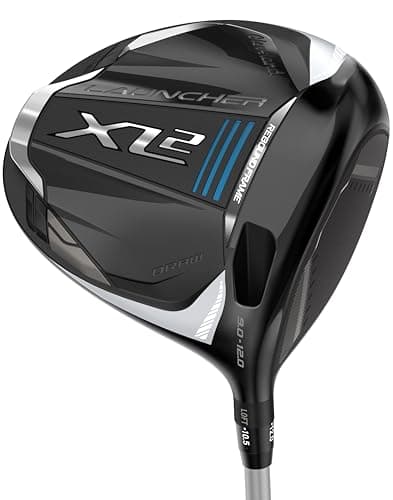
The most forgiving golf clubs for a senior are not a set. They are five separate answers: the Cleveland Launcher XL 2 driver, the Cleveland Launcher Halo XL hybrid, the Cleveland Halo XL Full-Face irons, the Cleveland Smart Sole wedge in graphite and the TaylorMade Spider GT Max putter. Each one is the most forgiving club we could find for its slot on the manufacturer’s own published design, and each one fixes a different miss.
That matters because “forgiving” gets used as if it were a single dial. It isn’t. A forgiving driver is a head with a high moment of inertia, so a strike off the heel or toe doesn’t twist the face and send the ball sideways. A forgiving iron or hybrid is mostly a sole — a shape that skids across the turf instead of digging when the club arrives a fraction early, which is the miss a slower, shallower swing makes most often. A forgiving wedge is a wide sole that cannot chunk a chip. And a forgiving putter is a heavy, stable head that starts the ball on line when the stroke wanders. If you already own a decent complete senior set, the cheapest fix is almost always the one club below whose miss you recognize — not a new bag.
What we ranked on, slot by slot
Driver: published MOI and where the weight sits. Cleveland describes the Launcher XL 2 head as an “improved XL Head design” with “a low, deep weight profile” that “provides more MOI, stability, and forgiveness” than the previous generation, and the original XL was the highest-MOI driver the company had built. The number we care about is the second one: low and deep weight means a high launch without you having to help it, which is the whole game for a swing that has slowed.
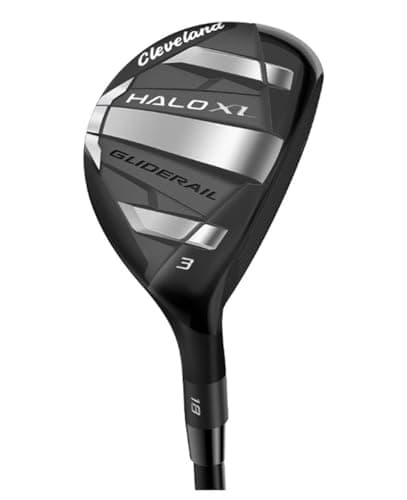
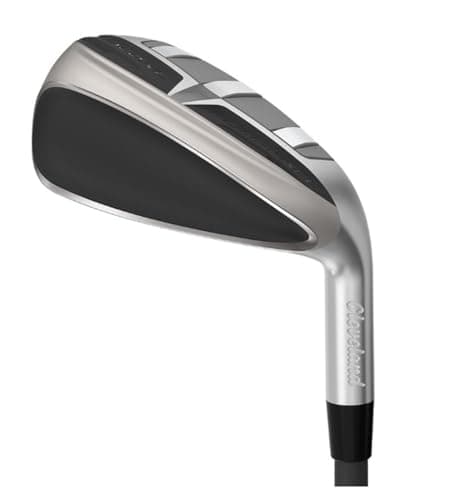
Hybrid and irons: the sole, then the flex. A senior swing tends to arrive at the ball on a shallower angle, and the miss that costs the most is the club catching the turf early. Cleveland builds a three-rail Gliderail sole into the Halo XL hybrid for exactly that, and the Halo XL Full-Face irons run the same idea through a set: GlideRail on the long irons “promotes solid contact,” a V-shaped sole on the mid-irons to “cut through turf,” and a three-tiered sole on the short irons. Both are sold in a genuine A flex off the shelf, which almost nothing this forgiving is — we explain why that matters in senior flex vs regular flex.
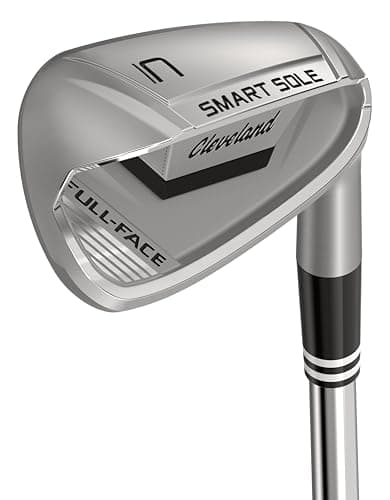
Wedge: sole width, and whether it comes in graphite. The chunked chip is the most common short-game miss on a slower swing, and no amount of forgiveness in the face fixes it. A wide three-tiered sole does. The Smart Sole is the widest we know of, and this is the graphite version, so the club stays light enough to swing smoothly around the green.
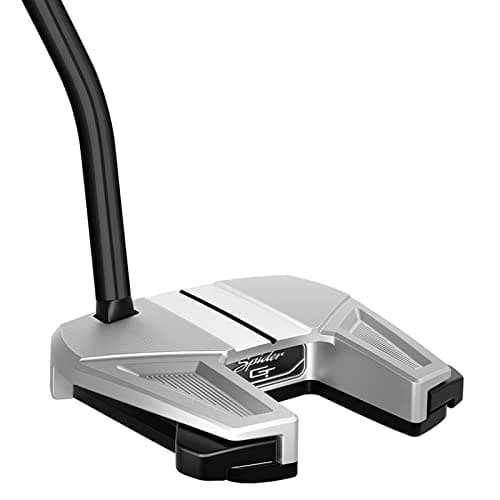
Putter: head stability and aim. A wandering stroke needs a head that resists twisting and a top line that makes aiming obvious. The Spider GT Max carries two 40-gram tungsten weights that Today’s Golfer reports can be positioned to slow face rotation for a player who misses left, or the reverse for a player who misses right. That adjustability is the reason it beats the softer-feeling mallets on our best putters for seniors list for this particular job.
Counterbalancing, across the bag. Both the Launcher XL 2 and the Halo XL irons carry Cleveland’s Action Mass CB — an 8-gram weight in the butt end of the shaft that the company says makes the club feel lighter on the takeaway and stay stable through impact. For a golfer whose wrists tire on the back nine that is a forgiveness feature too, even if it never shows up in an MOI number. Our shaft weight guide covers what the balance point actually does.
The picks
The Launcher XL 2 is the driver for a golfer who has stopped finding the middle of the face. Cleveland pairs the high-MOI head with an adjustable hosel offering twelve positions and, in senior flex, the 40-gram Aldila Ascent PL 40 shaft. It is not the lightest driver Cleveland makes — that is the HiBore XL Lite — but it is the most forgiving, and if your miss is off-center rather than short, it is the one to buy.
The Launcher Halo XL hybrid replaces the long iron you have already given up on. Twenty-four degrees, an A-flex shaft, and a sole with three rails that skid rather than dig. It is the club on this page we would hand to the widest range of players, and it costs a fraction of a new set. If your miss with a hybrid is a slice rather than a chunk, the offset Tour Edge Hot Launch Max D is the alternative.
The Halo XL Full-Face irons are the set answer for a player who finds a conventional cavity-back iron still too demanding. Every head is a hybrid-iron; the grooves run the full width of the face so an off-center strike still spins; and the sole changes shape as the lofts get shorter. Cleveland lists the set in 5–PW plus gap wedge, 4–PW plus gap and sand, or a five-club 6–PW, all with the UST Helium Nanocore 60 graphite shaft. If a whole set of hybrid-irons is what you are after, our best hybrid iron sets for seniors puts this one against the cheaper all-hybrid options.
The Smart Sole Full-Face wedge in graphite is the most forgiving short-game club we know of, and the graphite shaft is why we chose it over the steel version. It is a 42-degree chipping club, not a sand wedge; if you want a forgiving sand wedge with spin, the CBZ Full-Face 54 in graphite is the pick on our wedges page.
The Spider GT Max is the stable-head putter, with the True Path alignment stripe and the Pure Roll 2 insert. It is the most expensive club on the page, and the softest-feeling putter here is a different one — the Odyssey Ai-Dual Double Wide — but for a stroke that wanders, stability wins.
How to use this page without buying five clubs
Name your miss first. Off-center driver strikes want the high-MOI head. Chunked hybrids and irons want the rail sole. Fat chips want the wide wedge. Putts that start off line want the stable putter. Most seniors have one of these problems, not all five, and one club solves it for a lot less than a set. If you are not sure which miss is costing you most, our how to choose clubs for a slower swing guide walks through the diagnosis.
Check the flex before the forgiveness. Every club here is available in a senior (A) or light shaft, and that is deliberate: a forgiving head on a shaft too stiff to load is still a low, weak shot. Find your band on the swing speed and shaft flex chart and buy the flex that matches, or read are senior flex shafts worth it if you are on the fence.
Forgiveness does not add distance on its own. It stops you losing it on a bad strike. If every shot is well struck and simply shorter than it used to be, the fix is loft, shaft weight and ball compression, not MOI — start at what loft driver should a senior use and the best golf balls for seniors.
Mind the grip while you are at it. None of these clubs ship with an arthritic-size grip. If sore hands are part of why the strike has become inconsistent, budget for a regrip — the best golf grips for arthritis explains which size — or look at the best golf clubs for arthritis, where grip size was the first criterion.
Skip this
Skip the “most forgiving” label on a complete boxed set. Boxed sets are forgiving in the sense that every head is oversized, and for a beginner or a returning player that is exactly right. But the sets are built to a price, and the sole designs, counterbalancing and adjustable weighting above are the first things cut. If you already own a boxed set and one club in it keeps letting you down, replace that club with the pick above rather than the whole set again.
Skip forgiveness you cannot feel. MOI figures keep climbing, but the difference between a very forgiving driver and the most forgiving one is measured in a few yards of dispersion on a bad strike. If your current driver is a modern 460cc head and you hit it fine, the upgrade is not worth the money — spend it on the slot that is actually losing shots.