Skip to content
Fairway&Fescue

The Eyes · Rangefinders & Watches

Best Golf Sunglasses for Seniors

Aging eyes lose contrast before they lose anything else, and a golf course is nothing but shades of green. Here is what actually helps — and why the polarized pair everyone recommends may be working against you.

By Stephen V.Updated How we pick
#ad

We earn a commission when you buy through our Amazon links, at no extra cost to you. It never changes our rankings — and we'll tell you when the cheaper ball or club is the better buy. How this works.

Almost every “best golf sunglasses” list opens by telling you to buy polarized. For a senior golfer that advice is, more often than not, exactly backwards — and the brands that take golf most seriously agree. Oakley does not polarize its golf lens, and it says plainly why: removing every reflection also removes the surface detail you read a green and track a ball with. So the first question on this page is not which pair, it is which problem you are solving. If what you have lost is contrast, you want an unpolarized golf tint. If what you have lost is tolerance for bright light, you want polarization and you should accept the trade. Those are different purchases, and we have ranked for both.

The second question is whether you wear glasses. If you do — and most golfers past sixty-five do — then half the sunglasses market is irrelevant to you, because a wrap frame does not go over your own spectacles. That is why two of the six picks below are fitovers: purpose-built pairs that sit over a prescription frame. Nobody writing a general golf-sunglasses roundup bothers with them. For this reader they are the most useful thing in the category.

Our top pick is the Tifosi Veloce with the Enliven Golf lens, because it is the cheapest pair here that genuinely helps you see a golf course: a contrast-enhancing, non-polarized golf tint in a 28-gram frame. If you wear glasses, skip straight to the Cocoons Pilot fitover at number two. If money is no object and you want the best course lens made, the Oakley Flak 2.0 XL in Prizm Golfis at number three. And if bright light has become genuinely painful — which it often is in the months after cataract surgery — go to the Maui Jim Red Sands and ignore the contrast argument entirely.

A note on what this page is not. We have not tested these on a course, and we are not going to pretend otherwise — see how we pick. What we have done is read the published lens specifications, the manufacturers’ own reasoning about polarization, and the American Academy of Ophthalmology’s guidance on where polarized lenses help and where they get in the way, then matched all of it against the specific thing that changes in an older eye. If the yardage rather than the light is your struggle, our easiest-to-read rangefinders is the page you actually want.

The short answer

Quick picks

#ProductBest forScorePrice
01
Tifosi Tifosi Veloce (Enliven Golf Lens)
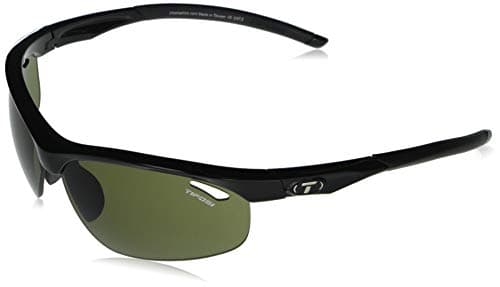
Tifosi Veloce (Enliven Golf Lens)

A golf-specific contrast lens that is deliberately not polarized, in a 28-gram frame, for a fraction of what the famous pair costs. For most senior golfers this is simply the right answer.

Most senior golfers, at the price
9.0
$49.95Amazon
02
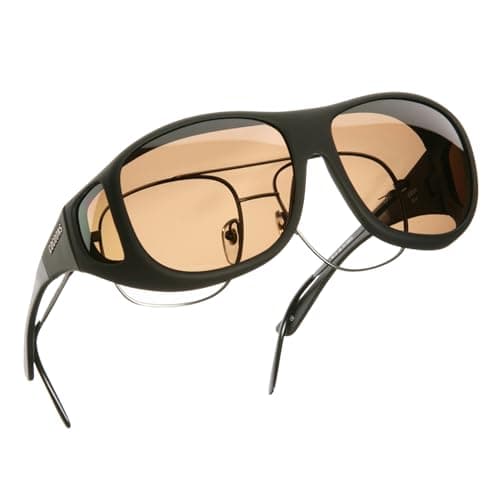
Cocoons Cocoons Pilot Fitover (Polarized Amber, L)
Cocoons Pilot Fitover (Polarized Amber, L)

The pair that goes straight over the glasses you already wear. If you have a prescription and no interest in contacts, this is the category — and the Pilot is the one built for a large frame.

Wearing over prescription glasses
8.5
$74.95Amazon
03
Oakley Oakley Flak 2.0 XL (Prizm Golf)
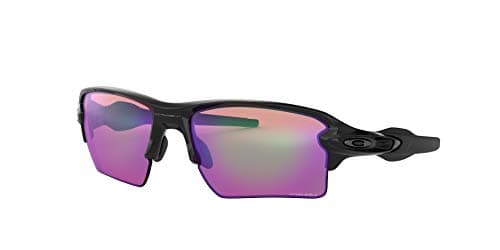
Oakley Flak 2.0 XL (Prizm Golf)

The most course-specific lens in golf, in the taller XL frame. Prizm Golf is engineered to separate the shades of green underfoot, and Oakley leaves it unpolarized on purpose.

The best lens, and a larger face
8.3
$214.00Amazon
04
Maui Jim Maui Jim Red Sands (Neutral Grey Polarized)
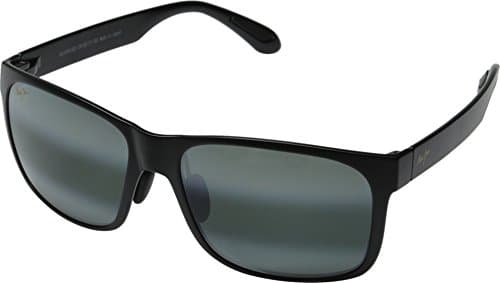
Maui Jim Red Sands (Neutral Grey Polarized)

The most comfortable pair here for an eye that light genuinely hurts. Maui Jim's polarization blocks 99.9% of reflected glare, and the optics are the cleanest on this page.

Eyes that bright light hurts
8.0
$259.00Amazon
05
Solar Shield Solar Shield Fits-Over (Polycarbonate II, Smoke)
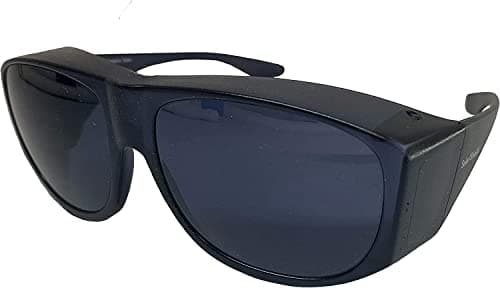
Solar Shield Fits-Over (Polycarbonate II, Smoke)

The cheapest honest way to find out whether a fitover suits you before spending real money on one. Plain smoke polycarbonate, no polarizer, pocket change.

Trying a fitover cheaply
7.8
$15.99Amazon
06
Duduma Duduma Polarized Sports Sunglasses
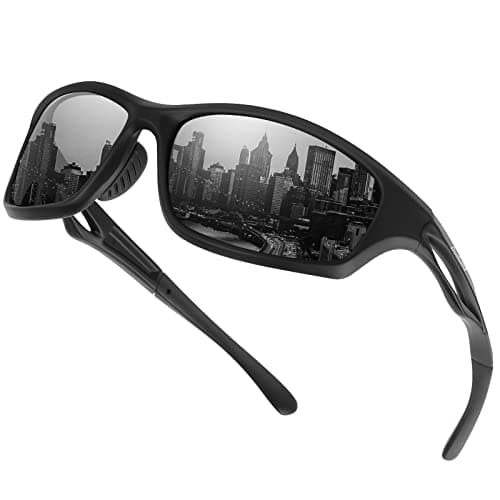
Duduma Polarized Sports Sunglasses

The cheap wrap that is genuinely worth owning — as the spare pair that lives in the bag, so a forgotten set of sunglasses never costs you a squinting round.

The spare pair in the bag
7.5
$19.79Amazon

#ad · Live prices from the Amazon Product API, as of October 4, 2026. Where we have no verified live price, we show none — we would rather leave a gap than print a number that has rotted.

In detail

The picks, in full

01
Tifosi Tifosi Veloce (Enliven Golf Lens)

Most senior golfers, at the price

Tifosi Veloce (Enliven Golf Lens)

Enliven Golf lens, non-polarized28 g Grilamid TR-90 frameVented half-frame, adjustable armsHydrophilic nose and temple pads
9.0/10

A golf-specific contrast lens that is deliberately not polarized, in a 28-gram frame, for a fraction of what the famous pair costs. For most senior golfers this is simply the right answer.

Contrast on grass
9
Glare comfort
8
Comfort over 18
9
Value
10

Pros

  • Tifosi's Enliven Golf lens is a contrast-enhancing tint rather than a polarizer, so it lifts the greens apart without flattening the sheen you read a putt from
  • At 28 grams it is light enough to forget you have them on, which matters over four hours and on the bridge of a nose that has worn glasses all day
  • The hydrophilic pads grip harder as you perspire, so they stay put on a hot round instead of creeping down your nose

Cons

  • A half-frame wrap is a sportier look than some golfers want walking into the clubhouse
  • This build ships with the one golf lens — the three-lens interchangeable Veloce is a separate listing if you also want a low-light option

Skip this if…

…you wear prescription glasses and have no intention of switching to contacts for a round. Nothing about a wrap frame goes over your own glasses — buy one of the fitovers below instead.

$49.95View on Amazon

Price as of October 4, 2026. Prices change — Amazon's is the one that counts.

#ad · we may earn a commission from this link to Tifosi Veloce (Enliven Golf Lens)

02
Cocoons Cocoons Pilot Fitover (Polarized Amber, L)

Wearing over prescription glasses

Cocoons Pilot Fitover (Polarized Amber, L)

Fits eyewear up to 139 x 50 mmPolarized amber lensSide shields and light blockers100% UVA/UVB
8.5/10

The pair that goes straight over the glasses you already wear. If you have a prescription and no interest in contacts, this is the category — and the Pilot is the one built for a large frame.

Fits over glasses
10
Glare comfort
9
Contrast on grass
7
Value
8

Pros

  • Cocoons publishes the actual opening — the Pilot (L) takes eyewear up to 139 mm wide by 50 mm high, so you can measure your own glasses before you order instead of guessing
  • Side shields plus top and bottom light blockers kill the peripheral glare that leaks in around an ordinary pair, and that leak is the part that makes a bright round tiring
  • An amber tint raises contrast and depth perception rather than just dimming everything, so the ground in front of you reads better, not darker

Cons

  • The lens is polarized — good for raw glare comfort, less good for reading subtle sheen on a green, and it can dim an LCD rangefinder or phone screen
  • A fitover sits proud of your face by design. It is bulkier than a normal pair and it looks it

Skip this if…

…you do not wear glasses on the course. You would be paying for the fitover engineering and carrying the bulk for nothing — the Tifosi above is lighter, cheaper and has the better golf lens.

$74.95View on Amazon

Price as of October 4, 2026. Prices change — Amazon's is the one that counts.

#ad · we may earn a commission from this link to Cocoons Pilot Fitover (Polarized Amber, L)

03
Oakley Oakley Flak 2.0 XL (Prizm Golf)

The best lens, and a larger face

Oakley Flak 2.0 XL (Prizm Golf)

Prizm Golf lens, non-polarized59 mm lens, 39 mm tall (XL)O Matter frame, Unobtainium padsMedium-to-large face fit
8.3/10

The most course-specific lens in golf, in the taller XL frame. Prizm Golf is engineered to separate the shades of green underfoot, and Oakley leaves it unpolarized on purpose.

Contrast on grass
10
Glare comfort
8
Comfort over 18
9
Value
6

Pros

  • Prizm Golf is built to pull the fairway, fringe, semi-rough and rough apart as distinct shades, which is exactly the contrast an older eye has lost
  • Oakley deliberately does not polarize the Prizm Golf lens — its own reasoning is that killing every reflection costs you the surface detail you read a green and track a ball against the sky with
  • The XL frame runs 39 mm tall rather than the standard Flak's shorter lens, so it covers more and suits a medium-to-large face without a gap at the brow

Cons

  • The second-most expensive pair here, for a lens advantage that is real but not four-times real
  • The Unobtainium earsocks grip well and are a consumable — they perish eventually and need replacing

Skip this if…

…glare comfort is your actual complaint rather than contrast. An unpolarized lens is the right call for reading a course and the wrong call if bright light genuinely hurts — the Maui Jims or the Cocoons are kinder to a light-sensitive eye.

$214.00View on Amazon

Price as of October 4, 2026. Prices change — Amazon's is the one that counts.

#ad · we may earn a commission from this link to Oakley Flak 2.0 XL (Prizm Golf)

04
Maui Jim Maui Jim Red Sands (Neutral Grey Polarized)

Eyes that bright light hurts

Maui Jim Red Sands (Neutral Grey Polarized)

PolarizedPlus2, 99.9% reflected glare blockedMauiPure lens material59-17-140 mm, large fitRx range +3.00 to -5.50
8.0/10

The most comfortable pair here for an eye that light genuinely hurts. Maui Jim's polarization blocks 99.9% of reflected glare, and the optics are the cleanest on this page.

Glare comfort
10
Comfort over 18
9
Contrast on grass
8
Value
5

Pros

  • If you are recently past cataract surgery, or simply find a bright afternoon painful, maximum glare reduction beats maximum contrast — and this is the pair that delivers it
  • MauiPure sits between glass and ordinary plastic: close to glass clarity without glass weight, with an anti-reflective back coating that stops glare bouncing off the inside of the lens
  • Maui Jim will glaze these to a prescription from +3.00 to -5.50, which makes them a real alternative to a fitover for a moderate prescription

Cons

  • Polarized, in a neutral grey tint — the honest trade is that you give up the green-reading contrast the Oakley and Tifosi lenses are built to give you
  • The highest price on this page by a wide margin, and grey polarized is the least golf-specific lens here

Skip this if…

…reading greens and tracking the ball are what you want help with. Grey polarized is the wrong tool for that job at any price — spend a quarter of the money on the Tifosi and get a better golf lens.

$259.00View on Amazon

Price as of October 4, 2026. Prices change — Amazon's is the one that counts.

#ad · we may earn a commission from this link to Maui Jim Red Sands (Neutral Grey Polarized)

05
Solar Shield Solar Shield Fits-Over (Polycarbonate II, Smoke)

Trying a fitover cheaply

Solar Shield Fits-Over (Polycarbonate II, Smoke)

Fitover, 50-15-125 mmSmoke polycarbonate lensExceeds ANSI Z80.3-1996 for UVWear over glasses or alone
7.8/10

The cheapest honest way to find out whether a fitover suits you before spending real money on one. Plain smoke polycarbonate, no polarizer, pocket change.

Fits over glasses
9
Glare comfort
7
Contrast on grass
5
Value
10

Pros

  • It costs so little that discovering fitovers are not for you is not a real loss — which is the whole reason it earns a place on this list
  • This listing is a plain smoke lens with no polarizer, so you keep the sheen on a green and your rangefinder screen stays readable
  • Solar Shield states the lens exceeds ANSI Z80.3-1996 for UV blocking, and the line is widely recommended for cataract patients

Cons

  • A plain smoke tint dims the course evenly instead of lifting contrast — it makes bright light bearable and does nothing to help you read a green
  • Build and finish are what the price suggests. The Cocoons feel like a product; these feel like a part
  • The opening is smaller than the Cocoons Pilot, so a large prescription frame may not fit. Measure yours first

Skip this if…

…you already know a fitover is what you want and you will wear it every round. Buy the Cocoons and be done — the coverage, the lens and the comfort are in a different class.

$15.99View on Amazon

Price as of October 4, 2026. Prices change — Amazon's is the one that counts.

#ad · we may earn a commission from this link to Solar Shield Fits-Over (Polycarbonate II, Smoke)

06
Duduma Duduma Polarized Sports Sunglasses

The spare pair in the bag

Duduma Polarized Sports Sunglasses

Polarized lensTR90 frameUnisex sport wrapSeveral frame and lens colors
7.5/10

The cheap wrap that is genuinely worth owning — as the spare pair that lives in the bag, so a forgotten set of sunglasses never costs you a squinting round.

Glare comfort
8
Comfort over 18
7
Contrast on grass
6
Value
9

Pros

  • Cheap enough to leave in the bag permanently, which is the single most useful thing a spare pair can be
  • A TR90 frame is the same family of material the Tifosi uses — light, and it survives being sat on in a cart
  • Polarized at this price is unusual; most sunglasses this cheap are a dark tint and nothing more

Cons

  • Polarized, with no golf-specific tint — it dims glare and does nothing for the contrast between fairway and fringe
  • Generic sizing. It is a one-shape-fits-most wrap, so it may sit high or wide on a narrower face
  • Not a golf product. It is a sport wrap that lists golf among a dozen uses, and it reads that way on the course

Skip this if…

…this is going to be your only pair. Buy something built for the job — the Tifosi is the cheapest lens on this page that genuinely helps you see a golf course.

$19.79View on Amazon

$26.9927% off

Price as of October 4, 2026. Prices change — Amazon's is the one that counts.

#ad · we may earn a commission from this link to Duduma Polarized Sports Sunglasses

The one thing that changes in an older eye, and why a golf course is the worst place for it

Contrast sensitivity — your ability to separate two things that are nearly the same brightness — declines with age well before sharpness does. You can still read the scorecard. What you have lost is the ability to tell the fairway from the first cut, to see the subtle sheen that tells you a green runs away from you, and to pick a white ball out of a pale sky. A golf course is almost entirely made of adjacent shades of green and a ball the color of a bright cloud. It is close to a worst case for the one thing that goes first.

That is why a golf-specific lens is not marketing. A contrast tint filters some of the excess green and lifts the reds and yellows, which pushes those adjacent greens apart and makes the ball stand out against both turf and sky. A plain grey lens does none of that. It makes everything equally dimmer, which helps your comfort and does nothing at all for your contrast.

Why polarized is usually the wrong answer here

It flattens the information you putt from.Polarization works by cutting horizontally reflected light. On a green, some of that reflected light is the sheen that tells you which way the grain lies and how the surface tilts. Oakley’s stated reason for leaving the Prizm Golf lens unpolarized is exactly this: golf is one of the few sports where you need some glare to perceive undulation and to follow a ball against a bright sky.

It can switch off your rangefinder.The American Academy of Ophthalmology lists LCD screens among the places polarized lenses cause trouble — “they can make screens hard to read, including car dashboard controls, ATM cash machines, cell phones, some watches.” A GPS watch face and a handheld golf GPS are the same technology. If you have ever tilted your head to read a screen through sunglasses, that is polarization doing it. On this site that matters more than usual, because we spend a whole hub telling you to buy a readable GPS watch.

But if light actually hurts, polarized wins.There is a real exception and it applies to a lot of readers here. If you are recovering from cataract surgery, or you simply find a bright afternoon painful, glare comfort beats green-reading every time — you cannot read a putt you are squinting through. Eye surgeons routinely advise UV-blocking sunglasses for about four weeks after cataract surgery, and generally suggest a grey or amber tint and a wrap shape that blocks light from the sides. In that case buy the polarized pair, enjoy the comfort, and accept that you have traded away some contrast.

If you wear glasses: measure before you buy

A fitover is the honest solution for a prescription wearer who is not going to switch to contacts for a round, and the only spec that decides whether it works is the size of the opening. Cocoons publishes it: the Pilot in size L takes eyewear up to 139 mm wide by 50 mm high. Lay a ruler across your own frames, outside edge to outside edge, and across one lens top to bottom, and you will know before you order rather than after. The rule of thumb from the fitover trade is that you want roughly 2–3 mm of clearance in each direction — enough to go on without pressing on your frames, not so much that it rattles.

The second thing to know is that fitovers are almost all polarized, including both of our picks’ premium option. If you want the glare comfort, that is fine. If you specifically want an unpolarized lens over your glasses, the cheap Solar Shield at number five is a plain smoke polycarbonate — which is a genuine reason to pick it beyond the price. The third option, if your prescription is moderate, is to skip fitovers entirely and have a real pair glazed: Maui Jim will build the Red Sands from +3.00 to -5.50.

UV protection is not the thing you are choosing between

Every pair on this page blocks 100% of UVA and UVB, and so does almost every pair sold by a reputable brand. UV protection is not a premium feature, it is not a function of how dark or how expensive the lens is, and it is not the same thing as polarization — the Academy of Ophthalmology is blunt about that: “Just because sunglasses block UV rays doesn’t mean they’re polarized. Check the label.” Treat full UV blocking as the floor you refuse to go below, then spend your decision on the lens tint and the fit, which are the parts that actually differ.

What not to spend money on

Don’t pay for a darker lens. Darkness is comfort, not performance. Past a certain point a very dark lens costs you detail in shade, under trees and in the last hour of light, which is when an older eye is already struggling most.

Don’t pay for interchangeable lens sets you will not change. Three-lens kits are good value on paper and most people use one lens forever. Buy the kit only if you genuinely play at dawn or dusk.

Don’t buy a fitover if you don’t wear glasses. You are carrying the bulk and the side shields for a problem you do not have.

Who should skip this page entirely

If your real complaint is that you cannot judge the distance rather than that you cannot see the ground, sunglasses are the wrong purchase and a yardage device is the right one — start at best rangefinders for seniors. If you are losing the ball off the tee because it goes sideways rather than because you cannot follow it, the fix is in the bag, not on your face: see best drivers for seniors. And if you have a genuine medical light-sensitivity problem rather than ordinary aging, that is a conversation with your optometrist, not a shopping decision — a prescription tint or a medical filter may be a better answer than anything on this list.
How we picked this

We haven't hit this gear — and we say so

We compiled the published manufacturer specifications — shaft weight and flex, loft, grip diameter, ball compression, cart weight — did the swing-speed and compression arithmetic, cross-read the owner manuals, and scored each pick against a published rubric. The scores are judgments from documented research — they are notlab measurements we took, because we don't have a lab and we're not going to pretend we do. Where somebody has genuinely measured this, we link them. You can check every number we publish.

Questions

Frequently asked

Should golf sunglasses be polarized?
Usually not, if your goal is to see the course better. Polarization cuts the reflected light that carries the sheen you read a green from, and the American Academy of Ophthalmology notes it also makes LCD screens harder to read — which includes a GPS watch or handheld. Oakley leaves its Prizm Golf lens unpolarized for exactly this reason. The exception is real though: if bright light genuinely hurts your eyes, polarized is the more comfortable choice and worth the trade.
What lens color is best for golf?
A contrast tint in the copper, amber or rose family. Those tints filter some of the excess green and lift reds and yellows, which separates the fairway, fringe and rough into distinguishable shades and makes a white ball stand out against turf and sky. Grey is the comfort choice rather than the performance one: it dims everything evenly without improving contrast.
Can I get golf sunglasses that fit over my prescription glasses?
Yes — they are called fitovers, and two of our six picks are fitovers. The spec that decides whether they work is the size of the opening: the Cocoons Pilot (L) takes eyewear up to 139 mm wide by 50 mm high, so measure your own frames across the outside edges before ordering. Aim for 2–3 mm of clearance. If your prescription is moderate, having a real pair glazed is the other route — Maui Jim will build the Red Sands from +3.00 to -5.50.
What sunglasses should I wear after cataract surgery?
Follow your surgeon’s instructions first. The general advice from eye-care practices is UV-blocking sunglasses outdoors for around four weeks after surgery, in a grey or amber tint, and in a wrap or fitover shape that blocks light coming in from the sides as well as the front. For golf specifically, that points at a polarized wrap or a fitover with side shields, and it means accepting less green-reading contrast while your eyes settle — the right call, because comfort is the limiting factor in that window.
Do expensive golf sunglasses actually see better than cheap ones?
The lens does, up to a point; the UV protection does not. A purpose-built golf tint like Prizm Golf or Tifosi’s Enliven Golf does something a plain dark lens cannot, and you have to pay for it. But full UV blocking is standard at every price, and the step from a $50 golf lens to a $214 one is a genuine but modest improvement — which is why our top pick is the cheap one. The step from a generic dark wrap to any real golf lens is the step that matters.

Keep reading

Receipts

Sources

We do not run a testing lab, and we do not pretend to. Every spec number here comes from a manufacturer's published sheet or an official standard, cited above. Where we could not verify something, we say so on the page rather than quietly leaving it out. Read our full method.