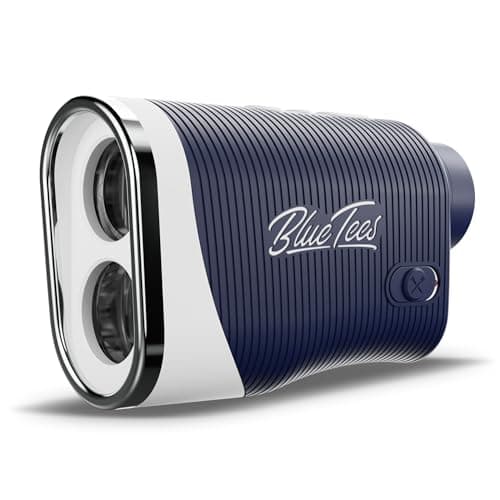
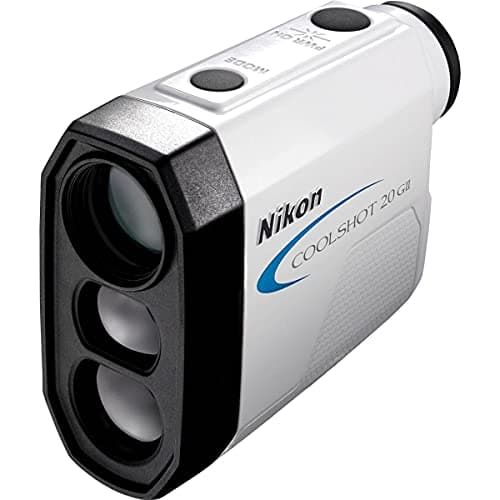
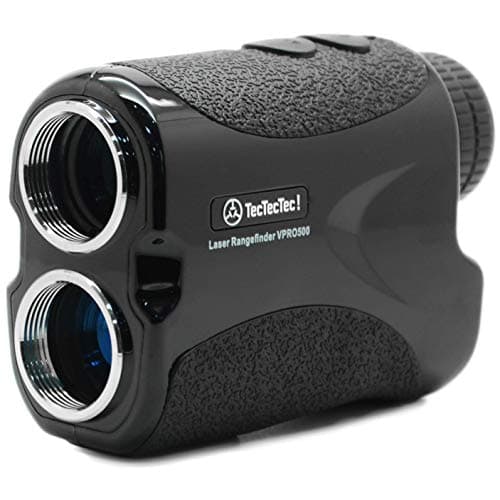
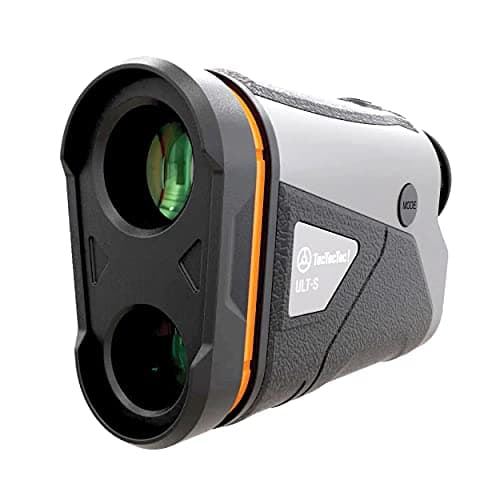
For most senior golfers, the best rangefinder is the one you can hold still — and that makes the TecTecTec ULT-S our top pick. Its image stabilization cancels the small wobble that makes a distant flag so hard to settle on, so you lock the number and get on with the shot. The Blue Tees Series 3 Max+ is the runner-up for its bright, easy-read display and a magnet that keeps it on the cart rail; the Nikon Coolshot 20 GII wins on sheer optical clarity; and the TecTecTec VPRO500 is the value pick that gets you a good laser for the least money.
We rank lasers on the things that change with age, not the things a younger buyer chases. That means the size and contrast of the in-scope readout, how forgiving the device is to aim and hold, how quickly it confirms a lock, and value — not maximum range you’ll never use or optics tuned for a hunter. If holding and aiming a device is the part that frustrates you, be honest about that before you buy: a GPS watch shows the yardage with no aiming at all, and it may simply suit you better.
Three of these four offer a slope function, which adjusts the yardage for uphill and downhill shots. It’s a real help for club choice, but it isn’t legal in competition — so the good ones let you switch it off. If that trips you up, read slope explained first. And remember that the rangefinder only tells you the distance; hitting it the right number still comes down to having the right clubs for a slower swing.
How to choose a rangefinder as your eyes and hands change
Start with the display, not the range.Every laser here reaches far enough for any golf shot you’ll play; the number on the box that says otherwise is marketing. What actually helps you is a bright, high-contrast in-scope readout you can read in flat light and full sun. The Blue Tees and the Nikon lead here, and the ULT-S is close behind.
If your hand isn’t steady, prioritize stabilization.This is the whole reason the ULT-S is our number one. A laser makes you aim a narrow beam at a thin flagstick and hold it there for a beat. A little tremor turns that into a real fight — the view jumps, the lock misses, and you re-aim three times. Image stabilization holds the picture still and the problem largely disappears. If a shaky hand is your main obstacle, don’t compromise on this; we go deeper in steadying the read for shaky hands.
Value quick, confident lock over headline accuracy.All four are accurate to within a yard for practical purposes. What varies is how quickly and confidently they confirm they’ve locked the flag — usually a small vibration or pulse. A device that pulses the moment it catches the pin saves you the second-guessing, which matters more day to day than a decimal of accuracy.
Decide whether you want slope.The ULT-S, Blue Tees and VPRO500 offer slope you can switch on for casual rounds and off for competition. The Nikon Coolshot 20 has no slope, which is why it’s permanently tournament-legal and dead simple — a genuine plus if you never want to think about it. There’s no wrong answer; just know which you’re buying.
Who should skip a laser entirely
Here’s the honest one: if the act of aiming and holding a device is itself the struggle, a laser is the wrong tool no matter how good it is — and no rangefinder on this page will fix that. Stabilization helps a wobble, but it can’t help a hand that can’t comfortably raise and steady a device to your eye at all. If that’s you, skip this category and buy a GPS watch — you glance at your wrist and the number is just there, with nothing to aim. It reads the green rather than the exact pin, but for the way most of us play, that trade is well worth making.
One more skip: don’t pay up for premium tournament optics you don’t need. The VPRO500 does the core job — accurate, light, simple — for the least money, and for a great many players it is all the laser they will ever want.
How we picked this
We haven't hit this gear — and we say so
We compiled the published manufacturer specifications — shaft weight and flex, loft, grip diameter, ball compression, cart weight — did the swing-speed and compression arithmetic, cross-read the owner manuals, and scored each pick against a published rubric. The scores are judgments from documented research — they are notlab measurements we took, because we don't have a lab and we're not going to pretend we do. Where somebody has genuinely measured this, we link them. You can check every number we publish.