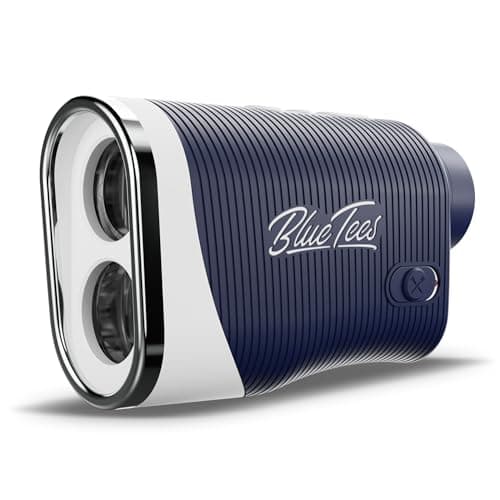
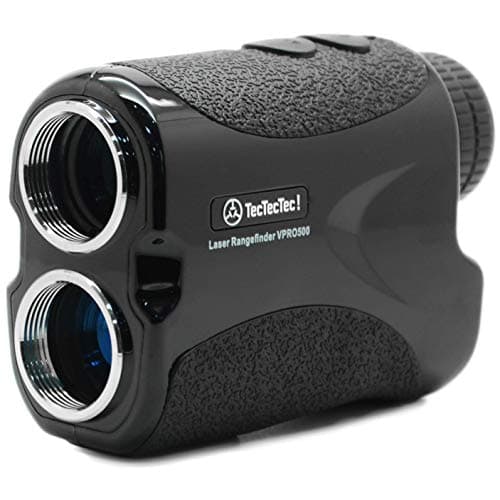
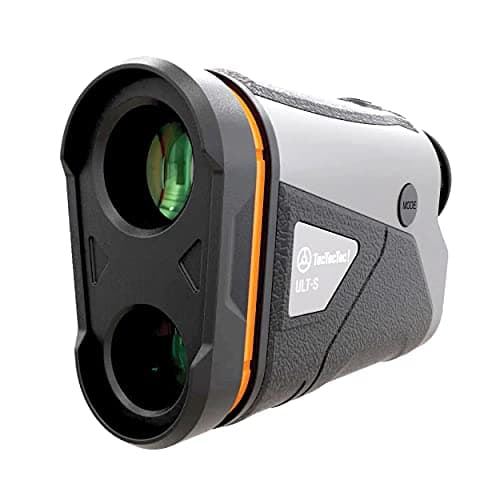
Slope is the feature that turns a rangefinder from “how far is the flag” into “what club should I hit” — it adjusts the raw distance for the hill, giving you the yardage the shot actually plays uphill or down. For a senior, that’s genuine help: it takes the guesswork out of club selection when reading a slope by eye gets harder. Every laser here has slope anda switch to turn it off, so the device stays tournament-legal when you need it to. The TecTecTec ULT-S leads because it adds image stabilization for an unsteady hand; the Blue Tees Series 3 Max+ has the brightest, most readable display; and the TecTecTec VPRO500 is the best-value way onto slope.
A quick word on the rules: slope-adjusted distances are not allowed in most competition, which is why every model here has a switch that disables slope and shows a legal, straight-line yardage. Keep it on for casual rounds and practice, flip it off for the club competition. If the whole idea is new, our slope explained guide clears it up, and laser vs GPS covers whether a laser is the right tool for you in the first place.
What to look for in a slope rangefinder
A legal-play switch.Non-negotiable if you play any competition — the switch disables slope and usually shows a visible indicator that it’s off, so you’re legal and can prove it. Every laser here has one.
A display older eyes can read.Slope is only useful if you can read the number it gives you. A bright, high-contrast readout — the Blue Tees Series 3 Max+ is the standout here — matters as much as the slope math itself. Our easiest-to-read roundup ranks on exactly that.
A steady view for an unsteady hand.Aiming a laser at a distant flag is harder with a less-than-steady hand, and slope doesn’t help if you can’t settle the crosshair. The TecTecTec ULT-S adds image stabilization that holds the view still — the single biggest help here for a hand that wobbles; more on that in stability with shaky hands.
Fast, confident flag lock.A good slope laser locks onto the flag quickly and pulses or vibrates to confirm it, so you’re not second-guessing whether it ranged the pin or the trees behind it. All three here lock confidently.
Do you actually need slope?
If your course is flat, honestly, no — you’ll rarely use it, and a simpler non-slope laser like the Nikon Coolshot 20 is cheaper and permanently tournament-legal. Slope earns its keep on hilly courses with big elevation changes between tee and green, where the flat number and the played number differ enough to cost you a club. If that’s your course, slope is well worth it; if not, save the money. The full field, slope and not, is in best rangefinders for seniors.
How we picked this
We haven't hit this gear — and we say so
We compiled the published manufacturer specifications — shaft weight and flex, loft, grip diameter, ball compression, cart weight — did the swing-speed and compression arithmetic, cross-read the owner manuals, and scored each pick against a published rubric. The scores are judgments from documented research — they are notlab measurements we took, because we don't have a lab and we're not going to pretend we do. Where somebody has genuinely measured this, we link them. You can check every number we publish.