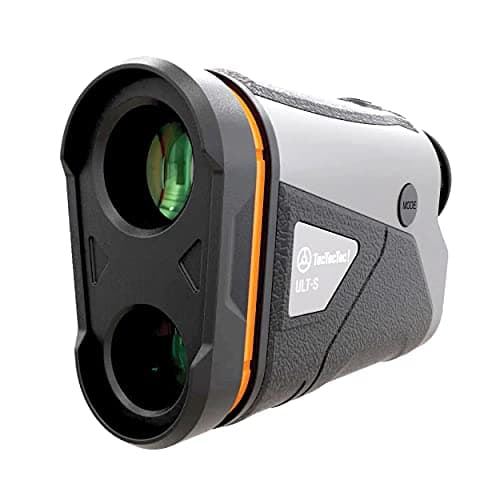
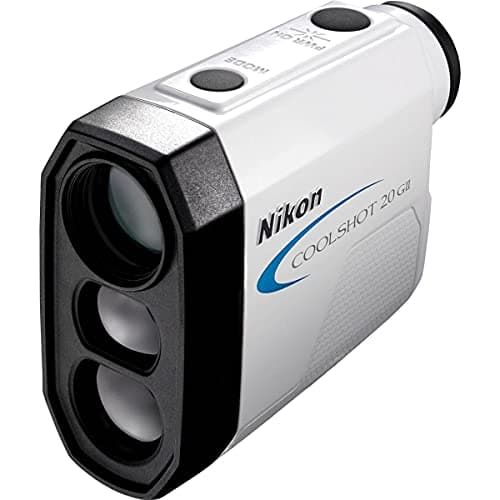
These two lasers both aim to make ranging easier for a senior, but they solve different problems. The Nikon Coolshot 20 attacks readability with glass: Nikon optics make the flag brighter and sharper through the eyepiece than any budget laser, which helps eyes that need it. The TecTecTec ULT-S attacks steadiness: image stabilization holds the view still so a less-than-steady hand can actually settle the crosshair on a distant flag. Below we set them side by side so you can pick on the problem that’s yours — seeing the flag clearly, or holding steady on it.
Where they differ
Optics vs stabilization:the Coolshot 20’s Nikon glass gives a brighter, sharper view that’s genuinely easier for older eyes to focus — if seeing the flag clearly is your struggle, it’s the better tool. The ULT-S’s image stabilization steadies a wobbling view, which is the bigger help if the problem is holding the laser still rather than seeing through it. Diagnose your own issue first: blurry, or shaky?
Slope:the ULT-S has slope with a legal-play switch, so it can tell you the distance a hill actually plays; the Coolshot 20 keeps it simple with no slope, which does mean it’s permanently tournament-legal. If you play hilly courses and want the played yardage, that’s a point to the ULT-S; if you play flat courses or competition, the Coolshot’s simplicity is a feature, not a lack.
Size and price:the Coolshot 20 is tiny and light — the easiest here to hold steady and carry — with dead-simple one-button operation. The ULT-S is a value price for its stabilization. Both are sensibly priced; you’re choosing on the feature that fixes your problem, not on cost.
The line that decides it
If your eyes are the issue and you want the clearest, sharpest view of the flag, buy the Nikon Coolshot 20 — and enjoy that it’s tiny, simple and always legal. If your hands aren’t steady and settling the crosshair is the struggle, buy the TecTecTec ULT-S for its stabilization, and take the slope as a bonus. Both are excellent senior lasers; they just fix different things. The wider field is in best rangefinders for seniors and the readability-first picks in easiest-to-read rangefinders.
The honest caveat
If aiming a laser at all is the frustration — not the clarity or the steadiness, but the whole business of pointing a device at a flag — then neither of these is your answer, and a GPS watch that shows the number with no aiming is the kinder tool. See laser vs GPS.
How we picked this
We haven't hit this gear — and we say so
We compiled the published manufacturer specifications — shaft weight and flex, loft, grip diameter, ball compression, cart weight — did the swing-speed and compression arithmetic, cross-read the owner manuals, and scored each pick against a published rubric. The scores are judgments from documented research — they are notlab measurements we took, because we don't have a lab and we're not going to pretend we do. Where somebody has genuinely measured this, we link them. You can check every number we publish.