Skip to content
Fairway&Fescue

The Swing · Clubs, Sets & Shafts

The Best Wedges for Seniors

Around the green is where a slower swing gives away the strokes it never had to. Ranked on how hard each wedge is to chunk, what it weighs, and whether it will still get you out of sand.

By Stephen V.Updated How we pick
#ad

We earn a commission when you buy through our Amazon links, at no extra cost to you. It never changes our rankings — and we'll tell you when the cheaper ball or club is the better buy. How this works.

A senior golfer does not lose strokes to the wedge because the wedge got harder. It is that the swing got shallower and slower, the turf stopped giving way, and the club that used to slide under the ball now digs into the ground behind it. That is the chunked chip, and it is the single most expensive shot in senior golf. Our pick for most golfers is the Cleveland Smart Sole Full-Face in the 42-degree chipper loft with a graphite shaft — the widest, most chunk-proof sole in a mainstream wedge, in the one shaft material that suits a slower swing. If you do not need the lighter shaft, the identical head in steel is the same club for less money, and we would rather you bought that one. If your real problem is bunkers rather than chips, skip both and take the Cleveland CBZ Full-Face, which is the forgiving sand wedge on this page.

What we ranked on, before any product

Most “best wedge” lists are written for a player who takes a divot and wants to control spin. That is a fine list, and it is the wrong list for a golfer past sixty, whose scorecard is being decided by three or four shots a round that went ten yards instead of thirty. Four things decide whether a wedge actually helps, and we applied them in this order:

  • How hard is it to chunk?This is almost entirely sole design. A wide sole with plenty of bounce — the angle that keeps the leading edge off the ground — skids across the turf instead of burying itself, so a strike that lands slightly behind the ball still sends the ball forward. A thin-soled blade with a sharp leading edge does the opposite. As your swing gets shallower and your low point moves around, sole width stops being a preference and starts being the whole club.
  • What does it weigh? Wedges are traditionally built with the heaviest shafts in the bag, because tour players want stability on short swings. That logic does not transfer to a golfer whose irons are already graphite: a heavy steel wedge is then the odd club out, and it feels like it. Two of the six clubs here are sold with a graphite shaft, which is rare enough to be a ranking factor on its own.
  • Will it still get you out of sand and stop on the green? Forgiveness is not free. A very wide, low-lofted sole is superb at running a chip up to the hole and useless from a bunker with a lip. Loft and groove coverage decide whether the club can do the second job, so we say plainly which of these can and which cannot.
  • What does it cost against the strokes it saves?A wedge is the cheapest club in the bag to replace and the one most likely to change a score. But the spread here runs from about a third of a mainstream wedge’s price to comfortably above it, so we ranked value as its own criterion rather than assuming the expensive one wins.

One thing we will not pretend: we have not hit a shot with any of these, and we have no launch monitor, no turf, and no lab. What we do is read the published manufacturer specifications — loft, sole design, groove coverage, shaft material and hand — put them side by side, and reason about what an older golfer’s swing actually needs. Every loft, shaft and hand quoted below comes off the live retail listing for the exact club we link to, and where a named publication has actually tested one, we link them rather than bluff.

Two of the six picks are the same head. That is deliberate, and it is the most useful thing on this page: the graphite and steel builds of the Smart Sole Full-Face are the same club apart from the shaft, so if the lighter shaft is not your problem you can have the identical sole and face for meaningfully less. We would rather send you to the cheaper one.

The short answer

Quick picks

#ProductBest forScorePrice
01
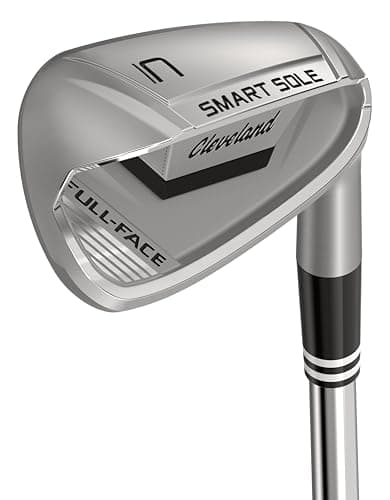
Cleveland Cleveland Smart Sole Full-Face Wedge (42°, Graphite)
Cleveland Smart Sole Full-Face Wedge (42°, Graphite)

The most forgiving short-game club you can buy, in the shaft a slower swing actually wants — the wide three-tiered sole refuses to dig, and the graphite build keeps it light enough to swing smoothly.

The chunk-proof chip, in graphite
9.0
$147.74Amazon
02
Cleveland Cleveland Smart Sole Full-Face Wedge
Cleveland Smart Sole Full-Face Wedge

The anti-chunk wedge. A wide three-tiered sole all but eliminates the fat and thin chips that plague a slower, shallower swing around the green.

Ending the chunked chip
8.8
$133.99Amazon
03
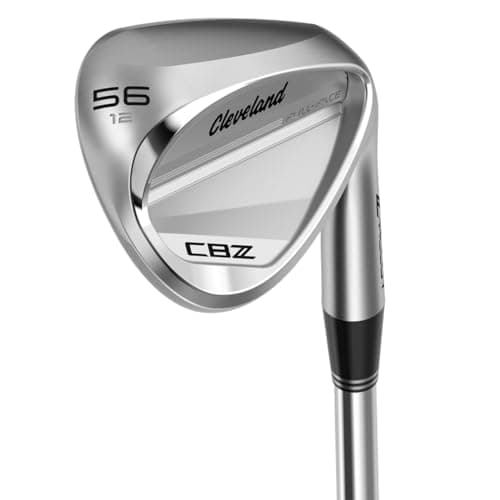
Cleveland Cleveland CBZ Full-Face Wedge (54°, Graphite)
Cleveland CBZ Full-Face Wedge (54°, Graphite)

The forgiving sand wedge for a senior who still wants spin: a cavity-back head with hosel-to-toe grooves, offered with a graphite shaft that most wedges never bother to make.

A forgiving sand wedge with real spin
8.5
$179.99Amazon
04
Square Strike Square Strike Wedge (45°)
Square Strike Wedge (45°)

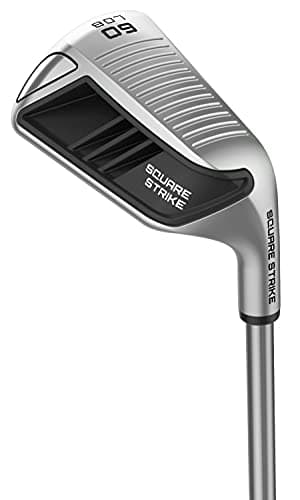
A chipping club that behaves like a putter: heavy head, upright lie, enormous high-bounce sole. If you have stopped trusting yourself around the green, this is the most direct fix on the page.

A short game you've lost faith in
8.3
$119.00Amazon
05
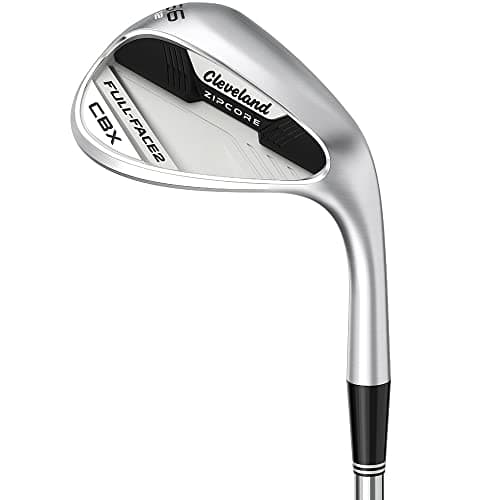
Cleveland Cleveland CBX Full Face 2 Wedge
Cleveland CBX Full Face 2 Wedge

A cavity-back, game-improvement wedge with real greenside spin — the step up when the Smart Sole feels too basic but a tour wedge feels too punishing.

Forgiving spin, a step up
8.0
$159.99Amazon
06
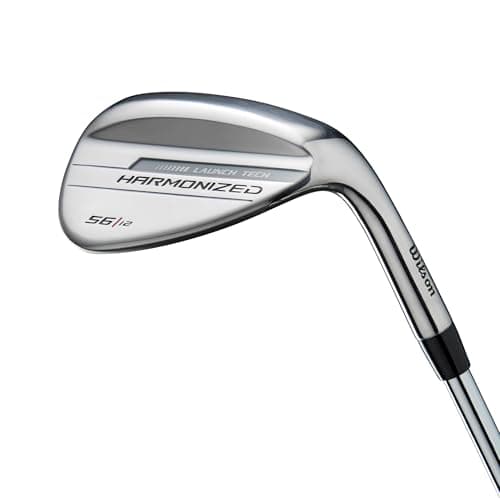
Wilson Wilson Harmonized Wedge (56°)
Wilson Harmonized Wedge (56°)

The sane budget answer. A classic blade profile with a sole grind that still gets out of sand, for roughly a third of what the forgiving wedges here cost.

The lowest sensible price
7.5
$69.99Amazon

#ad · Live prices from the Amazon Product API, as of Sep 6, 2026. Where we have no verified live price, we show none — we would rather leave a gap than print a number that has rotted.

In detail

The picks, in full

01
Cleveland Cleveland Smart Sole Full-Face Wedge (42°, Graphite)

The chunk-proof chip, in graphite

Cleveland Smart Sole Full-Face Wedge (42°, Graphite)

42° chipper loftThree-tiered wide soleFull-face UltiZip groovesGraphite shaft
9.0/10

The most forgiving short-game club you can buy, in the shaft a slower swing actually wants — the wide three-tiered sole refuses to dig, and the graphite build keeps it light enough to swing smoothly.

Forgiveness
9
Ease for a slow swing
10
Short-game help
9
Value
8

Pros

  • The extra-wide, three-tiered sole bounces off the turf rather than digging, which is what ends the fat chip
  • Graphite shaft — rare in a wedge, and the reason this one suits a slower, lighter swing
  • Cleveland's full-face UltiZip grooves and HydraZip face treatment mean the strike still grabs when it lands off the center

Cons

  • 42° is a chipping loft: it runs the ball out, so it will not stop one quickly on a fast green
  • It is not a bunker club — you still need a sand or lob wedge for anything with a lip
  • The graphite build costs more than the identical head in steel

Skip this if…

your chipping is already solid and what you actually need is a club that gets out of sand and stops on the green. This one is built to end the chunked chip, not to replace a sand wedge.

$147.74View on Amazon

Price as of Sep 6, 2026. Prices change — Amazon's is the one that counts.

#ad · we may earn a commission from this link to Cleveland Smart Sole Full-Face Wedge (42°, Graphite)

02
Cleveland Cleveland Smart Sole Full-Face Wedge

Ending the chunked chip

Cleveland Smart Sole Full-Face Wedge

Extra-wide soleForgiving bounceFull-face groovesEasy 'C' & 'G' lofts
8.8/10

The anti-chunk wedge. A wide three-tiered sole all but eliminates the fat and thin chips that plague a slower, shallower swing around the green.

Forgiveness
9
Ease for a slow swing
9
Short-game help
9
Value
8

Pros

  • The wide sole bounces off the turf instead of digging, curing the heavy chip
  • Genuinely the most forgiving wedge to hit for a nervous short game
  • Simple loft choices (chip/gap) instead of a confusing bounce grid

Cons

  • The wide sole limits the fancier shots a skilled short game might want
  • Not a spin machine — it's built for solid contact, not maximum bite

Skip this if…

you have a confident, versatile short game. The forgiving sole takes away the shot-making a good chipper would rather keep — a traditional wedge suits you better.

$133.99View on Amazon

$149.9911% off

Price as of Sep 6, 2026. Prices change — Amazon's is the one that counts.

#ad · we may earn a commission from this link to Cleveland Smart Sole Full-Face Wedge

03
Cleveland Cleveland CBZ Full-Face Wedge (54°, Graphite)

A forgiving sand wedge with real spin

Cleveland CBZ Full-Face Wedge (54°, Graphite)

54° sand loftCavity back, full-face groovesZ-Alloy face materialGraphite shaft option
8.5/10

The forgiving sand wedge for a senior who still wants spin: a cavity-back head with hosel-to-toe grooves, offered with a graphite shaft that most wedges never bother to make.

Forgiveness
8
Ease for a slow swing
9
Short-game help
9
Value
8

Pros

  • A cavity-back wedge is far kinder to a strike that moves around than a tour blade is
  • Grooves run hosel to toe, so a shot struck high on the face or with the face open still spins
  • One of very few current wedges sold with a graphite shaft, which matters if your irons are already graphite

Cons

  • The priciest wedge on this page by some margin
  • Plugged In Golf found the face harder to manipulate off tight lies than a tour model, and the sole width nudges you toward square-face shots
  • Bounce and grind choices are deliberately limited — this is a one-size-suits-most design

Skip this if…

your problem is fat and thin chips rather than getting out of bunkers. The Smart Sole is both cheaper and far harder to chunk — buy the club that fixes your actual miss.

$179.99View on Amazon

Price as of Sep 6, 2026. Prices change — Amazon's is the one that counts.

#ad · we may earn a commission from this link to Cleveland CBZ Full-Face Wedge (54°, Graphite)

04
Square Strike Square Strike Wedge (45°)

A short game you've lost faith in

Square Strike Wedge (45°)

45° loftExtra-wide high-bounce soleHeavy head, upright lieSingle striking face
8.3/10

A chipping club that behaves like a putter: heavy head, upright lie, enormous high-bounce sole. If you have stopped trusting yourself around the green, this is the most direct fix on the page.

Forgiveness
9
Ease for a slow swing
9
Short-game help
7
Value
8

Pros

  • The upright lie and heavy head let you use a putting-style stroke, which removes the wrist action that causes the chunk
  • Reviewers who came in skeptical found it does what it claims — the ball gets airborne and forward even on a poor strike
  • Simple to use with no technique to learn, which is the point

Cons

  • One shot only: Plugged In Golf found distance control past about 30 yards difficult and no flop, bump-and-run or flighted shot available
  • Almost no feedback on strike quality, so it will not teach you anything
  • Sold as legal for tournament play, but one reviewer could not find it on the USGA conforming list — check before you put it in a competition bag

Skip this if…

you can already chip reasonably and want a club you can shape shots with. This is a single-purpose rescue club, and a Smart Sole gives you most of the same forgiveness with more shots available.

$119.00View on Amazon

Price as of Sep 6, 2026. Prices change — Amazon's is the one that counts.

#ad · we may earn a commission from this link to Square Strike Wedge (45°)

05
Cleveland Cleveland CBX Full Face 2 Wedge

Forgiving spin, a step up

Cleveland CBX Full Face 2 Wedge

Cavity-back forgivenessFull-face groovesDynamic soleGraphite option
8.0/10

A cavity-back, game-improvement wedge with real greenside spin — the step up when the Smart Sole feels too basic but a tour wedge feels too punishing.

Forgiveness
8
Ease for a slow swing
8
Short-game help
8
Value
8

Pros

  • Cavity-back weighting makes it far more forgiving than a blade wedge
  • Produces genuine greenside spin the Smart Sole doesn't try to
  • Available with a graphite shaft to match a senior iron set

Cons

  • Less chunk-proof than the ultra-wide Smart Sole
  • Costs more than a basic game-improvement wedge

Skip this if…

your short game is shaky and you just want to stop the fat shots. The Smart Sole is the more forgiving tool for that specific problem — save the CBX for when consistency comes back.

$159.99View on Amazon

Price as of Sep 6, 2026. Prices change — Amazon's is the one that counts.

#ad · we may earn a commission from this link to Cleveland CBX Full Face 2 Wedge

06
Wilson Wilson Harmonized Wedge (56°)

The lowest sensible price

Wilson Harmonized Wedge (56°)

56° sand loftClassic blade profileSole grind for open-face shotsTrue Temper steel shaft
7.5/10

The sane budget answer. A classic blade profile with a sole grind that still gets out of sand, for roughly a third of what the forgiving wedges here cost.

Forgiveness
6
Ease for a slow swing
7
Short-game help
7
Value
10

Pros

  • Costs a fraction of the forgiving wedges above and still does the core job
  • The sole grind lets the club slip through turf with the face open, which is what a bunker shot needs
  • Sold in 50°, 52°, 56° and 60° so you can fill a gap without rethinking the whole bag

Cons

  • A blade profile is the least forgiving shape here — an off-center strike costs you distance
  • Steel shaft only, so it is the heaviest option on this page
  • Reviewers note the stock grip is thin and basic; budget for a regrip if your hands ache

Skip this if…

you chunk chips. A budget blade is the wrong tool for a strike that moves around — the money is better spent on a wide-soled wedge that forgives the miss you actually make.

$69.99View on Amazon

Price as of Sep 6, 2026. Prices change — Amazon's is the one that counts.

#ad · we may earn a commission from this link to Wilson Harmonized Wedge (56°)

Bounce and sole width: the spec that decides whether you chunk it

Set a wedge on a table and look at it from the side. The leading edge — the bottom of the face — sits slightly above the table, and the angle between the two is the club’s bounce. That angle is what keeps the club skidding along the ground instead of knifing into it. The wider the sole, the more forgiving that skid becomes, because there is simply more metal presenting itself to the turf before the sharp bit can do any damage.

A tour player wants a narrow sole and low bounce because they hit down on the ball and want to slide the leading edge under it on a tight lie. A senior with a shallower, slower swing wants the opposite: a wide sole and generous bounce that turns a heavy strike into a decent shot rather than a disaster. This is why Cleveland’s three-tiered Smart Sole exists, and why it is at the top of this page. It is the most extreme version of the idea that a mainstream manufacturer sells.

The trade-off is real and worth stating. High bounce and a wide sole make it harder to play the delicate flop from a tight lie, and they nudge you toward a square face and a straightforward stroke. If you play courses with firm, closely-mown surrounds and you like to open the face, you will feel the club refusing to sit down behind the ball. For most golfers reading this, that is a trade worth making twenty times over.

How many wedges does a senior actually need?

Fewer than the shops would like. The four-wedge setup exists because a fast player has enough distance between full swings to justify it. When your swing speed drops, those yardages compress toward each other, and the fourth wedge stops earning its place in a bag you also have to carry or push around.

For most seniors, two wedges past the pitching wedge is the sensible bag: something around 54 to 56 degrees for sand and longer greenside shots, plus one club dedicated to the shot you play most — the little chip from just off the green. Cleveland actually sells the Smart Sole Full-Face as a four-club system in exactly this shape: a chipper, a gap wedge, a sand wedge and a lob wedge, with the chipper doing the job most golfers do badly. You do not need all four. You need to be honest about which one shot is costing you.

Before you buy anything, check the loft of the pitching wedge already in your bag. Iron sets vary more than people expect, and a game-improvement set often carries a stronger pitching wedge than a traditional one, which quietly opens a bigger gap to your sand wedge than you think you have. The manufacturer’s spec sheet has the number; the club usually does not. If your set came as a boxed package, the best complete sets for seniors roundup covers what is normally included and where the gaps sit.

Why almost nobody makes a graphite wedge — and why it matters here

Wedge shafts are the heaviest in the bag by convention. The reasoning is that short swings need stability more than they need speed, and a heavy shaft delivers it. That is defensible for a golfer with a fast, steep swing. It is a poor fit for a golfer who has already moved the rest of the bag to graphite to protect a slower tempo and tired hands, because the wedge then becomes the one club that feels like a different set.

Manufacturers have been slow to answer this, so genuinely graphite-shafted wedges from a mainstream brand are thin on the ground. Two on this page have them: the Smart Sole Full-Face and the CBZ Full-Face are both sold in a graphite build alongside the usual steel. If your irons are graphite, that consistency is worth paying for, and it is the main reason the graphite Smart Sole outranks the identical steel head here.

If you are unsure which camp you are in, our graphite vs steel shafts comparison explains what actually changes, and shaft weight explained covers the number that matters more than flex. The swing speed and shaft flex chart puts your own speed against the flex that suits it, which is worth two minutes before you spend anything.

Chippers, the rules, and what “legal for tournament play” means

A chipper is not a putter with loft, in the eyes of the Rules of Golf. It is an iron-type club, and iron-type clubs must have a single striking face. That is why the double-sided chippers you see advertised for convenience are non-conforming, while a normal one-faced chipping wedge — the 42-degree Smart Sole, for instance, which is simply the lowest-lofted club in Cleveland’s regular wedge line — is a perfectly ordinary club you can put in the bag without a second thought.

The Square Strike is worth a specific note. It is sold and marketed as legal for tournament play, and it is a single-faced club, but Plugged In Golf’s reviewer said plainly that he could not find it on the USGA conforming list and could not see why it would be illegal either. If you only play social golf that is a non-issue. If you play in club competitions, look it up on the USGA and R&A conforming club lists before you commit — or buy a wedge from a manufacturer’s standard line and remove the question entirely.

What the reviews actually found, and where they disagree with the marketing

The Square Strike does what it says: two independent reviewers who went in skeptical came out saying it gets the ball airborne and forward on strikes that would have been chunks. The honest limitation is that it plays one shot. Distance control past roughly thirty yards is difficult, there is no flop and no bump-and-run, and the weighting gives you almost no feedback on whether you struck it well. It is a rescue club, and it is a good one, as long as you buy it knowing that.

At the other end, Plugged In Golf called the CBZ the best cavity-back wedge they had played, with spin on short swings and a cavity that forgives a strike that moves around — but also noted that the face is harder to manipulate off a tight lie than a tour model, and that the sole width pushes you toward square-faced shots. The Wilson Harmonized, meanwhile, is honestly reviewed as what it is: a budget blade that does the job without matching a premium wedge for spin or feel, and whose stock grip is the first thing many owners change.

Grip size on a wedge is not a detail

A wedge is the club you hold longest and most delicately, and a grip that is too thin makes arthritic hands squeeze — which is exactly the tension that turns a soft chip into a stab. Fitting a thicker grip costs a fraction of any club here and is completely reversible, which makes it the highest-return change in the bag for a hand that hurts.

Our do oversize grips help arthritis guide covers the mechanism and what the evidence supports, the grip size guide has the diameters manufacturers bury in a spec sheet, and best oversize golf grips ranks the ones worth fitting. The Arthritis Foundation makes the same general point about lighter clubs and larger grips for golfers with arthritis, and it applies most sharply here.

What a new wedge will not fix

Distance control on partial shots. Nothing about a wider sole tells you how far a half swing goes, and that is where most greenside strokes are lost once the chunking stops. It comes from practice on real grass, and it is the reason a cheap wedge you know well can beat an expensive one you do not.

It also will not fix arriving on the green in four rather than two. If that is the honest picture, the money is better spent up the bag — the best irons for seniors roundup and best hybrids for seniors both cover clubs that save more strokes per dollar for a golfer who is losing them long before the green.

Who should skip a new wedge entirely

If your current sand wedge gets you out of bunkers and you chip acceptably, keep it and regrip it. And if you have never compared the two forgiving Cleveland wedges directly, our Smart Sole vs CBX wedge comparison is the shorter version of this decision. If more than one club is due for replacement, start with the best golf clubs for seniorsroundup rather than buying a wedge in isolation — and if the shots you are losing are on the green rather than around it, the best putters for seniors list is the page you actually want.
How we picked this

We haven't hit this gear — and we say so

We compiled the published manufacturer specifications — shaft weight and flex, loft, grip diameter, ball compression, cart weight — did the swing-speed and compression arithmetic, cross-read the owner manuals, and scored each pick against a published rubric. The scores are judgments from documented research — they are notlab measurements we took, because we don't have a lab and we're not going to pretend we do. Where somebody has genuinely measured this, we link them. You can check every number we publish.

Questions

Frequently asked

What is the best wedge for seniors?
For most seniors, the Cleveland Smart Sole Full-Face in the 42-degree chipper loft — the widest, most chunk-proof sole in a mainstream wedge, and one of very few sold with a graphite shaft. If bunkers are the problem rather than chips, the Cleveland CBZ Full-Face is the forgiving sand wedge here, and it is also offered in graphite.
How many wedges should a senior carry?
Usually two past the pitching wedge: one around 54 to 56 degrees for sand and longer greenside shots, and one dedicated to the short chip you play most often. As swing speed drops, full-swing wedge yardages compress toward each other and the case for a third or fourth wedge largely disappears.
Are chippers legal in golf?
A single-faced chipper is legal. Chippers are treated as iron-type clubs under the Rules of Golf, and iron-type clubs must have only one striking face — so the double-sided chippers sold for convenience are non-conforming, while a normal chipping wedge is not. If you play competitions, check the club on the USGA and R&A conforming lists before you use it.
Do wedges come with graphite shafts?
A few do, but it is rare — wedges are traditionally built with the heaviest shafts in the bag. Cleveland sells both the Smart Sole Full-Face and the CBZ Full-Face in a graphite build alongside the steel one, which is why both appear on this page. If the rest of your irons are graphite, matching the wedge is worth the small premium.
What bounce should a senior use on a wedge?
More rather than less. Bounce is the angle that keeps the leading edge off the ground, and a shallower, slower swing needs the club to skid across the turf rather than dig into it. Wide-soled, high-bounce designs are the ones that turn a slightly heavy strike into a playable shot.
Is a chipping wedge better than a sand wedge for a senior?
They do different jobs. A low-lofted chipping wedge around 42 degrees runs the ball out to the hole and is the hardest club to chunk; a 54 to 56 degree sand wedge is what gets you out of a bunker and stops the ball on the green. If you only buy one, buy the one that fixes the shot you actually miss most often.
Is an expensive wedge worth it for a senior golfer?
Not automatically. The most forgiving sole on this page does not belong to the most expensive club, and a budget blade like the Wilson Harmonized will get you out of sand perfectly well if your contact is decent. Pay for a wide sole if you chunk chips, pay for graphite if the rest of your irons are graphite, and do not pay for tour grinds you will never open the face for.

Keep reading

Receipts

Sources

We do not run a testing lab, and we do not pretend to. Every spec number here comes from a manufacturer's published sheet or an official standard, cited above. Where we could not verify something, we say so on the page rather than quietly leaving it out. Read our full method.