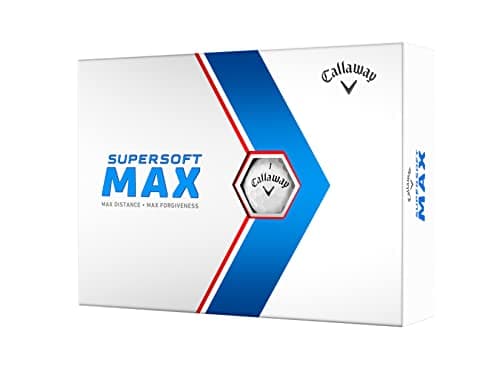
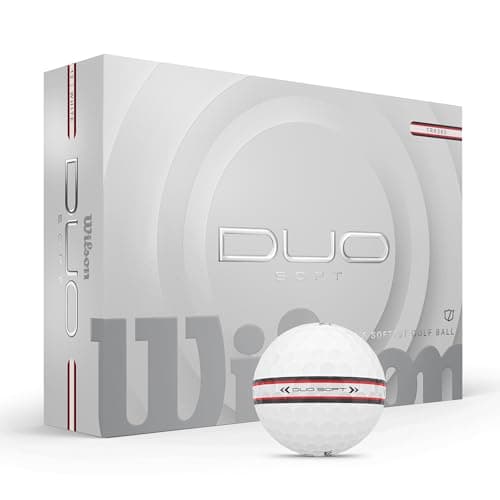
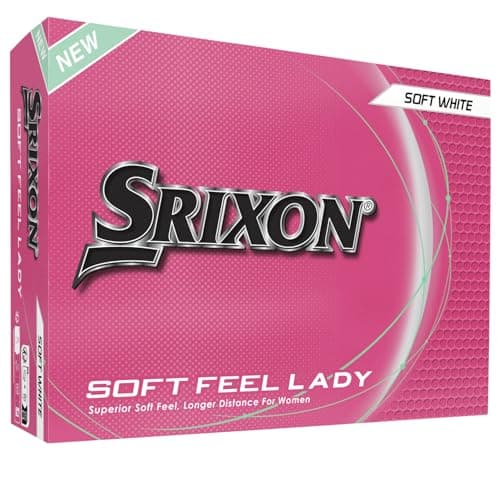
The best golf ball for most senior women is the Srixon Soft Feel Lady: a published compression of 58, two degrees softer than the standard Soft Feel, with what Srixon describes as an “increased launch angle for a higher trajectory” on the same FastLayer core and 338-dimple cover. For a swing that has slowed further still, the oversized Callaway Supersoft Max and the 37-compression Wilson Duo Soft are the two balls built to launch when almost nothing else will.
Here is the arithmetic that makes this page different from a generic women’s ball list. TrackMan publishes average driver club speeds for female amateurs: 90 mph for scratch, 87 for a 5 handicap, 83 for a 10, 79 for a 15. Age takes more off that — Arccos’s tracked data has male golfers losing about seven yards a decade, and there is no reason to think women lose less. So a senior woman with a 15 handicap is very likely swinging a driver in the 60s or low 70s, which is slower than any category the ball makers publish a target for. At that speed a firm tour ball never compresses; it sits on the face and leaves. The only balls that give distance back are the ones soft enough to flatten at 65 mph, and that is a short list. Our what compression do I need guide explains the mechanism; this page is the shopping list.
What we ranked on, in order
1. Published compression. Not “soft feel,” not the color of the box — the number the maker or a credible reviewer prints. Srixon publishes 58 for the Soft Feel Lady and 60 for the standard Soft Feel. Golf Monthly’s review of the 2025 Wilson Duo Soft reports Wilson’s figure of 37, down from 40. Callaway describes the Supersoft Max as its “longest ball for slow-speed players” without publishing a number on the page we could find, so it ranks on the next criterion.
2. Launch. A slow swing that also launches low loses distance twice. Srixon tunes the Lady for a higher trajectory; Callaway builds the Supersoft Max as an oversized ball with “high launch and low spin.” If your drives are low and run out, launch is worth more to you than two points of compression.
3. Price per dozen. Every ball here is a value-tier two-piece ionomer ball, and that is deliberate: a senior woman who loses two balls a round should not be paying tour-ball money for spin she cannot generate. Do expensive balls help a slow swing? is the longer answer.
4. Visibility. Fading eyes are part of the same conversation. Several of these balls come in yellow or matte colors, and our best high-visibility golf balls page ranks on that alone.
The picks
The Srixon Soft Feel Lady is the top pick because it is the one ball here designed specifically for this swing rather than relabeled for it. Srixon publishes the difference: 58 compression against 60, and a higher launch, on an otherwise identical ball. It is priced like the men’s Soft Feel, which is our value pick across the whole hub. If you are choosing between the two, we settle Srixon Soft Feel vs Callaway Supersoft for the standard versions.
The Callaway Supersoft Max is the ball for the swing that cannot get the ball in the air. It is oversized — Callaway says the design “conforms to the rules of golf” — and built for high launch and low spin. The bigger ball is a niche fix, and most players do fine with the standard Supersoft, but for a very slow swing that tops and skids the ball, it is the most direct help on the page.
The Wilson Duo Soft is the softest ball here by the published numbers, at 37, and Wilson markets it as the softest ball in golf. For the slowest swings that is exactly the point: it compresses when a firmer ball just sits there. What you give up is greenside control — the soft, low-spin design that helps the long game releases on chips. We put it head to head with the Supersoft in Wilson Duo Soft vs Callaway Supersoft.
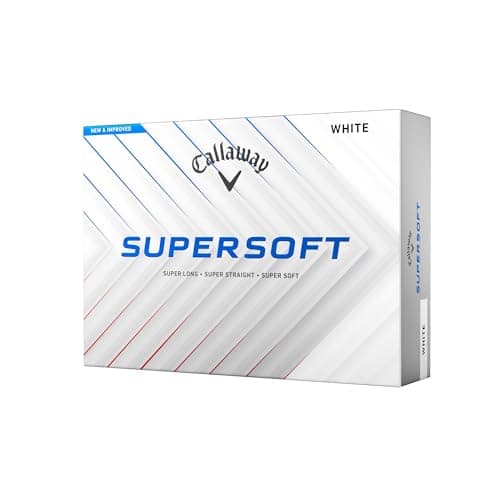
The Callaway Supersoft is the senior default across our whole balls hub and it belongs here too: one of the lowest compressions in golf, a straight, forgiving flight that flatters a slice, and a price that means losing one does not sting. It ranks fourth only because the three above it are tuned a step further toward the very slowest swings.
How to choose a golf ball as a senior woman
Ignore the word “women’s” and read the compression. Some women’s balls are genuinely softer, like the Soft Feel Lady. Others are the standard ball in a different box. The number is the only thing that tells you which, and a maker that will not publish it is asking you to trust the box.
Match the ball to your driver speed, not your handicap. TrackMan’s female amateur figures run from 79 to 90 mph, and a senior swing is usually below that. Under about 70 mph, the three softest balls here are the ones to try. Between 70 and 80, the standard Supersoft or Soft Feel is plenty soft, and best golf balls for a slow swing speed covers that band in full.
Buy one sleeve of two balls and play nine holes with each. The differences between these four are real but small, and the right one is the one whose flight you like. Compression tells you where to start, not where to finish.
Pair the ball with the club, not instead of it. A soft ball on a shaft too stiff to load is still a low, short shot. If the driver is old, our best golf clubs for senior women covers the sets and drivers built for the same swing.
Skip this
Skip the tour ball, however good the deal. A urethane three-piece ball is built to spin for a swing that can compress it. Below 80 mph it gives up distance to every ball on this page and costs twice as much. The one case for it is a player whose short game is the whole strength of her game and who will trade yards for stopping power — and even then, the two-piece vs three-piece page is worth reading first.
Skip “distance” balls with a mid compression. A ball marketed on distance for the average golfer is built for a 94 mph swing. At 65 it is a firm ball with a distance label.