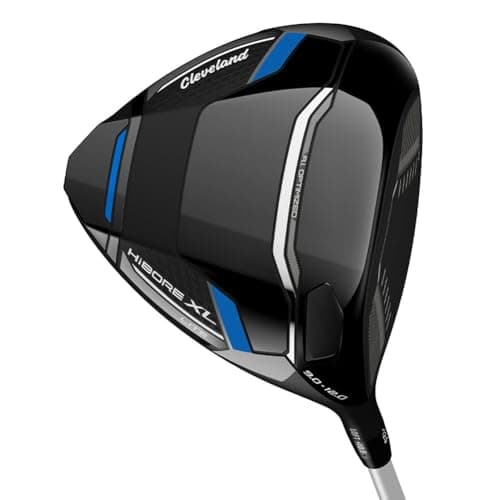
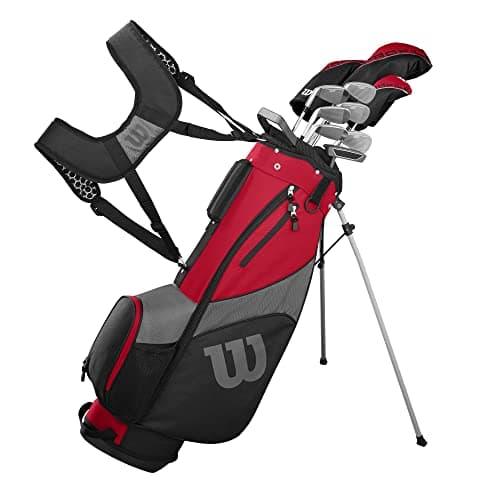
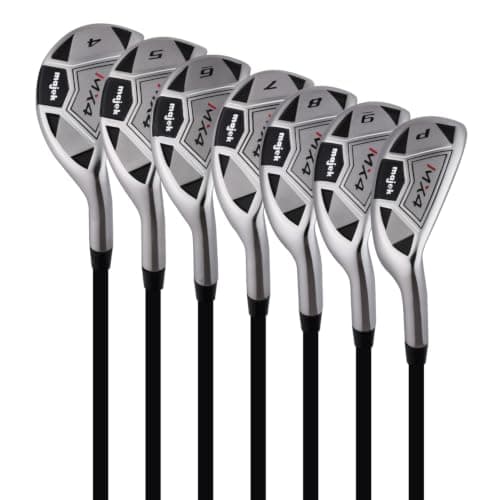
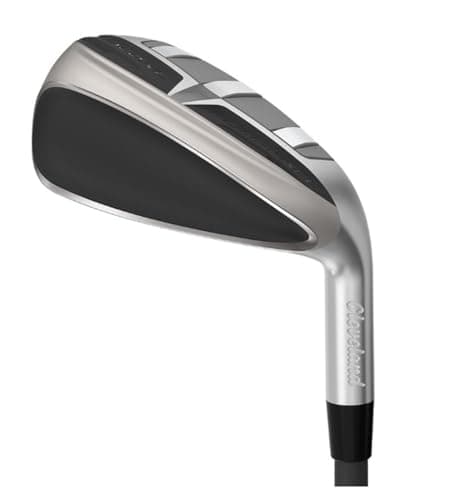
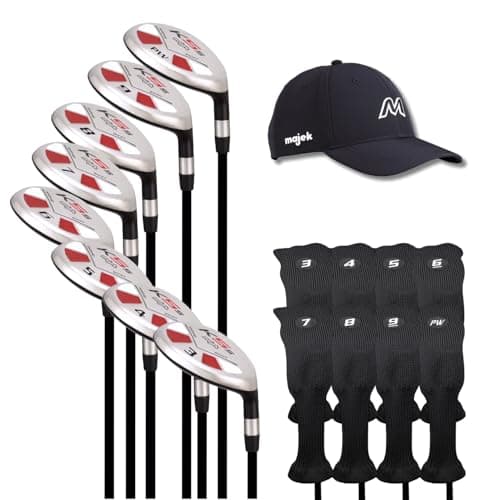
Here is the honest first sentence of any page about golf clubs and arthritis: the cheapest thing you can change is the grip, not the club. A fatter grip costs a fraction of a new set and it is the part of the club your hands actually touch, so if you have not tried that yet, start with the best golf grips for arthritis and come back. If you have already done that, or your clubs are old enough that regripping them is throwing good money after bad, this page ranks the clubs themselves. Our pick for most golfers with arthritic hands is the Majek K5s hybrid set in senior flex, because it is the only set here that arrives with a super jumbo grip already fitted. The single most useful club to buy on its own is the Cleveland HiBore XL Lite driver, which at a published 291 grams is about as light as a name-brand driver gets.
This is a gear page, not medical advice. Arthritis is something to manage with your doctor or physical therapist — we can only tell you what the equipment does. The Arthritis Foundation’s “Golfing With Arthritis” guide is the right place for the rest, and our golf with arthritis page gathers its equipment suggestions with citations.
What we ranked on, before any product
Almost every “best clubs for seniors” list ranks forgiveness and launch, because for most older golfers the problem is swing speed. Arthritis is a different problem in the same body. The swing may be fine; it is the twenty minutes afterward that hurt. So we ranked on four things, in this order:
- What grip does it arrive with? This is the whole game and almost nobody publishes it. A thicker grip lets you hold the club securely without squeezing, which is the hand position that hurts. Exactly one set on this page ships with an arthritic-size grip fitted; everything else assumes you will pay someone to change thirteen of them.
- What does the whole club weigh?Not the shaft — the club. Shaft plus head plus grip is what your wrists carry through the swing and what your hands absorb at impact. The lightest driver here publishes a total weight; most manufacturers do not, which tells you something about how seriously the spec is taken.
- How much force does it ask for?A long iron needs a fast, descending strike to work at all. A hybrid with a wide sole and a low center of gravity does not — it launches the ball off a sweeping swing, which is why five of the clubs on this page are hybrids or hybrid-soled irons rather than traditional blades.
- What does it cost, all in? All in means the club plus the regrip. A premium iron set plus thirteen jumbo grips and the labor to fit them is a meaningfully different number from the one on the listing, and it changes which club is actually the better buy. We ranked value on the all-in figure, not the sticker.
What we will not pretend: we have not played a round with any of these, we have no launch monitor, and we cannot measure how a club feels in a hand that hurts — nobody can do that for you. What we do is read the published manufacturer specifications, put them side by side, and reason about what an arthritic hand is being asked to do. Every loft, length, weight, shaft and grip quoted below comes off the manufacturer’s own spec sheet or the live retail listing for the exact club we link to.
The regrip math nobody does before they buy
Do this arithmetic before you spend anything. A set of thirteen jumbo or arthritic grips is an inexpensive purchase on its own, and fitting them is either an afternoon with a vise, some solvent and double-sided tape, or a modest per-club charge at a shop. Either way it is a real number, and it lands on top of whatever the clubs cost.
That changes the ranking. A premium iron set is already at the top of the price bracket here; add a full regrip to it and the gap to a set that arrives with the right grips fitted gets wide. Conversely, a budget boxed set is cheap enough that a full regrip still leaves you under the price of the irons alone — which is exactly why an entry-level senior set can be the smarter arthritis buy than a better set you cannot afford to finish. If you want to do the fitting yourself, our how to regrip your clubs guide walks through it; it is genuinely a job you can do at a kitchen table.
Start with the grip, and know what “jumbo” means
Grip sizes go standard, midsize, jumbo, and then a super-jumbo tier that most manufacturers do not bother with. The thicker the grip, the less you have to close your hand to hold the club, and the less tension travels up into fingers, thumbs and wrists. Majek publishes real numbers for its arthritic grip — a round .600 core at 87 grams with what it calls an extra-wide profile and a gradual taper — which is more than most grip makers will tell you.
The tradeoff is honest and worth naming: a very thick grip quiets the hands, and quiet hands release the clubface more slowly. Some golfers pick up a fade or a push after going jumbo. That is usually a fair trade for being able to play at all, but you should know it is coming. Our do oversize grips help arthritis guide covers the mechanism and the evidence, and the grip size guide lists the diameters each tier actually means so you can order the right one.
Why hybrids, and not irons, for hands that hurt
A traditional long iron only works if you hit down on the ball and take a divot. That strike is a fast, forceful, descending blow, and when it goes wrong — fat, thin, off the toe — the shock goes straight up the shaft into your hands. A hybrid asks for none of that. The wide sole skids rather than digs, the center of gravity sits low and back so the ball climbs on its own, and a sweeping swing at half the effort produces a usable shot.
Majek publishes the full ladder for its all-hybrid sets: 40 inches and 20 degrees at the 3, down to 36.5 inches and 45 degrees at the pitching wedge, all in lightweight senior-flex graphite. That is a bag of hybrids masquerading as irons, and for an arthritic golfer it removes the shots that hurt most. If you are not ready to replace the whole set, our hybrid vs long iron guide covers swapping only the clubs you dread, and best hybrids for seniors ranks the individual rescue clubs.
Total weight is the other half of the answer
Weight matters twice: once as the load your wrists carry through the swing, and again as the shock your hands absorb at impact. Both scale with the whole club, not just the shaft — and the grip is part of that total, which is the detail people miss when they fit a heavy oversize grip to a light club and wonder why it feels worse.
The Cleveland HiBore XL Lite is the useful example because Cleveland publishes the number: 291 grams total in senior flex, built with a 40-gram-class Aldila Ascent PL shaft and Golf Pride’s Tour Velvet 360 Lite grip. Light at both ends. Most manufacturers publish shaft weight and stop there, so when you are comparing clubs you often cannot see the figure that matters. Our shaft weight explained guide covers what the number does, graphite vs steel shafts covers the material choice, and the swing speed and shaft flex chart makes sure whatever you buy is in a flex you can load.
What about the jarring feeling on a mishit?
Golfers with arthritis usually describe the same thing: it is not the good shots that hurt, it is the one struck off the toe. Perimeter weighting, wide soles, cavity backs and soft face inserts all reduce how violently a club twists and rings on an off-center strike, which is why every club on this page has at least one of them.
We are not going to put a number on that, because we have not measured it and neither has anyone else in a way we could cite honestly. What we can tell you is that the Arthritis Foundation’s own golf guidance points golfers toward lightweight graphite shafts and more forgiving, perimeter-weighted heads, which is the same direction every pick here leans. Treat it as a well-supported principle rather than a measured effect.
Buying one club at a time is a legitimate plan
You do not have to replace fourteen clubs to find out whether lighter, fatter-gripped gear helps. Two single clubs are worth more than the rest put together for an arthritic golfer.
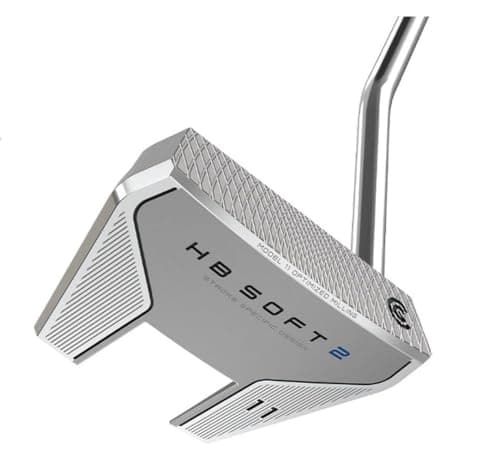
The first is the putter, because it is the club you hold longest, most softly, and most often — roughly two shots in five. The Cleveland HB Soft 2 above is on this page for one reason: it comes with the brand’s oversize pistol grip fitted as standard, so it is arthritis-ready out of the box. The best putters for seniors roundup ranks it against the rest, including one that lifts the ball out of the hole so you never bend for it.
The second is the driver, not because you hit it often but because it is the longest, heaviest club and the one that asks for the most speed. A genuinely light build takes real load off the wrists on the swings that ask the most of them.
What new clubs will not fix
Arthritis. New clubs can reduce what your hands are asked to do; they do not treat the condition, and any page that implies otherwise is selling you something. Grip strength, morning stiffness, how many holes you can play before it flares — those belong to you, your doctor and your physical therapist, not to a gear list.
Clubs also will not fix the parts of a round that hurt for other reasons: carrying the bag, bending to tee up and to pick the ball out of the cup, walking on hard ground. A push cart takes the bag off your shoulders and hands entirely, and it is one of the highest-relief purchases in this whole category — see best push carts for seniors. A padded relief glove is the other cheap experiment; best golf gloves for arthritis covers those, including the case for wearing one on each hand.
Who should skip new clubs entirely
If your clubs still suit your swing and only your hands have changed, do not buy any of this. Buy grips, fit them, and play. That is the whole recommendation, and it costs less than the cheapest club on this page. The same is true if your set is only a few years old and already graphite — a regrip plus a glove is a far better use of the money than a lateral move to another senior set.
And if the honest problem is that the swing has slowed rather than that the hands hurt, this is the wrong page. The best golf clubs for seniors roundup ranks the same category on swing speed and launch instead, which is a different question with a different answer.