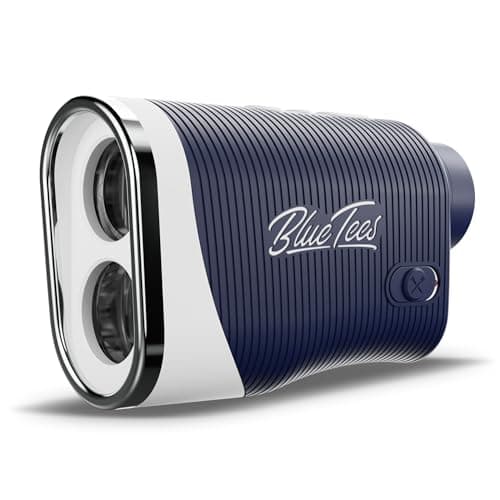
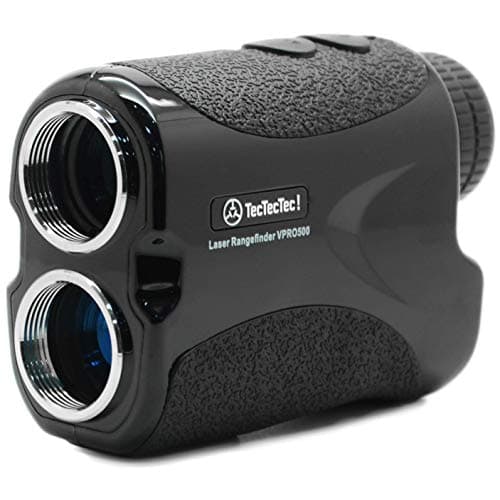
A laser rangefinder does one job — tell you the exact distance to the flag — and the good news is that the value models do it just as accurately as the premium ones. What you save money on is the badge and a few conveniences, not the core measurement. The TecTecTec VPRO500 leads because it’s the simple, light, accurate laser that got a generation of golfers started, at a price that’s now a genuine no-brainer. The Blue Tees Series 3 Max adds a brighter display and handy features for a little more.
We’ve ranked on what matters to a senior on a budget: accuracy, an easy-to-read display, simple one-button operation, and value. All of these give you the exact yardage to the pin that a GPS watch can’t — a laser reads the flag itself, not just the front and back of the green. If your hands aren’t steady, note the stabilized option below; if aiming a device is the struggle, a GPS watch may suit you better than any laser.
What you don't lose by going budget
Accuracy.A value laser ranges the flag to within a yard, exactly like a premium one — the physics of the measurement is the same. You are not buying a less accurate device by spending less.
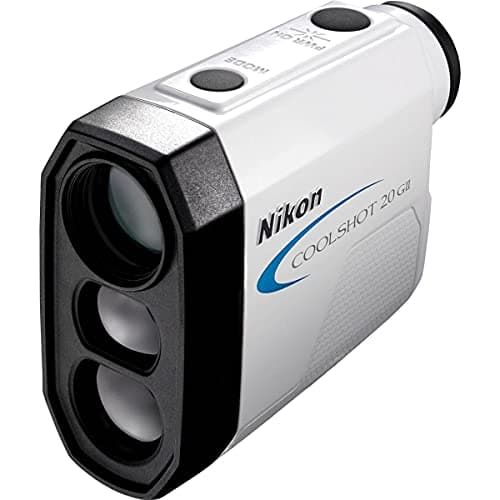
The essentials. Every pick here locks onto the flag quickly, reads clearly, and operates with one button. The VPRO500 and Coolshot 20 are about as simple as a rangefinder gets, which is a virtue, not a compromise.
What you do trade
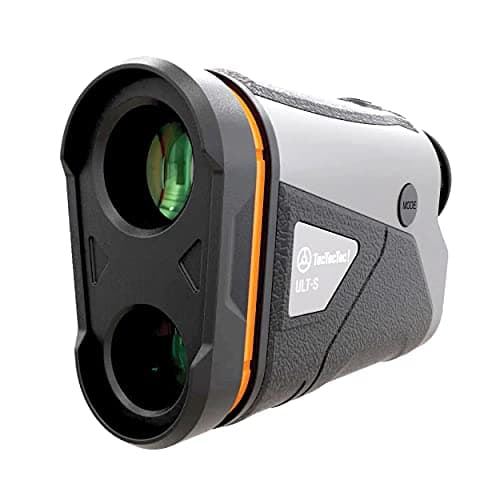
Image stabilizationis the one feature genuinely worth paying up for if your hands shake — it holds the view steady so you can settle the crosshair on a distant flag. Most budget lasers don’t have it; the TecTecTec ULT-S is the exception here, a stabilized laser at a still-fair price. If a wobbling view is your problem, it’s the pick, and our stability with shaky hands guide goes deeper. You also trade premium optics (the Nikon Coolshot is the standout for glass clarity here) and extras like a bright OLED display or a magnetic cart mount (the Blue Tees adds both).
Slope: handy, but know the rule
Several of these offer a slope function that adjusts the yardage for uphill and downhill shots — genuinely useful for club selection. It must be switched off to stay tournament-legal, and every slope model here has that switch. If you never play competitively, leave it on; the slope explained guide covers when it helps.
Who should spend more (or less)
If your eyesight is poor, the Nikon’s superior optics are worth the step up within this budget field. If your hands shake, pay for the stabilized ULT-S. But if you simply want an accurate yardage and your hands and eyes are fine, the VPRO500 is all the rangefinder most seniors ever need — don’t let a pro-shop upsell talk you into four figures of features you won’t use. For the premium field, see best rangefinders for seniors.
How we picked this
We haven't hit this gear — and we say so
We compiled the published manufacturer specifications — shaft weight and flex, loft, grip diameter, ball compression, cart weight — did the swing-speed and compression arithmetic, cross-read the owner manuals, and scored each pick against a published rubric. The scores are judgments from documented research — they are notlab measurements we took, because we don't have a lab and we're not going to pretend we do. Where somebody has genuinely measured this, we link them. You can check every number we publish.