Skip to content
Fairway&Fescue

The Edges · Trimmers, Edgers & Blowers

The Best Leaf Blower Vacuum

Blower, vacuum and mulcher in one tool - ranked on the mulch ratio, the impeller material and published airflow, with an honest note on when you want a plain blower instead.

By Stephen V.Updated How we pick
#ad

We earn a commission when you buy through our Amazon links, at no extra cost to you. It never changes our rankings — and we'll tell you when the cheaper bag or machine is the better buy. How this works.

For most people clearing leaves off a suburban lawn, the best leaf blower vacuum is the WORX Trivac WG512: it blows, vacuums and mulches from one corded body, and the mulching is the part that actually changes your afternoon — shredding leaves on the way into the bag reduces the pile to a fraction of its volume, which is the difference between filling two bags and filling nine. If you clear a lot of leaves, and especially if they are wet, pay up for the Toro 51609 Ultra and its metal impeller, which is the one spec in this category that predicts how long the tool lasts. If the extension lead is what has put you off, the Greenworks 48V is the only cordless option here and publishes the highest airflow on the page at 520 CFM. And the BLACK+DECKER BV6000 is the budget pick that still publishes both its numbers.

The thing to understand before you buy is that a blower-vac is not a better blower. It is a different tool for a different job, and it is worse at blowing than a tool built only to blow. A dedicated blower moves leaves — across the lawn, out of the beds, off the drive — and it does that faster and more powerfully than any 3-in-1. What it cannot do is pick them up. If your plan ends with a pile of leaves that somebody has to deal with, the pile is the problem, and the vacuum-mulcher is what solves it.

So the real question is what happens at the end of your clearance. If you blow leaves into a wood, a ditch or a corner you are happy to leave them in, buy a proper blower and stop reading — our leaf blower roundup ranks those on CFM and will serve you better. If you bag your leaves, compost them, or run them onto the lawn as mulch, a blower-vac earns its keep every autumn, because the mulch ratio is doing the work of several bags and several trips.

We have not cleared a lawn with any of these tools and we are not going to imply otherwise. The ranking reasons from what each listing publishes — amperage or voltage, CFM and MPH where the maker states them, impeller material, and whether the tool is corded or cordless — see how we pick. Where a manufacturer does not publish a figure, we say so rather than estimating it, and that gap is called out in the cons on every pick it affects.

The short answer

Quick picks

#ProductBest forScorePrice
01
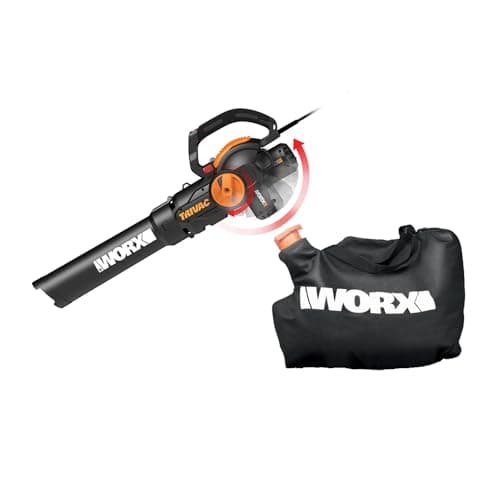
WORX WORX Trivac 3-in-1 Blower / Vacuum / Mulcher (WG512)
WORX Trivac 3-in-1 Blower / Vacuum / Mulcher (WG512)

Blower, vacuum and mulcher in one corded tool. Vacuuming and mulching leaves reduces the pile to a fraction of its volume, which is the difference between two bags and nine.

Collecting leaves, not just moving them
7.4
$110.99Amazon
02
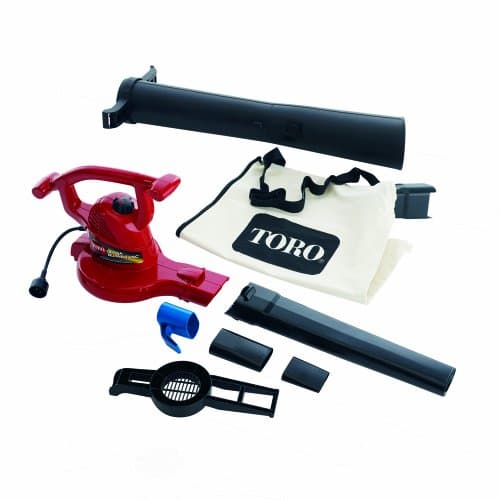
Toro Toro 51609 Ultra 12A Blower / Vacuum, Metal Impeller
Toro 51609 Ultra 12A Blower / Vacuum, Metal Impeller

The one with a metal impeller instead of a plastic one, which is the single spec that decides how long a blower-vac survives being fed wet leaves and the occasional stone.

Mulching wet leaves without destroying the tool
7.5
$229.95Amazon
03
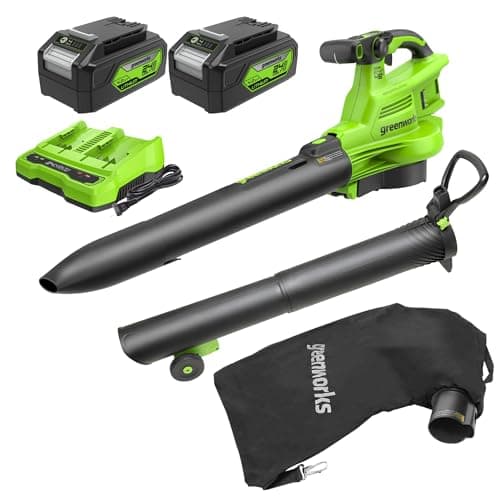
Greenworks Greenworks 48V (2x24V) Blower / Vacuum, 520 CFM
Greenworks 48V (2x24V) Blower / Vacuum, 520 CFM

The only cordless blower-vac here, and the only one that publishes a higher CFM than the corded tools. If the cable is what has stopped you buying one of these, this is the answer.

Cordless leaf collection, no extension lead
7.8
$191.43Amazon
04
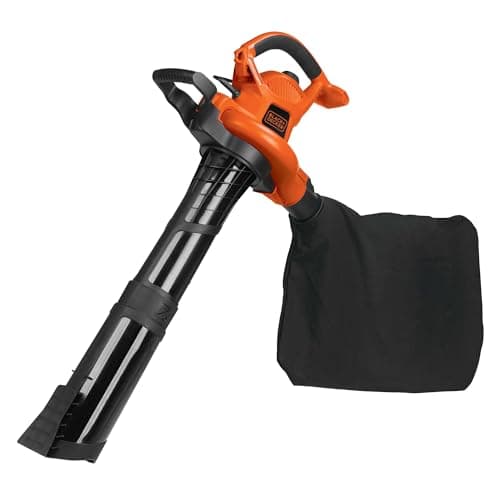
BLACK+DECKER BLACK+DECKER 3-in-1 Blower / Vac / Mulcher, 400 CFM (BV6000)
BLACK+DECKER 3-in-1 Blower / Vac / Mulcher, 400 CFM (BV6000)

A 12-amp corded 3-in-1 with both numbers published: 400 CFM at 250 MPH. The cheapest tool here that both publishes its airflow and can collect what it moves.

Cheapest blower-vac with real specs
7.4
$79.00Amazon

#ad · Live prices from the Amazon Product API, as of October 11, 2026. Where we have no verified live price, we show none — we would rather leave a gap than print a number that has rotted.

In detail

The picks, in full

01
WORX WORX Trivac 3-in-1 Blower / Vacuum / Mulcher (WG512)

Collecting leaves, not just moving them

WORX Trivac 3-in-1 Blower / Vacuum / Mulcher (WG512)

3-in-1 blow / vac / mulchCorded electricMetal impeller mulchingCollection bag
7.4/10

Blower, vacuum and mulcher in one corded tool. Vacuuming and mulching leaves reduces the pile to a fraction of its volume, which is the difference between two bags and nine.

Airflow (CFM)
6
Runtime
10
Noise
6
Ergonomics
6
Price
9

Pros

  • Mulching shreds leaves down dramatically, so the collection bag holds many times more leaf per bag
  • Shredded leaf is excellent mulch for beds or compost, so the waste becomes a resource
  • Corded means unlimited runtime for a long autumn session

Cons

  • You are managing a cord while walking round the garden
  • Vacuuming is slow compared with blowing — it is a finishing tool, not a clearing tool

Skip this if…

…your lawn is large or far from an outlet. Vacuum-mulching an acre with a corded tool is not realistic; blow the leaves into piles with a cordless blower instead.

$110.99View on Amazon

$129.9915% off

Price as of October 11, 2026. Prices change — Amazon's is the one that counts.

#ad · we may earn a commission from this link to WORX Trivac 3-in-1 Blower / Vacuum / Mulcher (WG512)

02
Toro Toro 51609 Ultra 12A Blower / Vacuum, Metal Impeller

Mulching wet leaves without destroying the tool

Toro 51609 Ultra 12A Blower / Vacuum, Metal Impeller

12 amp cordedVariable speed to 235 MPHMetal impellerBlower / vac / mulcher
7.5/10

The one with a metal impeller instead of a plastic one, which is the single spec that decides how long a blower-vac survives being fed wet leaves and the occasional stone.

Vacuum / mulch
9
Durability
10
Ease of use
7
Price
4

Pros

  • A metal impeller is the real durability difference in this category - plastic impellers are what fail first on a tool that spends its life shredding damp leaves
  • Variable speed matters more on a vacuum than a blower: full power lifts gravel off a driveway, low power lets you work a flowerbed
  • Corded means constant power for the whole job, which is what leaf clearing actually needs

Cons

  • The most expensive tool on this page by a clear margin
  • Toro does not publish a CFM figure for this model, so you cannot compare its airflow directly against the BLACK+DECKER
  • Corded, so you are managing an extension lead around every tree and bed

Skip this if…

…you clear a small lawn of dry leaves once or twice a season. The metal impeller is insurance against heavy, wet, repeated use, and on light duty the BLACK+DECKER does the same three jobs for a third of the money.

$229.95View on Amazon

Price as of October 11, 2026. Prices change — Amazon's is the one that counts.

#ad · we may earn a commission from this link to Toro 51609 Ultra 12A Blower / Vacuum, Metal Impeller

03
Greenworks Greenworks 48V (2x24V) Blower / Vacuum, 520 CFM

Cordless leaf collection, no extension lead

Greenworks 48V (2x24V) Blower / Vacuum, 520 CFM

48V (2 x 24V)520 CFM publishedCordless(2) 4.0 Ah batteries included
7.8/10

The only cordless blower-vac here, and the only one that publishes a higher CFM than the corded tools. If the cable is what has stopped you buying one of these, this is the answer.

Vacuum / mulch
8
Durability
7
Ease of use
10
Price
6

Pros

  • 520 CFM is the highest published airflow on this page, and CFM - not MPH - is the number that moves a pile of leaves
  • No cable, which on a lawn with beds and trees in the middle of it is a bigger quality-of-life difference than any spec
  • Arrives with two 4.0 Ah batteries and runs on the 24V platform, so the packs fit other Greenworks tools

Cons

  • Runtime is the ceiling - a big leaf clearance on a corded tool simply does not stop, and this one will
  • Costs more than either corded 3-in-1 here
  • Running two 24V packs in series means both have to be charged before you start

Skip this if…

…you have a long autumn clearance and an outdoor outlet. A corded tool never runs out halfway through the job, and leaf clearing is exactly the task where that matters most.

$191.43View on Amazon

$299.9936% off

Price as of October 11, 2026. Prices change — Amazon's is the one that counts.

#ad · we may earn a commission from this link to Greenworks 48V (2x24V) Blower / Vacuum, 520 CFM

04
BLACK+DECKER BLACK+DECKER 3-in-1 Blower / Vac / Mulcher, 400 CFM (BV6000)

Cheapest blower-vac with real specs

BLACK+DECKER 3-in-1 Blower / Vac / Mulcher, 400 CFM (BV6000)

400 CFM, 250 MPH12 A corded3-in-1 blow / vac / mulchCollection bag
7.4/10

A 12-amp corded 3-in-1 with both numbers published: 400 CFM at 250 MPH. The cheapest tool here that both publishes its airflow and can collect what it moves.

Airflow (CFM)
5
Runtime
10
Noise
6
Ergonomics
6
Price
10

Pros

  • Publishes CFM and MPH, which most tools at this price will not
  • 400 CFM is modest but genuine, and 250 MPH lifts stuck leaves off grass
  • Cheap, corded and nothing to charge

Cons

  • 400 CFM is well short of the cordless EGO and Toro blowers
  • Corded, with all the cord management that implies

Skip this if…

…you have a lot of wet leaves on grass. 400 CFM moves dry leaves off hard surfaces well and struggles with sodden leaf matted into a lawn.

$79.00View on Amazon

$99.0020% off

Price as of October 11, 2026. Prices change — Amazon's is the one that counts.

#ad · we may earn a commission from this link to BLACK+DECKER 3-in-1 Blower / Vac / Mulcher, 400 CFM (BV6000)

Leaf blower vacuums compared

ToolPowerPublished airflowImpellerBest for
WORX Trivac WG512CordedNot publishedPlasticMost lawns, best all-rounder
Toro 51609 Ultra12A cordedNot published (to 235 MPH)MetalHeavy and wet leaf loads
Greenworks 48VCordless (2 x 24V)520 CFMNot publishedNo cable, highest airflow
BLACK+DECKER BV600012A corded400 CFM at 250 MPHPlasticBudget, both specs published

Every figure in that table is one the manufacturer or the listing states. The blanks are real blanks, not omissions on our part: two of these makers do not publish a CFM number for these models, and we would rather show you an empty cell than a figure we invented. Prices are live from the price layer, with an “as of” date beside each tool above.

How to choose a leaf blower vacuum

Start with the mulch ratio, because it is the whole point.Makers quote this as a reduction figure — sixteen bags of leaves down to one, that sort of claim. Treat the exact number with suspicion, because it depends entirely on how dry the leaves are, but the principle is sound and large: shredded leaves pack far denser than whole ones. That is the single reason to own one of these rather than a blower, and it is worth more than any airflow spec on the page.

Then look at the impeller material. This is the spec almost nobody compares and the one that decides whether the tool survives. The impeller is the fan that both moves the air and chops the leaves, and it is what a stone, an acorn or a wet clump hits first. A metal impeller shrugs that off; a plastic one chips, goes out of balance, and eventually fails. If you are clearing heavy loads every autumn, this is where to spend the money, and it is the whole case for the Toro.

Compare CFM, not MPH. MPH is air speed and it sells tools; CFM is air volume and it moves leaves. A narrow nozzle will produce an impressive MPH figure while shifting very little material. For a vacuum the same logic applies in reverse: volume is what lifts leaves into the tube. This is why the Greenworks publishing 520 CFM is a more meaningful claim than a high MPH number would be, and why the BLACK+DECKER publishing both is genuinely useful.

Decide corded or cordless on the length of your clearance.Leaf clearing is the one garden job that runs long and continuous — you are not making passes with breaks, you are working through a lawnful. A corded tool never stops, which is why three of the four picks here are corded and why that is not an oversight. Cordless wins when your lawn has obstacles a cable would snag on, or no outdoor outlet. Be honest about which of those describes you.

Check the bag and the switchover. You will empty the collection bag repeatedly, and some designs require tools or a full nozzle change to go from blowing to vacuuming. A tool-free switch is worth having, because the whole value of a 3-in-1 is that you do both jobs in one pass rather than fetching a second tool.

Mind the weight on your shoulder. In vacuum mode you are carrying the tool plus an increasingly full bag of wet leaves. A tool that felt light in the shop is a different proposition forty minutes into a clearance, and this is the most common reason people stop using one.

Leaf blower vs leaf vacuum: which do you actually need?

Buy a blower if the leaves have somewhere to go. A boundary hedge, a wooded edge, a compost corner. Blowing is faster and less physical than vacuuming, and a dedicated blower out-blows any 3-in-1 on this page. Our best leaf blower list ranks on published CFM for exactly this buyer, and the cordless blower list covers it without a cable.

Buy a blower-vac if the leaves have to leave.Bagging for collection, filling a compost bin, or clearing a small courtyard where blowing just moves the problem to the neighbor. The mulching is what makes this viable — vacuuming whole leaves would fill the bag in minutes.

And consider the third option: mulch them into the lawn.A mower with a mulching deck will shred a moderate leaf fall straight into the turf, where it breaks down and feeds the soil. It is the least work of all three approaches and it genuinely improves the lawn. It only works up to a point — a thick mat of wet leaves will smother grass rather than feed it — but for a light or moderate fall it beats both blowing and vacuuming. That is covered in the best mulching lawn mower.

Why leaves matter to the lawn underneath

It is worth saying why anyone bothers. A layer of leaves left on turf through winter blocks light and traps moisture against the crowns, and cool-season grass sitting under a wet mat comes out of winter thin, patched and vulnerable to disease. That is the real cost of skipping the job, and it lands in March rather than November.

The flip side is that leaves are free organic matter, and the thing to do with what you collect is compost it or spread it — not bin it. If you have already thinned the lawn by leaving leaves on it too long, autumn is also the right moment to overseed and the most valuable feed of the year, which is set out in our lawn fertilizer schedule.

Who should skip these

Skip a blower-vac if you have a large property with a heavy leaf fall. Vacuuming an acre of leaves through a handheld tube is a genuinely unreasonable amount of work, and the right answer at that scale is a blower to windrow them plus a tow-behind lawn sweeper behind a ride-on.

Skip it if your leaves can simply be blown somewhere. You are paying for a collection function you will not use, and losing blowing power to get it.

And skip the Toro unless the leaf load genuinely justifies it. The metal impeller is excellent and it is insurance against a workload most lawns never generate; on a light autumn the BLACK+DECKER does the same three jobs for a fraction of the price.
How we picked this

We haven't hit this gear — and we say so

We compiled the published manufacturer specifications — shaft weight and flex, loft, deck width, blower CFM, fertilizer NPK, seed species — did the deck-width and nitrogen arithmetic, cross-read the owner manuals, and scored each pick against a published rubric. The scores are judgments from documented research — they are notlab measurements we took, because we don't have a lab and we're not going to pretend we do. Where somebody has genuinely measured this, we link them. You can check every number we publish.

Questions

Frequently asked

What is the best leaf blower vacuum?
The WORX Trivac WG512 for most lawns — corded, blows, vacuums and mulches from one body. For heavy or wet leaf loads, the Toro 51609 Ultra, because its metal impeller is what survives that work. For no cable, the Greenworks 48V, which publishes the highest airflow here at 520 CFM.
Is a leaf blower or a leaf vacuum better?
They solve different problems. A blower moves leaves and does it faster and more powerfully; a vacuum collects and shreds them. If the leaves have somewhere to go, buy a blower. If they have to leave your property or go in a compost bin, buy a blower-vac — the mulching is what makes bagging practical.
Does mulching leaves really reduce the volume that much?
The direction is real and large, though the exact reduction ratio makers quote depends heavily on how dry the leaves are. Shredded leaves pack far denser than whole ones, and that is the single reason to own one of these rather than a plain blower.
Should I get a corded or cordless blower vacuum?
Corded for a long clearance, which is what leaf season actually is — a corded tool never runs out mid-job. Cordless if your lawn has beds and trees a cable would snag on, or you have no outdoor outlet. The Greenworks 48V is the cordless option here.
Why does the impeller material matter?
The impeller is the fan that both moves air and chops the leaves, so it is what takes the hit from stones, acorns and wet clumps. Metal shrugs that off; plastic chips, goes out of balance and eventually fails. On heavy repeated use it is the spec that decides how long the tool lasts.
Can I just mulch leaves with my lawn mower instead?
For a light or moderate leaf fall, yes — and it is less work and better for the lawn, because the shredded leaf feeds the soil. It stops working once the fall is thick enough to mat, which smothers grass instead. See the best mulching lawn mower.

Keep reading

Receipts

Sources

We do not run a testing lab, and we do not pretend to. Every spec number here comes from a manufacturer's published sheet or an official standard, cited above. Where we could not verify something, we say so on the page rather than quietly leaving it out. Read our full method.