Skip to content
Fairway&Fescue

The Seed · Grass Seed & Fescue

Tall Fescue

The most planted lawn grass across much of the US, explained properly - what it does well, where it fails, and which bag of it to buy.

By Stephen V.Updated How we pick
#ad

We earn a commission when you buy through our Amazon links, at no extra cost to you. It never changes our rankings — and we'll tell you when the cheaper bag or machine is the better buy. How this works.

Tall fescue is a cool-season bunch grass, and across the broad middle band of the United States it is the most sensible lawn grass you can plant. It keeps colour through heat that fades Kentucky bluegrass, roots deeper than perennial ryegrass so it rides out a dry August, and tolerates meaningfully more shade than either. If you want one bag of it, buy Barenbrug Turf Saver RTF— the rhizomatous type that repairs its own patches — or Jonathan Green Black Beauty Tall Fescue if appearance matters more than self-repair.

There is one thing to get right before anything else, and it accounts for most disappointment with this species: turf-type and forage-type tall fescue are not the same product. Kentucky 31 is tall fescue, and it was bred to feed cattle. Modern turf-type cultivars were bred to be looked at. They are sold side by side, at very different prices, and the difference in the finished lawn is permanent.

We have not grown any of this. What follows is the agronomy as it is published and independently trialled — the National Turfgrass Evaluation Program runs the US cultivar trials and is the reference anyone serious about turfgrass uses — alongside the seed labels themselves. Our how we pick page explains how we work.

The short answer

Quick picks

#ProductBest forScorePrice
01
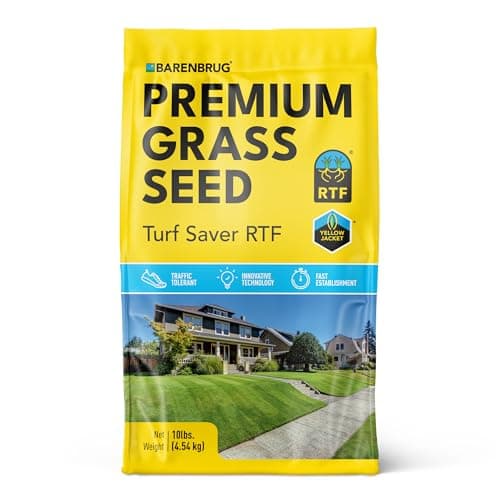
Barenbrug Barenbrug Turf Saver RTF Tall Fescue (10 lb)
Barenbrug Turf Saver RTF Tall Fescue (10 lb)

The one bag on this list that does something the others cannot: RTF is rhizomatous tall fescue, so it spreads sideways and fills its own thin patches instead of needing you to overseed them.

A lawn that repairs itself
8.4
$41.98Amazon
02
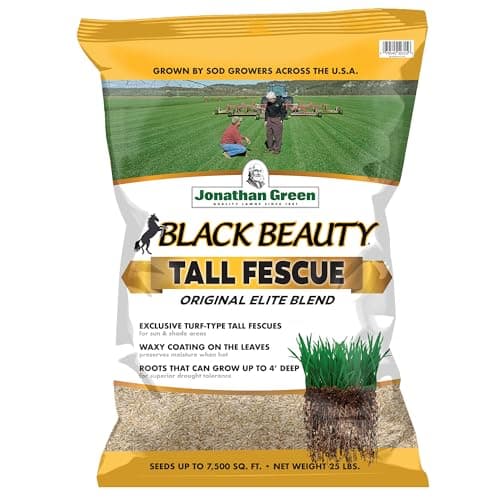
Jonathan Green Jonathan Green Black Beauty Tall Fescue Blend (25 lb)
Jonathan Green Black Beauty Tall Fescue Blend (25 lb)

The premium turf-type tall fescue blend, in a bag size that actually seeds a lawn. Black Beauty is the cultivar family lawn-care professionals name when asked what they would put down themselves.

The best-looking tall fescue lawn
7.6
$104.72Amazon
03
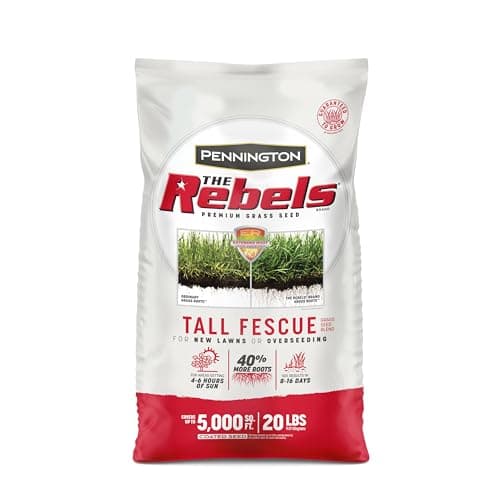
Pennington Pennington The Rebels Tall Fescue (20 lb)
Pennington The Rebels Tall Fescue (20 lb)

The value pick, and the bag we would point most people at first. The Rebels is a long-established turf-type tall fescue brand and a 20 lb bag costs a third of the premium blends.

Best value turf-type tall fescue
7.2
$35.51Amazon
04
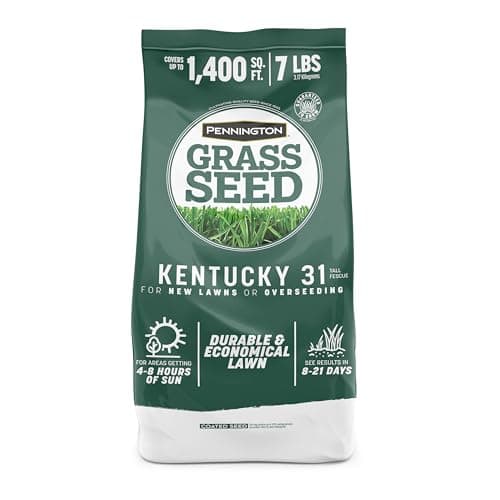
Pennington Pennington Kentucky 31 Tall Fescue (7 lb)
Pennington Kentucky 31 Tall Fescue (7 lb)

The skip-this pick for a lawn, and the right answer for a field. K31 is a forage-type tall fescue — coarse-bladed and tough as old boots, but it will never look like turf.

Pastures, ditches and erosion control
6.4
$18.38Amazon

#ad · Live prices from the Amazon Product API, as of October 7, 2026. Where we have no verified live price, we show none — we would rather leave a gap than print a number that has rotted.

In detail

The picks, in full

01
Barenbrug Barenbrug Turf Saver RTF Tall Fescue (10 lb)

A lawn that repairs itself

Barenbrug Turf Saver RTF Tall Fescue (10 lb)

Rhizomatous tall fescue (RTF)Yellow Jacket seed coating10 lb bagSelf-repairing
8.4/10

The one bag on this list that does something the others cannot: RTF is rhizomatous tall fescue, so it spreads sideways and fills its own thin patches instead of needing you to overseed them.

Species quality
10
Shade tolerance
7
Drought tolerance
9
Self-repair
10
Value per lb
6

Pros

  • Ordinary tall fescue is a bunch grass — it grows up, not out, so every bare patch stays bare until you reseed it. RTF puts out rhizomes and closes gaps on its own
  • The Yellow Jacket coating is a water-holding polymer coat, which helps germination on the days you miss a watering
  • Barenbrug sells the same seed into sports fields and parks, which is the honest reason to trust the genetics

Cons

  • Priced well above a commodity tall fescue bag per pound of seed
  • Coated seed weighs more per viable seed, so a 10 lb bag of coated seed sows less area than 10 lb of bare seed

Skip this if…

…you are seeding a large area on a budget. At this price per pound, covering a half acre gets expensive fast — Pennington's Rebels blend is the better value for sheer square footage.

$41.98View on Amazon

Price as of October 7, 2026. Prices change — Amazon's is the one that counts.

#ad · we may earn a commission from this link to Barenbrug Turf Saver RTF Tall Fescue (10 lb)

02
Jonathan Green Jonathan Green Black Beauty Tall Fescue Blend (25 lb)

The best-looking tall fescue lawn

Jonathan Green Black Beauty Tall Fescue Blend (25 lb)

Turf-type tall fescue blend25 lb bagDeep-rooting cultivarsDark green colour class
7.6/10

The premium turf-type tall fescue blend, in a bag size that actually seeds a lawn. Black Beauty is the cultivar family lawn-care professionals name when asked what they would put down themselves.

Species quality
10
Shade tolerance
7
Drought tolerance
9
Self-repair
4
Value per lb
8

Pros

  • A blend of several improved tall fescue cultivars rather than one, which spreads the risk of any single cultivar failing in your conditions
  • 25 lb is a real lawn's worth of seed at a sensible price per pound
  • The dark colour class is the visible difference between this and a commodity fescue bag

Cons

  • Noticeably more expensive than Scotts or Pennington per bag
  • Still a bunch-type tall fescue, so it will not self-repair the way RTF does

Skip this if…

…the lawn is mostly deep shade. Tall fescue tolerates shade better than bluegrass but a fine fescue mix handles genuine gloom far better.

$104.72View on Amazon

Price as of October 7, 2026. Prices change — Amazon's is the one that counts.

#ad · we may earn a commission from this link to Jonathan Green Black Beauty Tall Fescue Blend (25 lb)

03
Pennington Pennington The Rebels Tall Fescue (20 lb)

Best value turf-type tall fescue

Pennington The Rebels Tall Fescue (20 lb)

Turf-type tall fescue20 lb bagImproved cultivarsSun and light shade
7.2/10

The value pick, and the bag we would point most people at first. The Rebels is a long-established turf-type tall fescue brand and a 20 lb bag costs a third of the premium blends.

Species quality
8
Shade tolerance
6
Drought tolerance
8
Self-repair
4
Value per lb
10

Pros

  • Genuinely cheap per pound for real turf-type tall fescue rather than forage-type seed
  • 20 lb covers a substantial area at normal new-lawn seeding rates
  • The Rebels cultivars have been in the trials and on lawns for decades

Cons

  • Not the dark colour class of the Black Beauty bags
  • Bunch-type, so no self-repair

Skip this if…

…you are overseeding a lawn you already like the look of. Matching an existing dark-green fescue with a mid-green bag leaves you with a patchwork for a season.

$35.51View on Amazon

$59.9941% off

Price as of October 7, 2026. Prices change — Amazon's is the one that counts.

#ad · we may earn a commission from this link to Pennington The Rebels Tall Fescue (20 lb)

04
Pennington Pennington Kentucky 31 Tall Fescue (7 lb)

Pastures, ditches and erosion control

Pennington Kentucky 31 Tall Fescue (7 lb)

Kentucky 31 forage-type fescue7 lb bagDrought-resistantCoarse blade
6.4/10

The skip-this pick for a lawn, and the right answer for a field. K31 is a forage-type tall fescue — coarse-bladed and tough as old boots, but it will never look like turf.

Species quality
4
Shade tolerance
5
Drought tolerance
10
Self-repair
3
Value per lb
10

Pros

  • Extremely tough and drought-tolerant — it was bred for grazing land, and it shows
  • The cheapest fescue seed you can buy, by a distance
  • Genuinely the right choice for a bank, a ditch, a paddock or a hard-wearing play area

Cons

  • A coarse, wide blade that does not look like a lawn next to any turf-type fescue
  • Clumps rather than knitting, so a K31 lawn reads as uneven however you mow it

Skip this if…

…you want a lawn. This is the single most common grass-seed mistake we see: K31 is on the shelf next to the turf-type bags at a third of the price, and the difference is permanent. Buy The Rebels instead.

$18.38View on Amazon

Price as of October 7, 2026. Prices change — Amazon's is the one that counts.

#ad · we may earn a commission from this link to Pennington Kentucky 31 Tall Fescue (7 lb)

What tall fescue is, in plain terms

It is a cool-season perennial grass, meaning it grows actively in spring and autumn and slows in high summer. It is a bunchgrass: each plant grows upward from its own crown and, in the standard forms, does not spread sideways. Its defining physical feature is a deep root system — deeper than most lawn grasses — which is where its drought and heat performance comes from. It reaches water that shallower species cannot.

Where tall fescue is the right choice

The transition zone, above all. That broad band across the middle of the country is too hot for comfortable bluegrass and too cold for reliable warm-season grass. Tall fescue is the species that copes with both ends of that, which is why it dominates lawns there.

Hot summers with limited watering.Deep roots plus good heat tolerance means it stays green on less irrigation than bluegrass needs — which matters both for your bill and under the kind of outdoor water restrictions documented by EPA WaterSense.

Part shade.It handles four to six hours of sun better than bluegrass or ryegrass. It is not a deep-shade grass though — that is fine fescue's job, and our shade roundup covers it.

Where tall fescue is the wrong choice

Deep shade under dense trees. Use fine fescue instead.

Lawns that take heavy wear and need to knit back.Standard tall fescue is a bunch grass and will not fill a worn path. Either choose RTF, or accept annual overseeding, or consider bluegrass — the trade-offs are laid out in tall fescue vs Kentucky bluegrass.

The deep south. In genuinely subtropical heat, warm-season grasses are the right answer and no cool-season species is comfortable.

Turf-type versus Kentucky 31

Kentucky 31 is a forage cultivar: wide coarse blades, clumping growth, very tough, very cheap. Genuinely the right grass for a paddock, a ditch bank or erosion control on a slope. On a lawn it never looks like turf, however you mow it.

Turf-type tall fescues— the cultivars in The Rebels, in Black Beauty, in Barenbrug's RTF — were selected for narrow blades, density and darker colour. They cost two to three times as much per pound and they are worth it for a lawn. If you take one thing from this page: do not buy K31 for a lawn to save money.

Rhizomatous tall fescue (RTF)

RTF is tall fescue that has been selected to produce rhizomes — underground stems that push out sideways and start new plants. The practical effect is that a thin patch tends to close on its own rather than staying thin until you reseed it. On any lawn with wear on it, that is the most valuable property available in this species, and it is why the Barenbrug bag leads our best grass seed ranking.

Seeding rates and the arithmetic

Published rates for turf-type tall fescue are commonly around 6–8 lb per 1,000 square feet for a new lawn, and roughly half that for overseeding an existing one. For a 5,000 square foot lawn, that is in the region of 30–40 lb of seed for a full establishment — which is why 20 and 25 lb bags are the sensible purchase and a 5.6 lb bag is a patching product.

Two things change that arithmetic. Coated seed — Barenbrug's Yellow Jacket coating, Scotts' coatings — weighs more per viable seed, so a coated bag covers less ground than its weight implies; check the label's stated coverage rather than the weight. And combination products like Scotts EZ Seed are mostly mulch by weight, so their seed content per pound is lower again.

When to seed tall fescue

Late summer into early autumn is the best window by a wide margin: soil is still warm enough for fast germination, air is cooling, and the weed pressure that defeats spring seeding has passed. Spring is the second-best option and a clear second. And do not apply a crabgrass pre-emergent in the same season — it prevents your fescue germinating exactly as effectively as it prevents the crabgrass, a conflict covered in our fertilizer timing guide.

Looking after it once it is down

Mow high — tall fescue is happiest cut long, and height shades its own soil and crowds out weed seedlings. Feed it in autumn above all, which is when cool-season grasses build roots rather than leaf; our fertilizer roundup covers the programme. Water deeply and infrequently so those deep roots have a reason to go down. And if the lawn feels hard underfoot, the problem is compaction rather than feeding — see best lawn aerator.
How we picked this

We haven't hit this gear — and we say so

We compiled the published manufacturer specifications — shaft weight and flex, loft, deck width, blower CFM, fertilizer NPK, seed species — did the deck-width and nitrogen arithmetic, cross-read the owner manuals, and scored each pick against a published rubric. The scores are judgments from documented research — they are notlab measurements we took, because we don't have a lab and we're not going to pretend we do. Where somebody has genuinely measured this, we link them. You can check every number we publish.

Questions

Frequently asked

Is tall fescue a good grass for lawns?
Yes, across much of the US it is the best cool-season choice: it holds colour in heat, roots deeply enough to handle dry spells, and takes more shade than bluegrass or ryegrass. Buy a turf-type blend rather than Kentucky 31.
Does tall fescue spread?
Standard tall fescue does not — it is a bunch grass, so bare patches stay bare until you reseed. Rhizomatous tall fescue (RTF), such as Barenbrug Turf Saver, does spread sideways and closes its own thin patches.
How much shade will tall fescue take?
It handles four to six hours of sun reasonably well, which is more than bluegrass or ryegrass. For genuine deep shade under dense trees you need fine fescue instead — see best grass seed for shade.
When should I plant tall fescue seed?
Late summer into early autumn is clearly best: warm soil for germination, cooling air, and far less weed competition than spring. Spring is a workable second choice. Never in the same season as a crabgrass pre-emergent.

Keep reading

Receipts

Sources

We do not run a testing lab, and we do not pretend to. Every spec number here comes from a manufacturer's published sheet or an official standard, cited above. Where we could not verify something, we say so on the page rather than quietly leaving it out. Read our full method.