The Soil
Aerators, Dethatchers & Lawn Repair
When feeding and watering stop working, the problem is usually underneath: soil packed too hard for roots, or a mat of thatch the water never gets through. Two different problems, two different tools.
We earn a commission when you buy through our Amazon links, at no extra cost to you. It never changes our rankings — and we'll tell you when the cheaper bag or machine is the better buy. How this works.
When feeding and watering stop working, the problem has usually moved underground. Either the soil is packed too hard for roots to find air, or a mat of dead stems has built up between the grass and the soil so that water never gets through. Those are two different problems with two different tools, and using the wrong one is the most common mistake in this whole category.
It matters because these are the jobs that make everything else work. Fertilizer cannot reach roots that have no air. Seed cannot germinate sitting on a thatch layer. If you have been feeding and seeding a lawn that keeps disappointing you, the answer is probably on this page rather than in the fertilizer aisle.
Compaction and thatch are not the same problem
Compaction is soil particles pressed together so tightly that there is no pore space left for air and water. It comes from foot traffic, from machinery, and from heavy clay settling. A lawn with compaction feels hard underfoot and water tends to run off rather than soak in.
Thatchis a layer of dead and living stems, crowns and roots sitting between the green grass and the soil surface. A little is good — it cushions and insulates. More than about half an inch starts to shed water and hold disease. You diagnose it by cutting a small wedge out of the lawn with a spade and looking at the profile, which takes about a minute and is the most useful minute in lawn care.
The full diagnosis, with what to do in each case, is in aerating vs dethatching. Read it before you buy anything from this hub.
Coring works. Spiking mostly does not.
This is the thing the market does not want to tell you plainly. A hollow-tine core aerator pulls plugs of soil out of the ground and leaves holes with genuine air space. A spike aeratorpushes a solid spike in, which displaces the soil sideways and compresses the walls of the hole — so it can make the top inch slightly worse rather than better. Spike aerators are cheaper, lighter and much more widely sold, and for relieving compaction they are the wrong mechanism. They do have a real use: slicing the surface before overseeding, so seed reaches soil. Our aerator roundup ranks coring first for exactly this reason.
Dethatching is one job with two aggression levels
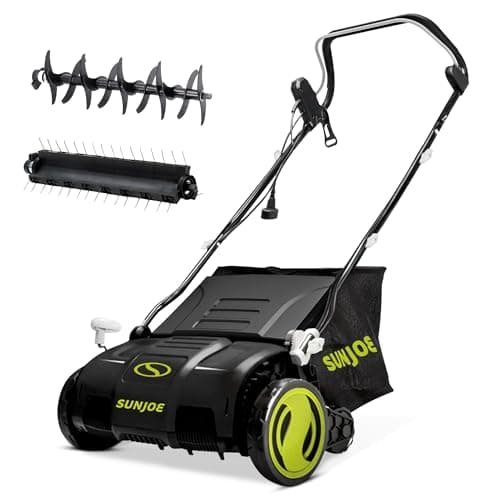
Machines in this category come with one of two working heads, and the difference is large. A spring-tine reelrakes loose material out of the canopy — gentle, good for light thatch and for a tidy-up. A scarifier blade reelhas fixed blades that cut down into the mat and slice it out — aggressive, and what a genuine thatch layer actually needs. Most machines ship with one. The pick in our dethatcher roundup ships with both, which is most of why it wins.
Timing, and the honest warning
Both jobs are stressful for a lawn, so do them when the grass can recover: early autumn for a cool-season lawn, which is also the best time to overseed and to feed. Doing all three in one weekend is the single most effective thing you can do for a tired lawn. Doing any of them in July is how you kill one.
And the warning: dethatching produces an astonishing volume of debris. People consistently underestimate this — a scarified lawn can yield many bags of material from a small area. Have a plan for it before you start, whether that is a collection bag, a tarp and a rake, or a tow-behind sweeper if you have a ride-on to pull one with.
Rent, do not always buy
We will say this on the pages too, because it is the right advice and it costs us a sale: a powered walk-behind core aerator can be rented for an afternoon for less than most of the tools in this hub cost to buy, and it will do in two hours what a hand corer does in two days. If you only need to aerate a whole lawn once every few years, renting is the sensible choice. Buying makes sense for the tow-behind implements, which you will use every autumn, and for the hand tools, which handle the spot repairs that rentals are not worth booking for.
Where to start
Diagnose first with aerating vs dethatching. Then go to best lawn aerator if the lawn is hard underfoot, or best dethatcher if water sits on a spongy layer. If the lawn is simply bumpy rather than unhealthy, a levelling rake and some topdressing is the fix, and it is ranked on the comparison page.
Start here
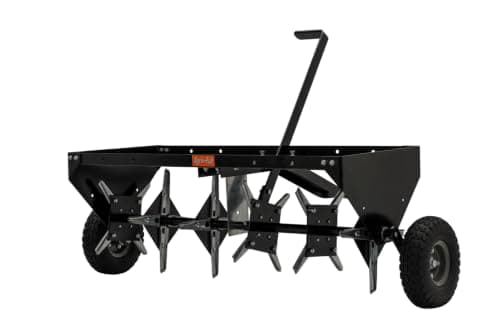
The Best Lawn Aerator
Core and spike aerators ranked by tine type, width and depth, with live prices and an honest skip-this.
Read the guide →
Everything in this hub
All aerators, dethatchers & lawn repair guides
Roundup
The Best Lawn Aerator
Core and spike aerators ranked by tine type, width and depth, with live prices and an honest skip-this.
Top pick · Agri-Fab 40" Tow-Behind Plug Aerator (24 knives)
Roundup
The Best Dethatcher
Dethatchers and scarifiers ranked by reel type, width and motor amperage, with live prices and the test to run first.
Top pick · Sun Joe 15" Dethatcher with Scarifier Blade Reel (AJ805E)
Head to head
Aerating vs Dethatching
The screwdriver test and the spade test, what each job fixes, when to do them, and the tool for each.
Top pick · Agri-Fab 40" Tow-Behind Plug Aerator (24 knives)