The Feed
Fertilizer, Weed Control & Spreaders
The cheapest thing you can do to a thin lawn is feed it properly. Most people buy the wrong bag, spread it by guesswork, and blame the seed.
We earn a commission when you buy through our Amazon links, at no extra cost to you. It never changes our rankings — and we'll tell you when the cheaper bag or machine is the better buy. How this works.
Feeding a lawn properly is the cheapest thing you can do to it, and the thing most people get wrong in the most expensive way: they buy the wrong bag, spread it by guesswork, and then blame the seed. Three numbers on every bag tell you almost everything — the NPK analysis and the square footage it covers. Those are published on every product, and almost nobody reads them.
This hub covers the three things that go on a lawn out of a bag or a bottle: fertilizer, weed control, and the spreader that applies both. They belong together because a good fertilizer applied unevenly produces a striped lawn, which looks worse than not feeding at all — so the spreader is not an accessory to this category, it is half of it.
NPK, in the only terms that matter
The three numbers on a bag are the percentages by weight of nitrogen, phosphorus and potassium. Nitrogen drives leaf growth and colour and is what a lawn mostly wants. Phosphorus matters at establishment, for root development in new seedlings, and much less afterwards. Potassium helps with stress tolerance. A 16-4-8 analysis — nitrogen, quarter as much phosphorus, half as much potassium — is the shape most established cool-season lawns want, which is why our fertilizer roundup is led by one.
The arithmetic that turns a percentage into an application
Here is the calculation nobody prints on the front of the bag. The standard target for a single feed is about one pound of actual nitrogen per 1,000 square feet. To find how much product that is, divide 100 by the first number on the bag. A 16 percent nitrogen fertilizer: 100 ÷ 16 = 6.25 lb of product per 1,000 sq ft. A 6 percent product like Milorganite: 100 ÷ 6 = about 16.7 lb for the same nitrogen. That single division explains why a cheap low-analysis bag is not always the bargain it looks like, and the worked examples are in how much fertilizer do I need.
Timing beats product choice
If you only feed a cool-season lawn once a year, do it in autumn. Autumn is when cool-season grasses put energy into roots and carbohydrate storage rather than top growth, so a fall feed does more for next summer's lawn than a spring feed does. Spring feeding produces visible green and a lot of mowing. This is also why the only weed-and-feed we genuinely recommend is the autumn one: perennial weeds are translocating to their roots at the same time, so the herbicide goes where it does most damage.
Pre-emergent and post-emergent are different jobs
A pre-emergent like Scotts Halts stops seed germinating; a post-emergent kills a plant that is already growing. For crabgrass, pre-emergent control is dramatically more reliable, and one correctly-timed spring application beats a summer of spot-spraying. The catch matters: a pre-emergent does not distinguish between crabgrass seed and the grass seed you wanted to sow. Pick one job per spring. The products, and the honest case for spot-spraying instead of blanket-treating a lawn, are in best weed and feed.
Why the spreader is half the job
Fertilizer applied unevenly gives you dark green stripes next to pale ones for the rest of the season, and once the pattern is in the lawn you cannot fix it except by waiting. A calibrated broadcast spreader with edge control is the difference — the edge shut-off also keeps fertilizer off your driveway and out of the storm drain, which matters for the reasons the EPA sets out on nutrient pollution. Our spreader roundup ranks on exactly that feature.
What feeding will not fix
Worth saying plainly, because it saves people money: if your lawn is thin and hard underfoot, the problem is compaction and no amount of fertilizer reaches roots that have no air. If water sits on the surface and runs off, you have thatch or compaction. Both are covered in aerating vs dethatching, and fixing them first makes everything in this hub work better. And if the lawn is thin because it is mown too short, raise the deck on your mower before you buy anything at all.
Where to start
Start with best lawn fertilizer for the products, and how much fertilizer do I need for the rates and the calendar. Then buy a broadcast spreader before you buy a second bag of anything — it will do more for the result than upgrading the fertilizer.
Start here
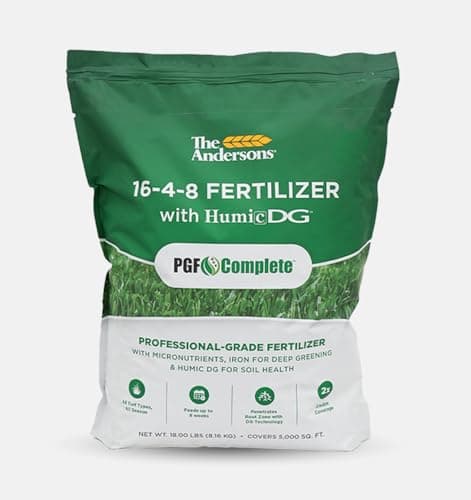
The Best Lawn Fertilizer
Granular and liquid lawn fertilizers ranked by NPK, release rate and coverage, with live prices and a skip-this.
Read the guide →
Everything in this hub
All fertilizer, weed control & spreaders guides
Roundup
The Best Lawn Fertilizer
Granular and liquid lawn fertilizers ranked by NPK, release rate and coverage, with live prices and a skip-this.
Top pick · The Andersons PGF Complete 16-4-8 with Humic DG (5,000 sq ft)
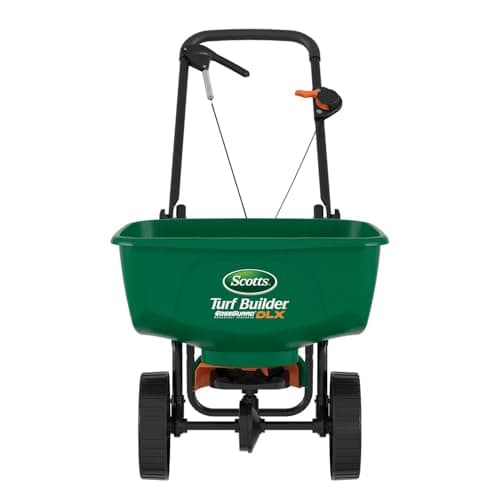
Roundup
The Best Broadcast Spreader
Broadcast and handheld spreaders ranked by edge control, capacity and build, with live prices and a skip-this.
Top pick · Scotts Turf Builder EdgeGuard DLX Broadcast Spreader
Buyer's guide
How Much Fertilizer Do I Need?
The pounds-of-nitrogen arithmetic, worked examples by lawn size, and a cool-season feeding calendar.
Top pick · The Andersons PGF Complete 16-4-8 with Humic DG (5,000 sq ft)
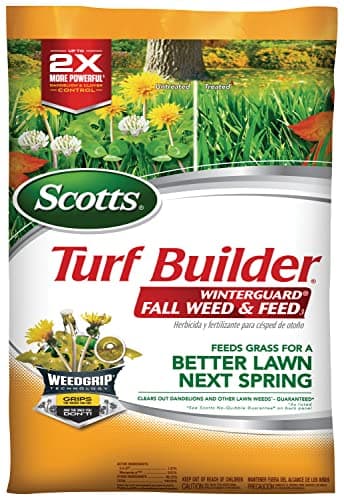
Roundup
The Best Weed and Feed
Weed-and-feed and crabgrass pre-emergents ranked by timing and herbicide type, with live prices and a skip-this.
Top pick · Scotts Turf Builder WinterGuard Fall Weed & Feed3 (11.43 lb)