Skip to content
Fairway&Fescue

The Cut · Mowers

The Best Mulching Lawn Mower

3-in-1 mowers ranked on how well they mulch - clippings in summer, leaves in autumn - with the one rule that decides whether mulching helps your lawn or smothers it.

By Stephen V.Updated How we pick
#ad

We earn a commission when you buy through our Amazon links, at no extra cost to you. It never changes our rankings — and we'll tell you when the cheaper bag or machine is the better buy. How this works.

The best mulching lawn mower for most lawns is the Worx WG760, a 40V 21-inch 3-in-1 rated to half an acre: it mulches, bags or side-discharges, and being battery-powered it does all of that without an engine to service. If your lawn slopes, the SENIX 21" self-propelled is the one to buy, because mulching is the hardest work you can ask of a mower and on a gradient you want the drive. The PowerSmart 21"puts a Briggs & Stratton engine on the same 3-in-1 deck, which is the right trade if parts availability in ten years matters more to you than convenience now. And the BILT HARD 21" is the cheapest genuine 3-in-1 here, with eight cutting heights.

Mulching means the deck keeps the clippings circulating under itself and cuts them repeatedly until they are small enough to fall down between the grass blades and disappear. It is not the same as side discharge, which throws whole clippings out onto the lawn, and it is not bagging. A “3-in-1” deck does all three, and that is the specification to look for — every mower on this page states it on its own listing, which is the entry requirement for being here at all.

The reason to care is that mulched clippings are free fertilizer. Grass clippings are mostly water and nitrogen, and returning them to the lawn recycles a meaningful share of the nitrogen you would otherwise buy in a bag. Mulching also does a second job most people do not expect: a mulching deck will shred a light or moderate autumn leaf fall straight into the turf, which is less work than raking, less work than vacuuming, and better for the soil than either. That second use is why demand for these mowers peaks in November as well as in spring.

We have not mown a lawn with any of these machines and we are not going to imply otherwise. The ranking reasons from what each listing publishes — deck width, whether the deck is stated as 3-in-1 or mulching, engine displacement or battery platform, drive type and the number of cutting heights — see how we pick. None of these makers publishes a mulching reduction ratio, so no page on this site quotes one.

The short answer

Quick picks

#ProductBest forScorePrice
01
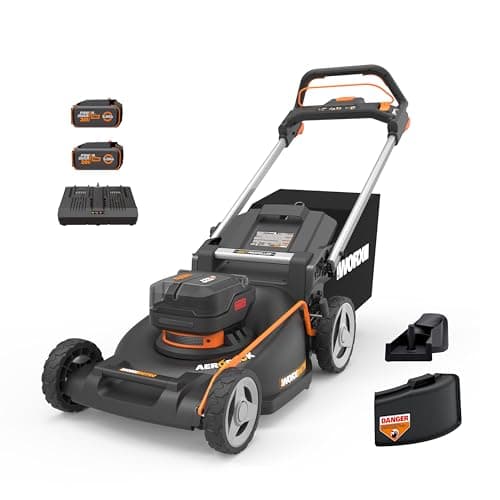
Worx Worx 40V 21" 3-in-1 Cordless Mower (WG760)
Worx 40V 21" 3-in-1 Cordless Mower (WG760)

Worx rates this one for half an acre and gives it a 21-inch 3-in-1 deck — mulch, bag or side discharge — on their 40V (2 x 20V) battery system.

Worx 20V owners with a bigger lawn
7.8
$459.99Amazon
02
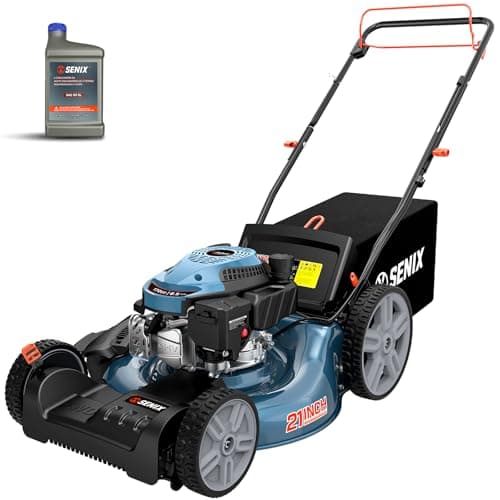
SENIX SENIX 21" 170cc Self-Propelled Gas, 3-in-1
SENIX 21" 170cc Self-Propelled Gas, 3-in-1

A 170cc self-propelled gas mower with a 3-in-1 deck and six cutting heights — the configurable one, for anyone who changes mowing height between spring and August.

Changing cut height through the season
7.8
$342.44Amazon
03
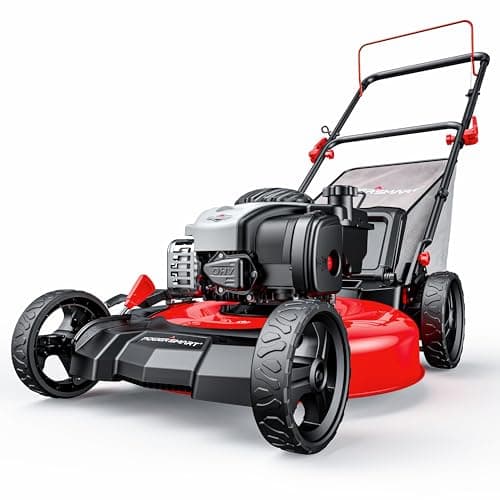
PowerSmart PowerSmart 21" 3-in-1 Gas Push Mower, 140cc Briggs & Stratton
PowerSmart 21" 3-in-1 Gas Push Mower, 140cc Briggs & Stratton

A Briggs & Stratton engine on a 21-inch 3-in-1 deck, and the listing names mulching as a capability rather than leaving you to guess. The engine badge is the reason to pick this over a generic gas push mower.

Mulching on a budget, known engine
7.0
$396.27Amazon
04
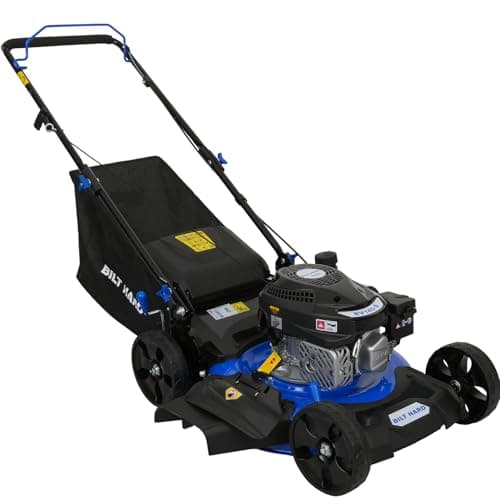
BILT HARD BILT HARD 21" 144cc Gas Push Mower, 3-in-1
BILT HARD 21" 144cc Gas Push Mower, 3-in-1

The skip-this pick in most cases, and an honest bargain in one: the cheapest 21-inch gas deck here, with eight cutting heights and no drive system.

A flat lawn on the tightest budget
6.6
$249.98Amazon

#ad · Live prices from the Amazon Product API, as of October 11, 2026. Where we have no verified live price, we show none — we would rather leave a gap than print a number that has rotted.

In detail

The picks, in full

01
Worx Worx 40V 21" 3-in-1 Cordless Mower (WG760)

Worx 20V owners with a bigger lawn

Worx 40V 21" 3-in-1 Cordless Mower (WG760)

21" deck40V (2 x 20V) platform3-in-1 mulch / bag / dischargeRated to 1/2 acre
7.8/10

Worx rates this one for half an acre and gives it a 21-inch 3-in-1 deck — mulch, bag or side discharge — on their 40V (2 x 20V) battery system.

Suits most lawns
8
Runtime / capacity
8
Ease of use
7
Platform value
8
Price
8

Pros

  • Runs on pairs of Worx 20V packs, so anyone already in that ecosystem buys the tool and not the batteries
  • 3-in-1 deck means you can mulch clippings back in summer and bag them in fall without a second machine
  • Worx publishes a half-acre rating, which is unusually specific for this price band

Cons

  • Two 20V packs in series is a lower-voltage arrangement than the 60V and 80V mowers here
  • Push, not self-propelled

Skip this if…

…your lawn has real slope. At half an acre on a hill you want a driven wheel, and every self-propelled mower above will be less work than this.

$459.99View on Amazon

Price as of October 11, 2026. Prices change — Amazon's is the one that counts.

#ad · we may earn a commission from this link to Worx 40V 21" 3-in-1 Cordless Mower (WG760)

02
SENIX SENIX 21" 170cc Self-Propelled Gas, 3-in-1

Changing cut height through the season

SENIX 21" 170cc Self-Propelled Gas, 3-in-1

21" deck170 cc engine6-position cutting height3-in-1 mulch / bag / discharge
7.8/10

A 170cc self-propelled gas mower with a 3-in-1 deck and six cutting heights — the configurable one, for anyone who changes mowing height between spring and August.

Suits most lawns
9
Runtime / capacity
9
Ease of use
7
Platform value
6
Price
8

Pros

  • Six height positions is real flexibility — low in spring, high in summer heat to shade the soil
  • 3-in-1 deck covers mulching, bagging and side discharge without an accessory
  • Self-propelled, with the engine displacement to back it up

Cons

  • More expensive than the PowerSmart for the same engine size
  • All the usual gas-engine upkeep

Skip this if…

…you cut at one height all year. You are paying a premium over the PowerSmart for adjustment range you will set once and never touch.

$342.44View on Amazon

$392.4513% off

Price as of October 11, 2026. Prices change — Amazon's is the one that counts.

#ad · we may earn a commission from this link to SENIX 21" 170cc Self-Propelled Gas, 3-in-1

03
PowerSmart PowerSmart 21" 3-in-1 Gas Push Mower, 140cc Briggs & Stratton

Mulching on a budget, known engine

PowerSmart 21" 3-in-1 Gas Push Mower, 140cc Briggs & Stratton

21" deck140cc Briggs & Stratton3-in-1 mulch / bag / discharge6 height adjustments
7.0/10

A Briggs & Stratton engine on a 21-inch 3-in-1 deck, and the listing names mulching as a capability rather than leaving you to guess. The engine badge is the reason to pick this over a generic gas push mower.

Mulching
8
Cut quality
7
Upkeep burden
5
Price
8

Pros

  • Briggs & Stratton is the engine brand with the widest parts and service coverage in the US, which matters on a machine you keep ten years
  • A true 3-in-1 deck: mulch, bag or side discharge, so you can return clippings in summer and bag leaves in autumn
  • Six height positions is enough range to cut low in spring and raise the deck through summer heat

Cons

  • A push mower, so on any real slope you are the drive system
  • Gas means oil, filters, fuel and spring starting - all of it your job
  • PowerSmart does not publish a mulching reduction ratio, so there is no figure to compare against the battery mowers

Skip this if…

…you want to stop maintaining an engine. The WORX WG760 mulches on the same 3-in-1 principle with no oil, no fuel and no winterizing, and on a normal suburban lawn it is the easier machine to own.

$396.27View on Amazon

Price as of October 11, 2026. Prices change — Amazon's is the one that counts.

#ad · we may earn a commission from this link to PowerSmart 21" 3-in-1 Gas Push Mower, 140cc Briggs & Stratton

04
BILT HARD BILT HARD 21" 144cc Gas Push Mower, 3-in-1

A flat lawn on the tightest budget

BILT HARD 21" 144cc Gas Push Mower, 3-in-1

21" deck144cc 4-cycle enginePush (no drive)8 cutting heights, 3-in-1
6.6/10

The skip-this pick in most cases, and an honest bargain in one: the cheapest 21-inch gas deck here, with eight cutting heights and no drive system.

Suits most lawns
6
Runtime / capacity
7
Ease of use
5
Platform value
5
Price
10

Pros

  • Full 21-inch deck for less than many 17-inch battery mowers
  • Eight height positions is more adjustment than anything else in this registry
  • 3-in-1 deck included at the price

Cons

  • 144cc is the smallest engine here, and a loaded 21-inch deck asks a lot of it
  • Push only, gas only — you get the maintenance of gas without the ease of a driven wheel

Skip this if…

…your lawn slopes at all, or you cut less often than weekly. This is the one mower here that genuinely struggles in long grass, and it has no drive to help you.

$249.98View on Amazon

$359.9931% off

Price as of October 11, 2026. Prices change — Amazon's is the one that counts.

#ad · we may earn a commission from this link to BILT HARD 21" 144cc Gas Push Mower, 3-in-1

Mulching mowers compared

MowerDeckPowerDriveHeightsBest for
Worx WG76021 in40V batteryPushNot publishedMost lawns, no engine upkeep
SENIX 21"21 in170cc gasSelf-propelled6Sloping lawns
PowerSmart 21"21 in140cc Briggs & StrattonPush6Known engine, parts coverage
BILT HARD 21"21 in144cc gasPush8Cheapest true 3-in-1

Every figure above is one the listing states; all four decks are stated 3-in-1 or mulching by their makers. Prices are live from the price layer with an “as of” date beside each mower.

How to choose a mulching lawn mower

Confirm the deck actually mulches, and does not just side-discharge. This is the first filter and it eliminates a lot of mowers. Side discharge throws whole clippings onto the lawn, where they sit in visible rows and smother the grass under them. Mulching re-cuts clippings under the deck until they are fine enough to vanish. Look for “3-in-1” or “mulching” stated by the manufacturer, and if a listing only says “bag and discharge”, it is not a mulching mower.

Mulching is the hardest work a mower does, so weight the drive. Cutting the same clippings several times takes noticeably more power than throwing them out of the side, and it loads the motor or engine for the whole cut. On flat ground a push mower handles it. On a slope, the combination of mulching load and pushing uphill is what makes people give up and bag instead, which is why the self-propelled SENIX ranks second here rather than lower. The broader case is in the self-propelled roundup, and if your lawn is flat, the push mower roundup will save you money.

Cutting-height range matters more on a mulching mower than on any other. Mulching works when you remove a third of the leaf blade or less, and that means cutting more often and cutting higher. A mower whose top setting is low takes that option away from you. Eight positions on the BILT HARD is genuinely more useful here than it would be on a bagging mower.

Decide battery or gas on how much you want to own a machine. Battery mulching is quieter, starts instantly and needs no servicing; the constraint is that mulching draws harder on the pack, so runtime in mulch mode is shorter than the headline figure. Gas removes the runtime question and replaces it with oil, filters, fuel and spring starting. The full comparison is in electric vs gas.

Check that bagging is still available.You do not want to mulch all year. In a wet spring, or when the grass has got away from you, or with a heavy leaf fall, you need to bag — and a deck that only mulches leaves you stuck. All four picks here bag as well, which is the point of a 3-in-1.

Keep the blade sharp, because it is the whole mechanism. A mulching deck relies on cutting clippings repeatedly into fine pieces. A dull blade tears rather than cuts, the pieces stay large, they sit on the surface and the lawn looks worse than if you had bagged. This is the one piece of maintenance that decides whether a mulching mower works, regardless of which one you buy.

The rule that decides whether mulching helps or hurts

Remove no more than a third of the blade height in one cut.That is the whole rule, and almost every complaint about mulching traces back to breaking it. Cut a third off and the clippings are short, they fall between the standing blades, and they disappear within a day or two. Let the lawn get long and then cut it to your usual height and you are producing long clippings in a large volume, the deck cannot process them, and they end up as a wet mat sitting on top of the grass — blocking light, holding moisture and inviting disease.

In practice that means mulching asks you to mow slightly more often than bagging does, especially through a growing spring. It is a real cost. What you get back is the nitrogen and the time you would have spent emptying a bag, and on most lawns that trade is clearly worth it from May onward.

The same rule governs leaves. A light or moderate fall shredded into the lawn breaks down and feeds the soil. A thick wet mat of leaves will smother turf no matter how good the deck is, and at that point you want to collect them — either with a blower vacuum that mulches into a bag, or by blowing them off with a leaf blower.

Does mulching really replace fertilizer?

Partly, and it is worth being precise rather than enthusiastic. Clippings return nitrogen, potassium and organic matter to the soil, and returning them over a season meaningfully reduces how much bagged nitrogen a lawn needs. What mulching does not do is correct a soil that is short of something, fix a pH problem, or substitute for the autumn feed that cool-season grass uses to build roots.

So the honest version is: mulch all season and you will buy less fertilizer, not none. Keep the autumn application — it is the most valuable feed of the year and clippings do not replace it. The schedule is in our lawn fertilizer schedule, and if your lawn is thin enough that you are thinking about feeding it more, the real fix is usually overseeding rather than nitrogen.

One more thing mulching does not cause, despite the persistent belief: thatch. Thatch is built from stems, roots and crowns, not from leaf clippings, and clippings decompose far too quickly to contribute. If you have a thatch layer, the cause is elsewhere — see aerating vs dethatching.

Who should skip these

Skip a mulching mower if you cannot mow often. Mulching needs the one-third rule, and a lawn cut every three weeks in May will produce clippings the deck cannot process. Bagging is the honest choice for an irregular schedule.

Skip it if your lawn is over about three quarters of an acre. Mulching that area behind a 21-inch deck is a long afternoon; look at a riding lawn mower with a mulching deck instead.

And skip the gas picks if what you want is a machine that asks nothing of you. The Worx mulches on the same principle with no oil, no fuel and nothing to winterize, and on a normal suburban lawn it is simply the easier mower to live with.
How we picked this

We haven't hit this gear — and we say so

We compiled the published manufacturer specifications — shaft weight and flex, loft, deck width, blower CFM, fertilizer NPK, seed species — did the deck-width and nitrogen arithmetic, cross-read the owner manuals, and scored each pick against a published rubric. The scores are judgments from documented research — they are notlab measurements we took, because we don't have a lab and we're not going to pretend we do. Where somebody has genuinely measured this, we link them. You can check every number we publish.

Questions

Frequently asked

What is the best mulching lawn mower?
The Worx WG760 for most lawns — a 40V 21-inch 3-in-1 rated to half an acre that mulches, bags or side-discharges with no engine to service. For a sloping lawn, the self-propelled SENIX, because mulching is the hardest work you can ask of a mower.
Is mulching better than bagging grass clippings?
Usually yes, from late spring onward — clippings return nitrogen and organic matter to the soil, and you skip emptying a bag. Bag instead when the grass has got long, when it is wet, or when you have a heavy leaf fall, because in those conditions the clippings mat on the surface rather than breaking down.
Do grass clippings cause thatch?
No. Thatch is built from stems, roots and crowns; leaf clippings decompose far too quickly to contribute. If you have a thatch layer the cause is elsewhere — see aerating vs dethatching.
Can a mulching mower handle autumn leaves?
A light or moderate fall, yes — shredded leaf breaks down into the soil and it is less work than raking or vacuuming. A thick wet mat will smother the grass whatever deck you have, and at that point collect them with a blower vacuum instead.
How often do I need to mow if I mulch?
Often enough to remove no more than a third of the blade height per cut, which through a growing spring usually means slightly more often than if you bagged. That is the real cost of mulching, and breaking that rule is behind almost every complaint about it.
Does a mulching mower mean I can stop fertilizing?
It means you will buy less, not none. Clippings return useful nitrogen over a season but do not correct a deficient soil or replace the autumn feed that cool-season grass uses to build roots — see our lawn fertilizer schedule.

Keep reading

Receipts

Sources

We do not run a testing lab, and we do not pretend to. Every spec number here comes from a manufacturer's published sheet or an official standard, cited above. Where we could not verify something, we say so on the page rather than quietly leaving it out. Read our full method.