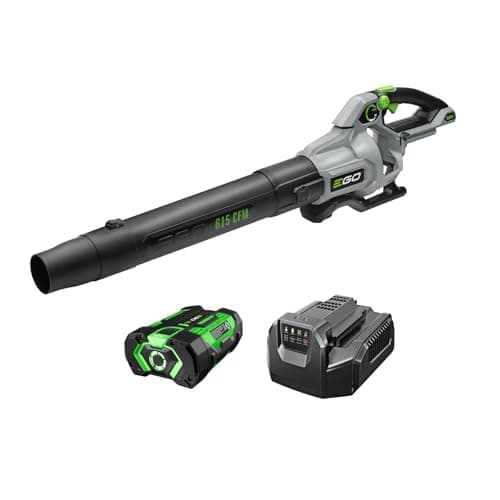
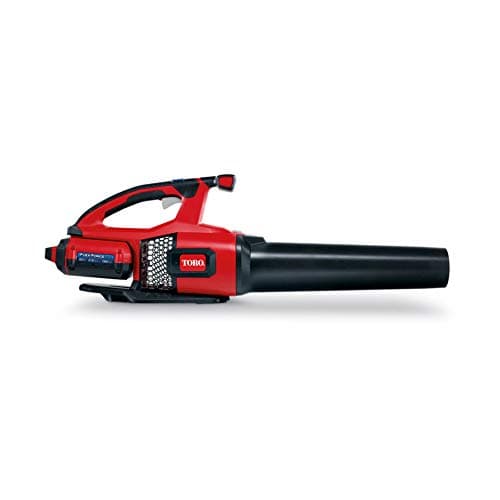
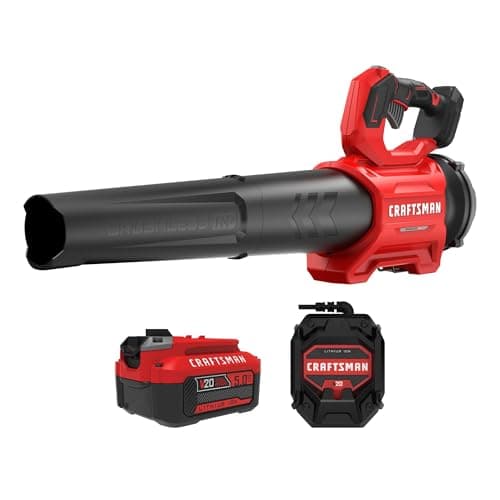
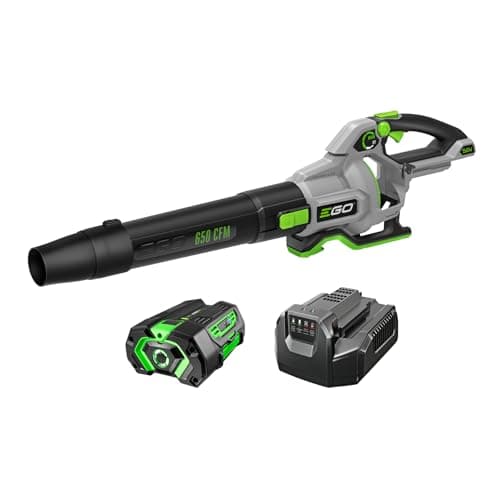
The best cordless leaf blower is the EGO Power+ LB6504: a published 650 CFM with the battery in the box, which is genuinely gas-blower airflow. The EGO LB6151 is the value pick at 615 CFM for meaningfully less. And the Toro 60Vis the one that publishes both airflow figures — 605 CFM at 120 MPH — which is the honest way to spec a blower and lets you compare properly.
A cordless blower is the thirstiest tool you will ever put on a battery platform. A mower draws hard but intermittently; a trimmer barely draws at all; a blower runs flat out continuously. That has two consequences worth knowing before you buy: pack size matters more here than on any other tool, and because you hold the whole assembly out at arm's length, the pack that gives you runtime is also the pack that tires your shoulder.
We have not cleared leaves with any of these. The ranking reads published CFM and MPH, battery platform and whether a pack is included — see how we pick. Where a manufacturer declines to publish CFM we say so rather than estimating, which is why one perfectly decent tool here ranks last. For corded and gas options, see best leaf blower.
How to choose a cordless blower
Start from the platform you are already on. This is a bare-tool category for most people. If you have EGO 56V packs from a mower, buy EGO. If you have Toro 60V, buy Toro. The platform decision was made when you bought your mower, and overriding it for one tool's spec advantage rarely pays.
Then buy on published CFM. 400 to 600 CFM covers a suburban lot. Above 600 CFM is real autumn clearing. And if a tool publishes MPH but not CFM, treat it as a patio blower regardless of how the MPH figure reads.
Size the pack generously, then think about your arm.The Toro kit ships a 2.5 Ah battery, which is modest for the most power-hungry tool on any platform — expect perhaps fifteen minutes of continuous blowing. A bigger pack buys more runtime and weighs more in the hand. There is no way around that trade; decide which constraint bothers you more.
Variable speed is worth more than it sounds. Full power blows mulch out of beds and gravel off a path. Being able to throttle back for delicate work is what stops you making a second mess, and it also stretches runtime substantially.
Brushless, if you have the choice. On a tool that runs flat out continuously, motor efficiency translates directly into runtime. Every blower on this page except the entry models is brushless, and on a blower specifically it is worth insisting on.
Be realistic about what cordless will not do.If your autumn job is a wooded acre, a cordless handheld is the wrong tool — you want a gas backpack, and the case for it is in best leaf blower. If you want to collect and mulch leaves rather than move them, a corded blower-vac is a third of the price and has unlimited runtime for a long job.
Who should skip these
Skip the CRAFTSMAN V20 for leaf clearing. It is a well-made, light, pleasant handheld and CRAFTSMAN publishes MPH but not CFM for it — which, on a 20V platform, means you should treat it as a patio and driveway tidying tool and not expect it to shift autumn leaf off a lawn.
Skip the Toro kit if you want long sessions on one pack; the 2.5 Ah battery is the limiting factor and a second one costs real money. And skip the flagship LB6504 if you are clearing a patio — the LB6151 costs less for airflow you will not notice is lower.
How we picked this
We haven't hit this gear — and we say so
We compiled the published manufacturer specifications — shaft weight and flex, loft, deck width, blower CFM, fertilizer NPK, seed species — did the deck-width and nitrogen arithmetic, cross-read the owner manuals, and scored each pick against a published rubric. The scores are judgments from documented research — they are notlab measurements we took, because we don't have a lab and we're not going to pretend we do. Where somebody has genuinely measured this, we link them. You can check every number we publish.