The Acreage
Riding & Zero-Turn Mowers
Past about three quarters of an acre, walking behind a mower stops being exercise and starts being a second job. This is the machinery that gets an acre or five cut in one pass of the afternoon.
We earn a commission when you buy through our Amazon links, at no extra cost to you. It never changes our rankings — and we'll tell you when the cheaper bag or machine is the better buy. How this works.
There is a point at which walking behind a mower stops being exercise and starts being a second job, and for most people it arrives somewhere around three quarters of an acre. An acre behind a 21-inch deck is comfortably over an hour of walking, every week, for thirty weeks a year. That is the problem this category exists to solve, and it solves it completely.
The decision splits two ways and both halves matter. First, deck width against acreage: how much ground you need to cover decides how wide a deck you need, and the arithmetic is the same as it is for walk-behind sizing, only with bigger numbers. Second, machine type: zero-turn or lawn tractor. That one is decided by the shape of your lawn rather than its size, and it is where most of the money gets wasted.
Zero-turn or tractor is a shape question, not a size question
A zero-turn pivots within its own footprint, because each rear wheel is driven independently. On a lawn full of flowerbeds, specimen trees, fence lines and a trampoline, that is transformative — you cut round obstacles in one pass instead of three, and the trimming afterwards shrinks to almost nothing. On a plain open field it buys you very little, and a lawn tractor costs less, tracks straighter across a side slope and will tow an aerator or a sweeper behind it. The full case is in zero-turn vs riding mower.
Deck width is where the time goes
Going from a 42-inch to a 52-inch deck widens each pass by about 24 percent, which takes roughly a fifth off your mowing time. On two acres that is a meaningful chunk of an afternoon. The limit is access: a 52-inch deck will not pass through most residential side gates, and a machine that cannot reach the back lawn is worth nothing. Measure the gate, every time, before you look at a deck.
Electric has arrived here too, with a real caveat
Battery zero-turns are now genuinely competitive machines, and the upkeep argument is even stronger than it is for walk-behinds: a gas zero-turn wants oil, filters, belts, blades and fuel stabiliser every year, and an electric one wants sharp blades. The caveat is the same one as always — when the charge is gone you stop, and recharging is measured in hours while refuelling is measured in minutes. Over three acres that caveat starts to decide the question, which is why the value pick in our zero-turn roundup is still a gas machine.
Slope is a safety specification, not a performance one
This is the part of the category that deserves plain speaking. Zero-turns are fast and agile and they are not the best machine on a steep side slope, because the light front castors can lose grip and the rear-wheel steering gives you less to correct with. A lawn tractor with a steering wheel and front wheels that bite tracks a gradient more predictably. If your land has a bank you would think twice about walking a mower across, take that seriously and read the comparison before you buy on agility.
What this hub does not cover, and why
We only rank products that are live, buyable listings with a real price. Most of the big dealer-channel zero-turn brands — the Toro TimeCutter line, Cub Cadet's Ultima series, Ariens IKON — are not sold through the channel we can verify prices on; what you find there is their replacement blades and belts, not the machines. Rather than pad this hub with parts listings dressed up as mowers, we have kept it honest and short. If a dealer brand is on your list, take our deck-width and machine-type reasoning and apply it to their spec sheet; the arithmetic travels.
Where to start
Start with the best zero-turn mower — it covers one to three acres, which is most properties that need a ride-on at all. If you have around two acres specifically, the two-acre list is sized for it. And if you are not yet sure you need a ride-on, check what size lawn mower do I need first — a good self-propelled walk-behind covers more ground than people assume.
Start here
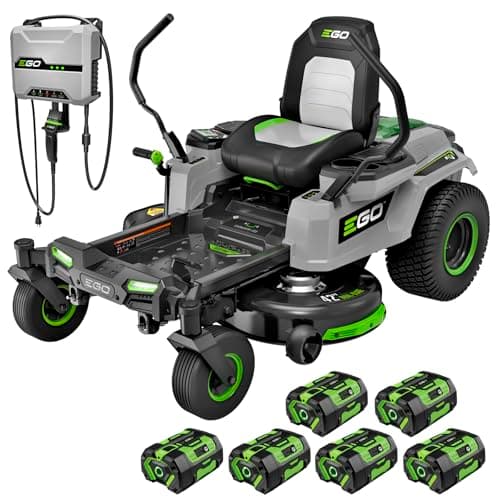
The Best Zero-Turn Mower
Electric and gas zero-turns ranked by deck width and acreage, with live prices and a skip-this pick.
Read the guide →
Everything in this hub
All riding & zero-turn mowers guides
Roundup
The Best Zero-Turn Mower
Electric and gas zero-turns ranked by deck width and acreage, with live prices and a skip-this pick.
Top pick · EGO Power+ Z6 Zero Turn, 42" Deck (ZT4214L)
Head to head
Zero-Turn vs Riding Mower
Zero-turn against lawn tractor on turning, slope safety, towing and price - with a pick on each side and live prices.
Top pick · EGO Power+ Z6 Zero Turn, 42" Deck (ZT4214L)
Roundup
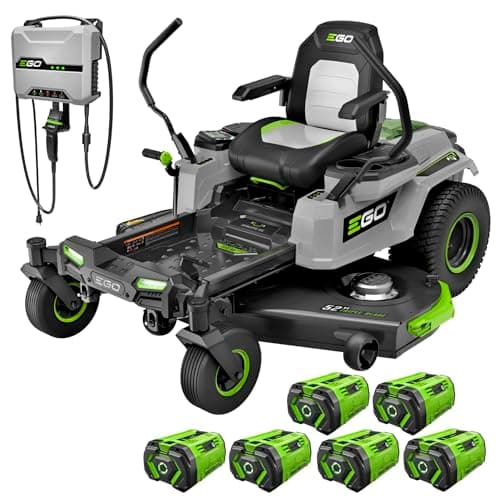
The Best Zero-Turn Mower for 2 Acres
Zero-turns sized for two acres, with the deck-width arithmetic and an honest answer on electric runtime.
Top pick · EGO Power+ Z6 Zero Turn, 52" Deck (ZT5216L)