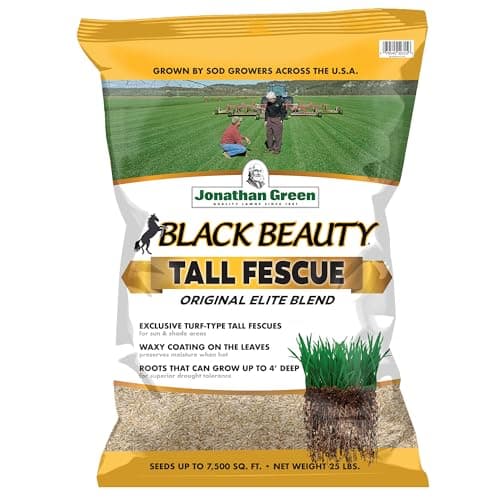
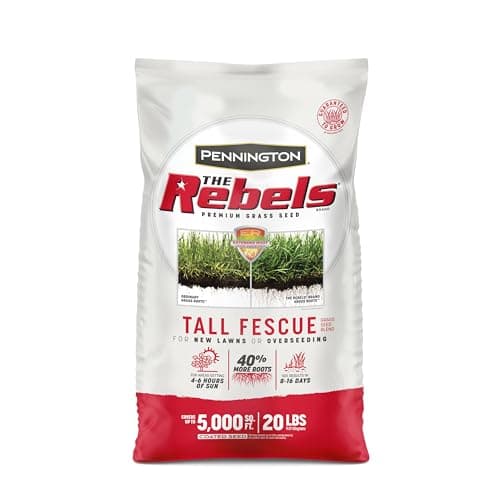
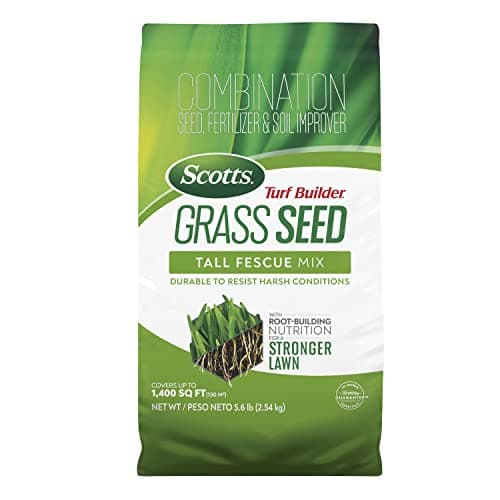
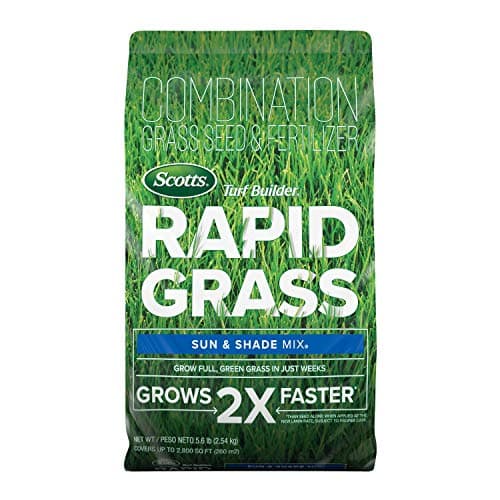
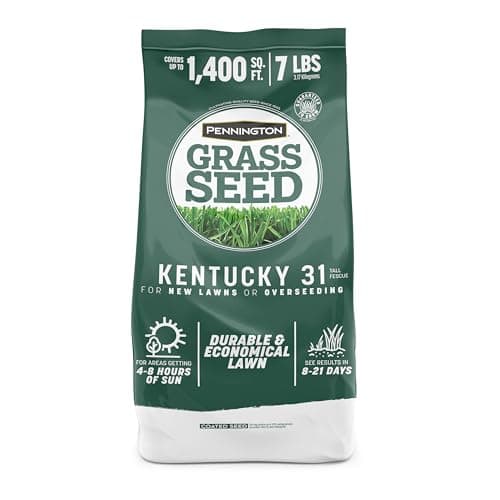
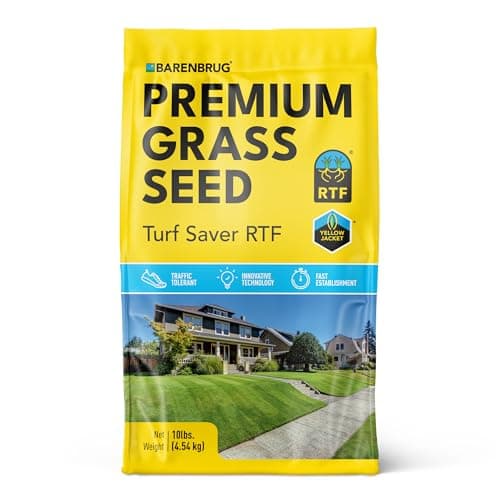
The best grass seed for most lawns is Barenbrug Turf Saver RTF, because it does something no other bag here does: rhizomatous tall fescue spreads sideways and closes its own bare patches. Ordinary tall fescue is a bunch grass and will not. If you want the best-looking lawn and do not need self-repair, Jonathan Green Black Beauty Tall Fescue is the premium blend to buy; if you are seeding a real area on a budget, Pennington The Rebels is excellent value for genuine turf-type seed.
Everything in this ranking comes down to what is on the back of the bag. Species decides shade tolerance, heat tolerance, blade texture and whether the lawn knits or clumps. Brand decides very little. We publish the species, the blend type, the bag weight and the coating for every entry, because those are the facts that predict what you will be looking at in five years.
One honesty note. We have no test plot, we have grown none of these, and we are not going to write as though we have. What we do is read the published seed labels, use the independent cultivar trial data published by the National Turfgrass Evaluation Program as the reference point for how species and cultivar groups actually perform, and rank on that. Our how we pick page sets out the method, and every pick carries an honest “don’t buy if”.
How to choose grass seed
Read the species list, not the front of the bag.This is the whole game. “Fescue” on the front can mean a modern turf-type blend or coarse Kentucky 31 forage seed. The species and cultivar list on the back tells you which, and that difference is permanent.
Decide whether you need self-repair.If the lawn takes wear — dogs, children, a worn path — a grass that spreads is worth more than a grass that looks slightly better. Rhizomatous tall fescue (RTF) and Kentucky bluegrass both spread; standard tall fescue, perennial ryegrass and fine fescues largely do not. This is the single most useful question to ask yourself before you buy.
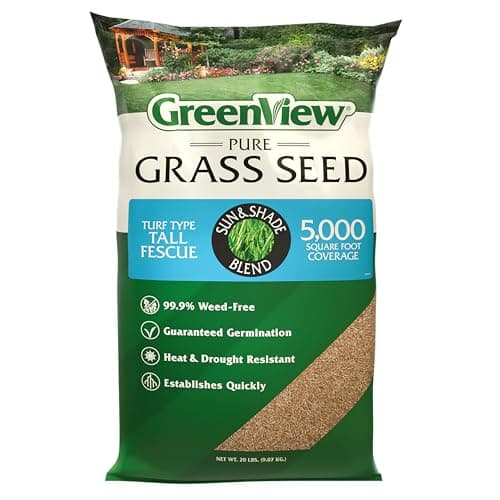
Match the species to your light.Open sun and summer heat: turf-type tall fescue. Mixed sun and shade: a tall fescue sun-and-shade blend like the GreenView. Genuine deep shade: fine fescue, which is a different group — go to best grass seed for shade. Putting sun seed in shade is the most common reason a reseeding job fails.
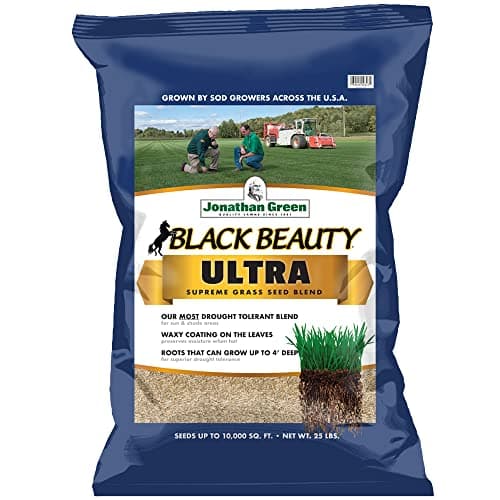
Blend beats mix for appearance. A blend is several cultivars of one species, so the lawn looks uniform. A mix is several species, which hedges your bets agronomically but gives visibly different leaf textures across the lawn. Black Beauty Tall Fescue is a blend; Black Beauty Ultra is a mix and deliberately so, because the bluegrass in it adds the self-repair tall fescue lacks.
Work out cost per thousand square feet, not per bag. Divide the bag price by the coverage the label states. A cheap 5.6 lb bag is usually terrible value per square foot; a 20 lb bag of The Rebels is usually excellent. And remember coated seed weighs more per viable seed, so coated bags cover less than their weight suggests.
Prepare the seedbed before you spend on seed.Seed needs soil contact, moisture for two or three weeks, and light. Scarifying or spike-aerating first gets the seed down to soil rather than leaving it on thatch — see aerating vs dethatching for which one you need. Spread it with a calibrated broadcast spreader, not by hand, and feed it with a starter fertilizer rather than a general one.
Who should skip these
Skip Kentucky 31 for a lawn. It is on this list because it is genuinely the right answer for a pasture, a ditch bank or an erosion-control job, and because it is the mistake we see most often: it sits next to the good bags at a third of the price and the coarse, clumping result is permanent. Buy The Rebels instead.
Skip the premium Barenbrug RTF if you are seeding a large area on a tight budget — at that price per pound, a half acre gets expensive fast. And skip Black Beauty Ultra specifically if you are in the hot end of the transition zone, where the bluegrass component struggles; straight tall fescue is the cleaner choice there.
How we picked this
We haven't hit this gear — and we say so
We compiled the published manufacturer specifications — shaft weight and flex, loft, deck width, blower CFM, fertilizer NPK, seed species — did the deck-width and nitrogen arithmetic, cross-read the owner manuals, and scored each pick against a published rubric. The scores are judgments from documented research — they are notlab measurements we took, because we don't have a lab and we're not going to pretend we do. Where somebody has genuinely measured this, we link them. You can check every number we publish.