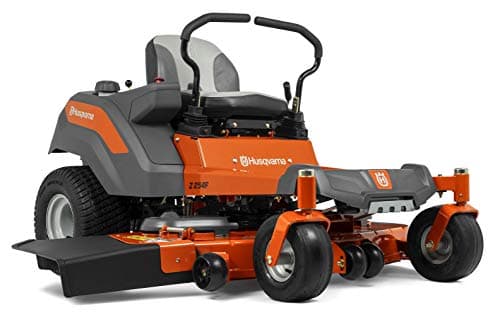
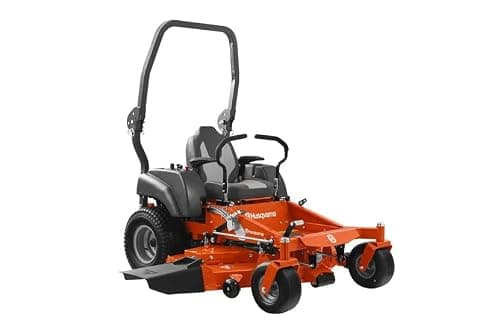
The best Ferris zero turn mower for most buyers who genuinely need one is the ISX 800: full independent suspension, a commercial deck and a suspended seat, which together are what let somebody mow all day rather than endure it. The 400S is the entry point and the sensible one if the ground is rough but the hours are not long. The SRS Z1 is a stand-on rather than a sit-on, and it solves a route-density problem that commercial crews have and homeowners do not. And if you are a homeowner reading this about a two-acre lawn, the honest recommendation is at the bottom of the ranking: the Husqvarna Z254F, which has a verified live price and will cut your grass just as well for a fraction of the money.
Every Ferris machine here is a dealer purchase and this page publishes no prices for them. Our 13 October 2026 catalog pass across the Ferris line returned ISX hitch kits, 400S hydro belts, and a remarkable number of mower covers tailored to specific Ferris models. No mowers. Ferris is a commercial brand sold through commercial dealers, and that is reflected in the check-price links below rather than in a number we would be making up.
What makes Ferris worth a page at all is one engineering decision. Almost every other zero-turn bolts the deck to a rigid frame, so every bump in the ground moves the deck and the cut height with it — which is why rough ground produces a wavy, scalped finish. Ferris puts the machine on independent suspension, so the wheels move and the deck does not. On genuinely rough, undulating ground that is a cut-quality feature first and a comfort feature second, and nobody else builds it in across the range. Whether it is worth the money depends entirely on your ground and your hours, which is what the rest of this page is about.
We have operated none of these machines. The ranking reasons from Ferris’s published specifications — suspension design, deck and spindle class, platform type — see how we pick.
Ferris mowers compared
| Model | Platform | Suspension | Built for | Price source |
|---|
| Ferris 400S | Sit-on zero-turn | Independent | Rough ground, moderate hours | Dealer — check price |
| Ferris ISX 800 | Sit-on zero-turn | Full independent + seat | All-day commercial use | Dealer — check price |
| Ferris SRS Z1 | Stand-on zero-turn | Suspension platform | Crews with many small sites | Dealer — check price |
| Husqvarna Z254F | Sit-on zero-turn | None | Residential 2-4 acres | Live price |
| Husqvarna MZ61 | Sit-on zero-turn, ROPS | None | Five acres and up | Live price |
Suspension designs and platform types above are the figures Ferris’s published specifications state. The three Ferris rows carry no price because no verified live listing exists for them; the two Husqvarna rows do, from the live price layer with an “as of” date.
What independent suspension actually does to the cut
Think about what happens when a rigid-frame zero-turn crosses a hollow. The wheels drop, the frame drops, and the deck — which is bolted to that frame — drops with it. For a moment your cut height is wrong, and on undulating ground that moment repeats constantly. The visible result is scalping on the rises and long grass in the dips, which is the signature of mowing rough ground with a rigid machine.
Suspension decouples the two. The wheels follow the ground, the frame and deck stay closer to level, and the cut height stays closer to what you set. That is the actual argument, and it is a real one. The comfort benefit — and it is substantial over two hours — follows from the same mechanism.
The flip side is that this is a feature you only feel where it applies. On a smooth, well-levelled residential lawn, suspension is doing very little that a rigid frame is not already doing, and you have paid commercial money for it. If your ground is rough enough that you are reading this because of cut quality, suspension is the answer. If your lawn is flat and you are reading this because the brand sounds serious, it is not.
Ferris lawn mowers: which one, and who for
400S — rough ground, residential-plus hours. The entry Ferris, and the one that makes sense for a large property with genuinely uneven ground where you mow for an hour or two at a time. It is commercially built from the bottom of the range, which is both the appeal and the price.
ISX 800 — the professional default. Full independent suspension plus a suspended seat, a commercial deck and commercial spindles. This is specified in hours per day, and it holds resale value better than almost anything in the category. For a business it is a straightforward calculation; for a homeowner it is a great deal of machine.
SRS Z1 — crews, not lawns. A stand-on takes less room on a trailer, so more machines travel per trip; stepping off to open a gate takes a second rather than a dismount; and standing lets an operator shift weight uphill on a slope. Every one of those advantages is about running a route efficiently. None of them helps somebody mowing one lawn a week.
If this is your own lawn, read this part
A large share of the people searching for Ferris mowers are homeowners with two to five acres who have heard the brand is serious equipment. It is. It is also priced for a business that bills for mowing, and the sensible residential answer usually sits elsewhere.
The Husqvarna Z254Fis a 54-inch zero-turn with a 23 HP Kawasaki twin — the engine family commercial crews specify — at a verified live price far below any Ferris. On two to four acres of normal residential ground it does the job properly. For five acres and up, the MZ61 puts a 61-inch commercial-class deck and a ROPS roll bar on the same proposition. Both are ranked against the rest of the field in the best zero-turn mower, and the brand-level view is in the best Husqvarna lawn mowers.
Spend Ferris money when your ground is rough enough that cut quality is the problem, or when mowing is work rather than a chore. Those are the two cases where the suspension pays for itself. Otherwise you are buying a durability and comfort reserve you will never reach.
Who should skip these
Skip Ferris if your lawn is smooth. The entire premium is suspension, and smooth ground does not use it.
Skip the SRS Z1 unless you are running a route. Standing for hours is a trade-off crews accept for trailer space and gate speed, and it has no upside on a single property.
And skip any zero-turn if your ground is open and sloping rather than obstacle-heavy — a tractor layout holds a line across a gradient better and costs much less. See zero-turn vs lawn tractor.