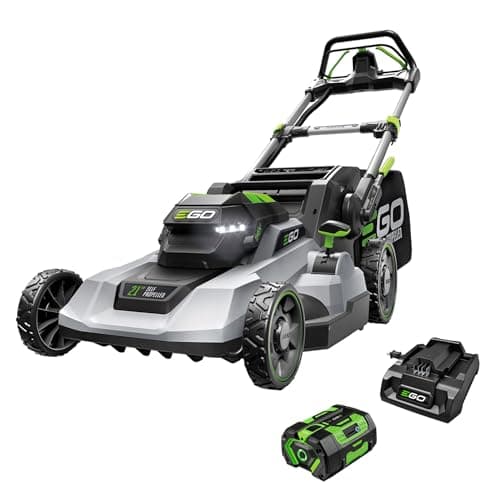
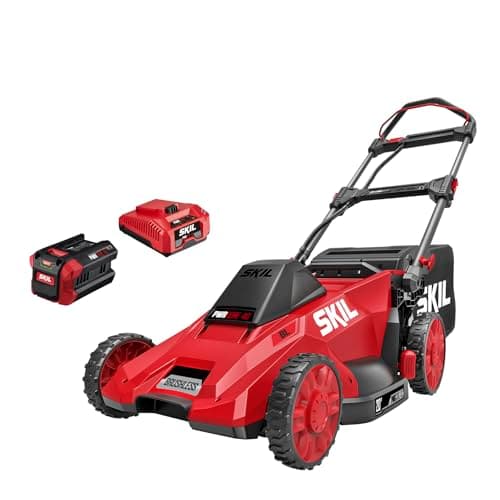
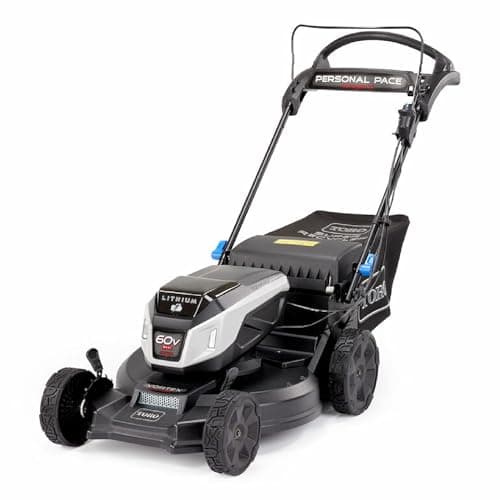
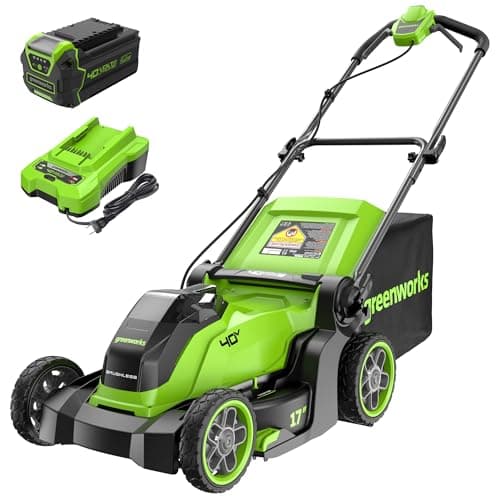
Buy a battery mower with a 17 to 20-inch deck, and buy it as a kit. That one sentence covers most of what makes a mower easy to live with: no pull cord, no fuel can, no oil, and far less weight than a gas mower of the same cutting width. For a small, flat lawn the Greenworks 40V 17" push mower is the lightest sensible choice. For anything with a slope, or a lawn big enough to be a real walk, the EGO Power+ LM2114SP is self-propelled, so the mower moves itself and you steer. The SKIL PWR CORE 40 20" is the value pick, and the Toro 60V Super Recycler is the one to buy if you want the mower to match your own walking pace rather than setting it.
A mower does not know who is pushing it, so there is no such thing as a women's mower as a product category. What there is — and what this page is actually about — is a set of specs that make any mower lighter, easier to start and easier to steer, which are the three complaints behind this search. They are all published figures you can check before you buy.
One: weight, which deck width mostly decides
The number that matters is not how hard the mower is to push on the flat — most modern mowers roll easily — it is how heavy it is to lift, turn and manhandle: up a step, over a kerb, out of a shed, onto a shelf for winter.
Deck width is the main driver of weight, so a 17 or 20-inch deck is meaningfully lighter than a 21 or 22-inch one. Power source is the second: a battery mower has no engine block, no oil and no steel crankcase, so it is lighter than the gas equivalent at the same width. And a corded electric mower is lighter again, if you are willing to manage a cable.
Two: how it starts
Nothing with a pull cord. A recoil starter is awkward shoulder work for anybody, needs several yanks on a mower that has sat all winter, and is the single most common reason a mower sits unused. Every battery mower here starts on a button or a bail bar.
If gas is necessary for other reasons — a big lawn, no outlet, long thick grass — then buy electric start, which is a gas mower with a starter button. Our easy-start roundup covers those.
Three: steering and drive
This is the one people underestimate. A mower that is easy to steer is not the same as one that is easy to push.
Self-propelled drive with variable speedis the feature worth paying for on any lawn with a slope, because you are no longer providing the forward force — you are guiding. Look for rear-wheel drive, which keeps traction on a slope where front-wheel drive loses it, and a speed control you can set slow.
Toro's Personal Pace goes further: the mower matches its speed to how hard you are pushing on the handle, so it walks at whatever pace you walk. That is a genuinely significant feature for anyone who has found a self-propelled mower drags them along.
On a small flat lawn, skip the drive entirely — it is weight and money you will not use. See self-propelled vs push mower.
Light, easy-start mowers compared
| Mower | Deck | Start | Drive | Best for |
|---|
| Greenworks 40V 17" push | 17 in | Button | Push | Lightest, small flat lawn |
| EGO Power+ LM2114SP | 21 in | Button | Self-propelled | Slopes and bigger lawns |
| SKIL PWR CORE 40 20" | 20 in | Button | Push | Best value, 6.0 Ah included |
| Toro 60V Super Recycler | 21 in | Button | Personal Pace | Speed matched to your pace |
Deck widths, starting methods, drive types and included battery capacities above are the figures the listings publish. Prices are live with an “as of” date beside each mower.
The handle and controls checklist
Four things to look for that rarely appear in a spec table and make a real difference day to day.
An adjustable-height handle, so the grips sit at your height rather than making you stoop or reach. Most quality mowers offer two or three positions.
A single-lever cutting-height adjuster rather than four separate wheel levers. One lever is a two-second job; four levers means kneeling down four times every time you change height.
A handle that folds without tools, for storing the mower upright in a small shed or garage.
Mulching rather than bagging.A full grass bag is an awkward weight to lift out and empty. Mulching deletes that job and feeds the lawn with the clippings — see the mulching roundup.
Buy the kit, not the tool
The most common expensive surprise in battery mowers: a “tool only” listing at an attractive price, with the battery and charger as separate purchases that cost as much again as the mower. Every pick on this page is sold as a kit with at least one battery and a charger in the box.
It also means the mower is choosing your battery platform for whatever trimmer, blower or hedge cutter you buy next — so it is worth a minute on which platform you want to be on. Our lawn mower brands guide covers that, and the budget electric roundup ranks on kit price specifically.
Three habits that make any mower easier
Mow weekly rather than fortnightly. Taking a third off the leaf is far less work than taking half off, for the mower and for you, and the lawn looks better for it.
Keep the blade sharp.A sharp blade cuts with much less resistance, so the mower is easier to push and a battery goes further on a charge. Twice a season is plenty — see blade sharpeners.
Raise the cut height. Longer grass shades its own roots, needs less water and grows more slowly in summer heat, which means fewer cuts across the season.
Who should skip these
Skip the 17-inch deck if your lawn is over about 4,000 square feet — the extra passes cost more time than the lighter mower saves effort. The arithmetic is in the large-yard roundup.
Skip the push mowers if there is any slope. Buy the drive — the hill mower roundup explains why rear-wheel drive specifically.
And skip walk-behind mowers entirely if the lawn is over about half an acre. At that size the honest answer is a small rider, and the small riding mower roundup is the page you want.