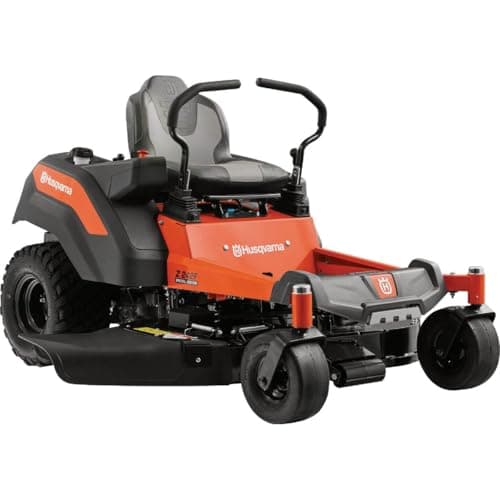
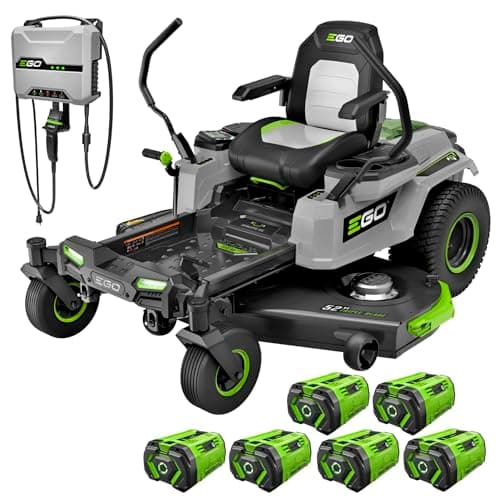
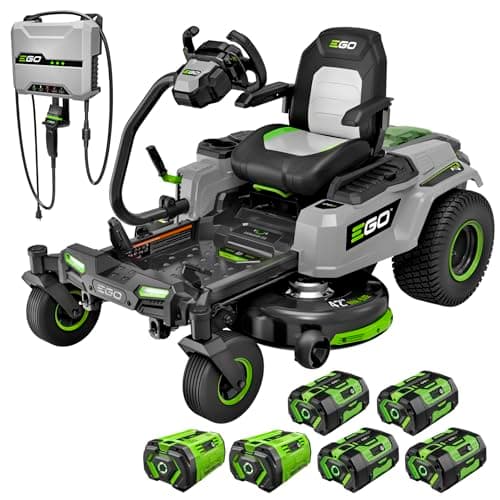
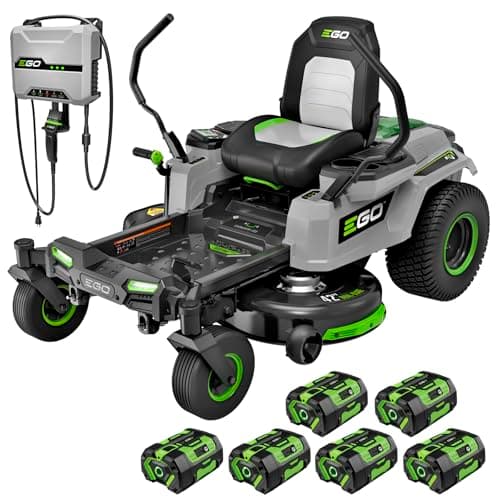
For most properties between one and two acres the best zero-turn is the EGO Power+ Z6 with the 42-inch deck. Forty-two inches fits through a standard gate and still clears an acre in a sitting, and the electric drivetrain removes the entire annual service ritual a gas zero-turn demands — no oil, no filters, no belts to fret about, nothing to winterise. If the budget matters more than the upkeep, the Husqvarna Z242F gives you the same 42-inch cut with a 21.5 HP Kawasaki twin for thousands less, and it refuels in two minutes. Past two acres, step up to the 52-inch EGO deck.
A zero-turn earns its money on lawn shape rather than lawn size. Each rear wheel is driven independently, so the machine pivots inside its own footprint — which means you cut around beds, trees and fence lines in a single pass and the trimming afterwards almost disappears. On a plain open paddock that agility buys you less, and a lawn tractor is cheaper and tows better.
We have not driven any of these machines and we are not going to imply otherwise. The ranking is built on published deck widths, steering type, engine rating or battery platform, and the acreage each maker states — see how we pick. Every pick carries an honest “don’t buy if”, and there is a real safety note in the guide below about slopes that we would rather you read than skip.
How to choose a zero-turn mower
Measure the gate before you choose the deck. A 52-inch deck needs well over four and a half feet of clear opening and plenty of residential side gates are half that. The 42-inch machines on this list exist because that is the width that actually gets to the back lawn on a normal property. Nothing else on this page matters if the machine cannot reach the grass.
Then size the deck to the acreage. Up to about two acres, 42 inches is the sensible balance of coverage and access. From two to five acres, 52 inches takes roughly a fifth off your mowing time and the price step is modest. Beyond five acres you are outside what any of these machines is really designed for.
Decide electric or gas on acreage, not on principle. Under about two acres, electric wins the way it wins for walk-behind mowers: no annual servicing, instant starting, far less noise. From three acres up, the charge time is the binding constraint and a gas machine that refuels in two minutes is simply the better tool. The Husqvarna is here for exactly that case.
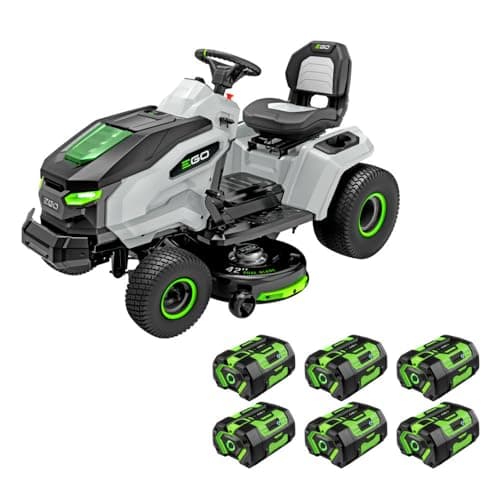
Take slope seriously.Zero-turns steer with the driven rear wheels and carry light front castors, and on a steep wet side slope that combination gives you less to correct with than a steering wheel and loaded front wheels do. This is a safety consideration, not a performance one. If your land has a real bank on it, look at the EGO TR4204 lawn tractor instead — a tractor layout tracks a gradient far more predictably.
Consider whether lap bars suit you. Lap-bar steering is fast and precise once learned and genuinely takes some learning. The EGO Z6 e-Steer replaces them with a steering wheel while keeping the zero-turn radius, which is worth the premium if lap bars are what has been putting you off the category. If you have driven a lap-bar machine happily before, save the money.
Factor in what else you want to pull. If you intend to tow a plug aerator or a sweeper, check the hitch and the drawbar rating. This is a genuine advantage of the tractor layout, and the reason our dethatching and aeration recommendations assume a tow vehicle for larger lawns.
Who should skip these
Skip this category entirely if your lawn is under about three quarters of an acre. A good self-propelled walk-behind covers that comfortably for a tenth of the price, stores in a shed rather than a bay, and does not need a gate wide enough to drive through.
Skip the e-Steer unless lap bars are a genuine obstacle for you — it is several hundred dollars for an interface change. And skip the 52-inch deck without measuring first; it is the better mower and it is useless on the wrong side of a 40-inch gate.
How we picked this
We haven't hit this gear — and we say so
We compiled the published manufacturer specifications — shaft weight and flex, loft, deck width, blower CFM, fertilizer NPK, seed species — did the deck-width and nitrogen arithmetic, cross-read the owner manuals, and scored each pick against a published rubric. The scores are judgments from documented research — they are notlab measurements we took, because we don't have a lab and we're not going to pretend we do. Where somebody has genuinely measured this, we link them. You can check every number we publish.