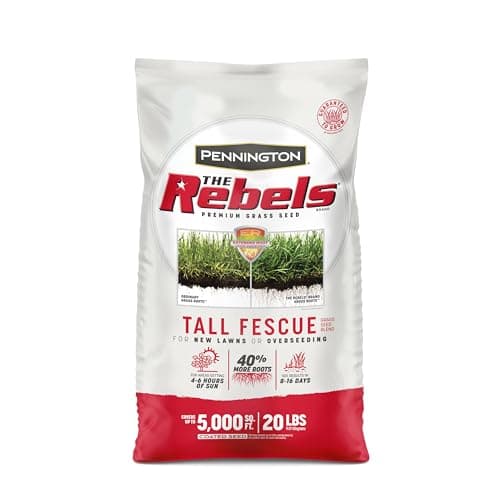
Growing grass from seed comes down to three things: sow at the right time of year, get the seed in contact with soil, and keep the top half inch damp for three weeks. Everything else is detail. For most of the US that means sowing in early autumn, raking the soil loose before you spread, and watering lightly twice a day rather than deeply once. If you are starting a lawn for the first time and want one decision rather than a shopping list: a bag of Pennington The Rebels tall fescue, a broadcast spreader, and a starter fertilizer. That is the whole kit.
This page is written for someone who has never done it. There is nothing hard about growing grass from seed, but there are four or five places where it reliably goes wrong, and almost all of them happen in the first ten days. If you only remember one thing, remember this: seed that dries out once is dead, and no amount of watering afterwards brings it back.
We are not agronomists and we have no test plot. The species facts here are standard turfgrass practice, with cultivar performance data from the National Turfgrass Evaluation Program and seeding rates from the seed companies' own published labels. Where we recommend a product, we say why. See how we pick.
Step 1 — sow at the right time, or do not bother
This is the step beginners skip and it is the one that decides everything. For a cool-season lawn — fescue, bluegrass, ryegrass, which is most of the US north of the Carolinas — late summer to early autumn is the right window. The soil is still warm enough to germinate seed, the air is cooling, autumn rain is coming, and the weeds that would outcompete your seedlings are finishing for the year. Spring is the second-best option and a clearly worse one, because your seedlings spend their first summer competing with crabgrass.
For a warm-season lawn — bermuda, zoysia, St. Augustine, which is the Deep South and the Southwest — the window is the opposite: late spring into early summer, once soil temperatures are genuinely warm. Bermuda will not germinate in cool soil at all. If you are not sure which side of the line you live on, start with fescue vs bermuda.
Sowing in high summer is the classic mistake. It is when people decide to fix the lawn, and it is the one time of year when seed cannot survive the gap between waterings.
Step 2 — prepare the soil, which mostly means scratching it
Seed needs to touch soil. Seed sitting on top of thatch, dead grass or hard-crusted ground will not germinate, which is why so much seed is wasted. You do not need to rotovate anything. For a bare patch or a thin lawn, rake it vigorously with a steel garden rake until you can see loose soil between the stems. For a whole new lawn, loosen the top inch or two and rake it level.
If the ground is genuinely compacted — if a screwdriver will not push into it easily — that is a separate job and you want our aerator roundup or the hand tools in best manual lawn aerator tool first. Seed falling into aeration holes gets perfect soil contact at depth, which is why aerating and overseeding on the same weekend is the single most effective thing you can do to a tired lawn.
Rake out dead material and stones as you go. Do not add topsoil over the top of existing lawn — a layer of soil over living grass smothers it and creates a perched layer that roots will not cross.
Step 3 — spread the seed evenly, at the rate on the bag
Use a spreader, not your hand. Hand-scattering produces thick patches and bare stripes, and you will see the pattern in the lawn for two years. A broadcast spreader costs little and is the difference between a lawn and a map of your throwing arm. Walk at a steady pace, go in one direction, then go across at ninety degrees at half the rate — the crossing pattern cancels out your own unevenness.
Use the rate printed on the bag and resist doubling it.Every label gives two figures: a new-lawn rate and an overseeding rate, usually around 6 to 8 pounds per 1,000 square feet for tall fescue new, and about half that for overseeding. Over-sowing does not give you a thicker lawn — it gives you seedlings competing with each other for the same water and light, and the whole stand comes up weak.
After spreading, rake very lightly so most seed ends up just barely covered, or roll it. Grass seed wants to be at the surface, not buried: a quarter inch of cover is plenty, and an inch is a grave.
Step 4 — feed it a starter fertilizer, not a normal one
New seed needs phosphorus for root development, and normal lawn fertilizer is built around nitrogen for leaf growth. A starter fertilizer has a much higher middle number in the NPK ratio for exactly this reason. Apply it at sowing or within the first week.
Do not apply weed killer. Almost all pre-emergent herbicides stop grass seed germinating as effectively as they stop weeds, and most post-emergent products will kill seedlings outright. The label on your crabgrass preventer will tell you to wait — usually several weeks after the new grass has been mowed a few times. The one exception used around new seed is discussed in best weed control for lawns.
Step 5 — water little and often for three weeks
This is the part that fails. Established lawns want deep, infrequent watering. New seed wants the opposite: the top half inch has to stay damp continuously until the seed germinates, which is roughly 7 to 14 days for tall fescue and ryegrass and longer for bluegrass. That means light watering once or twice a day in cool weather, more often in warm wind.
Once the seedlings are up, start stretching the interval and watering more deeply each time, so the roots chase the water down. By about six weeks you should be on a normal schedule. The EPA's WaterSense guidance on outdoor watering is worth reading if you are on a meter.
Then leave it alone. Do not walk on it. Do not mow until it reaches about three inches, and when you do, take off no more than a third of the height with a sharp blade — a dull blade pulls young plants out of the ground by the roots. Full mowing guidance is in the mower roundup.
What to buy, and nothing more
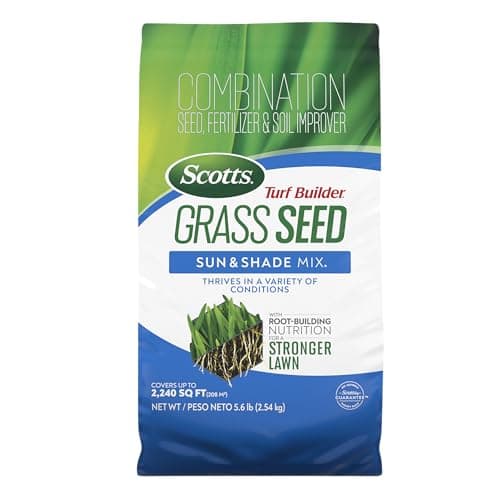
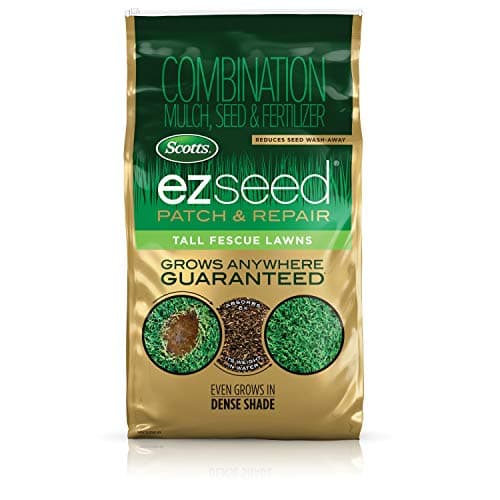
Seed. For a cool-season lawn, Pennington The Rebels tall fescueis the value pick in turf-type tall fescue and the right default for a first lawn. If the area is part sun and part shade — which describes most real gardens — Scotts Turf Builder Sun & Shade Mix is the easy, available answer. For a few bare patches rather than a lawn, Scotts EZ Seed Patch & Repair combines seed, mulch and fertilizer in one and takes the watering discipline down a notch, because the mulch holds moisture.
A spreader, because even coverage is not optional, and a starter fertilizer, because phosphorus is what new roots are made of. That is the entire list. You do not need a roller, a seed mat, or a soil conditioner, and the cheapest thing that improves your odds is free: sow in September.
Before any of this, settle the quantity - over-seeding produces weak, shallow-rooted grass that thins out in its first summer, which is the most common way a careful job still fails. How much grass seed do I need has the rates per thousand square feet and the worked arithmetic.
And settle the date before the method, because it outweighs everything else on this page: seed responds to soil temperature rather than the calendar, and the same bag that thrives in September fails in June. When to plant grass seed works the window out from your frost date and the soil temperature the species needs.