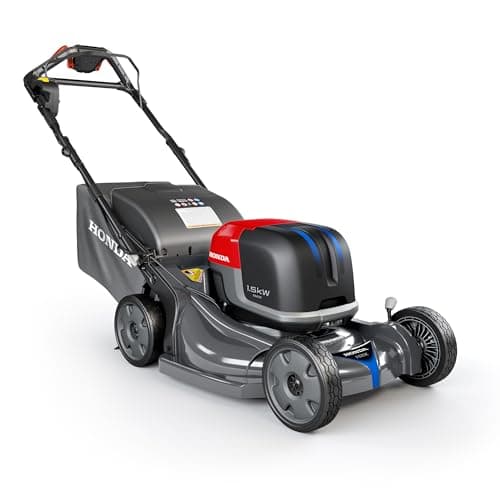
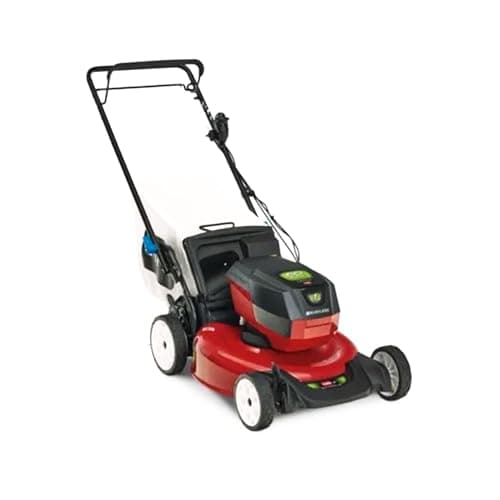
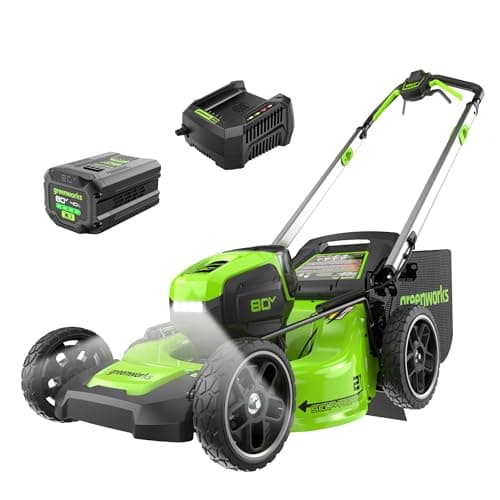
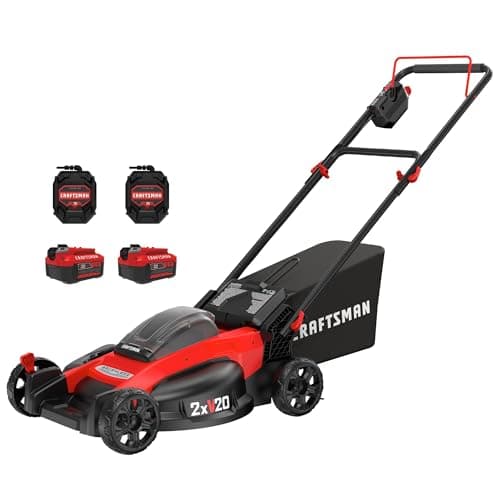
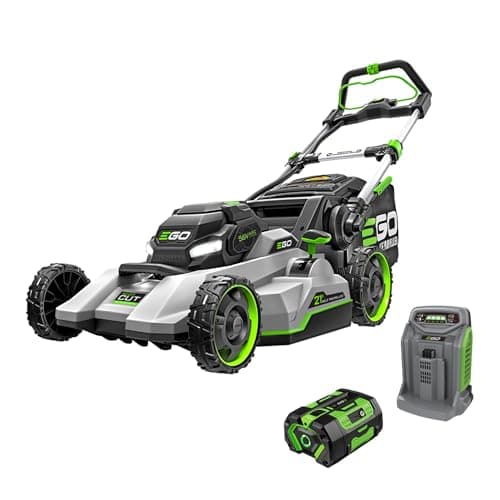
The best lawn mower brand for most homeowners is EGO: the 56V platform is the deepest battery range in outdoor power equipment, the mowers are genuinely good, and every battery you buy works across trimmer, blower and chainsaw. If you want a gas walk-behind to keep for twenty years, Honda builds the best engines in the category. Toro is the strongest all-rounder across gas and battery. Greenworks is the value play with a real platform behind it. And CRAFTSMAN makes most sense if you already own V20 tools.
Having said that, here is the thing this page exists to tell you: brand is the third most important decision you make, not the first. Lawn size decides deck width and drive type. Your terrain decides whether you need self-propelled. Those two choices narrow the field far more than any badge does, and a well-specified mower from a mid-tier brand beats a badly specified one from a premium brand every time. Start with the best lawn mower if you have not sized the machine yet.
Where brand genuinely does decide things is in three places: the battery platform you are joining for the next decade, whether you can get parts and service where you live, and who built the engine inside a gas machine. This page is organized around those three.
One structural point about this market that shapes everything below. Several of the biggest names in mowers — John Deere, Kubota, Ferris, most of the Toro and Husqvarna gas lines — sell primarily through dealers, not through Amazon. Where that is the case we say so and the card carries a “check price” link rather than a number we cannot verify. We have not mowed with any of these machines; the ranking reads published specifications. See how we pick.
Brand is a proxy for three specs
The reason brand reputation tracks reliability at all is that it is standing in for deck material, drive design and parts supply. Check those three directly instead and the badge stops mattering much, which is the argument in the most reliable lawn mowers.
Every brand page on this site
Battery-first brands. Greenworks (the deepest value range and the only brand here with no supply constraint at all), STIHL (AK and AP battery systems, mostly dealer-channel).
Gas heritage brands. Honda (the engines everyone else is compared to), Toro (Recycler decks and Personal Pace drive), Husqvarna, Snapper, Troy-Bilt, Murray and Ariens.
Big-box and tool-platform brands. CRAFTSMAN (V20 shares batteries with a large hand-tool range).
Riding and zero-turn brands. John Deere, Cub Cadet, Kubota and Ferris.
The battery platform question, which is the real one
If you buy a battery mower you are not buying a mower. You are joining a platform, and the batteries will outlast the mower and cost a meaningful fraction of what the next tool costs. So the question is not “which mower” but “whose batteries do I want in my garage for the next ten years.”
| Platform | Volts | Range depth | Best suited to |
|---|
| EGO Power+ | 56V | Deepest in the category | Anyone buying more than one outdoor tool |
| Greenworks | 40V / 60V / 80V | Broad, with three tiers | Value buyers - but pick ONE voltage |
| Toro Flex-Force | 60V | Good, mower-led | People who want a Toro deck and a battery |
| CRAFTSMAN V20 | 20V | Huge in hand tools, light in OPE | Existing V20 owners with small lawns |
| STIHL AK / AP | 36V class | Deep, dealer-sold | People with a STIHL dealer nearby |
| Husqvarna | Varies by line | Mixed, dealer-led | Owners already in the Husqvarna system |
The Greenworks row carries the warning. Greenworks sells 40V, 60V and 80V lines and the batteries are not interchangeable between them. Buying a 40V trimmer and an 80V mower means owning two incompatible charging systems, which defeats the entire point. Pick a voltage and stay in it.
The engine question, for gas mowers
Gas mowers are mostly a chassis with somebody else's engine bolted on, and the badge on the hood is often not the badge on the engine. Honda builds its own and they are the reference point in the category — they start, they idle, they run for decades. Briggs & Stratton engines appear under a very large number of brands. Kawasaki engines power most of the premium zero-turns.
So when comparing two gas mowers at the same price, look at the engine make and displacement rather than the chassis brand. A 170cc Briggs under two different badges is two mowers with the same heart. See best gas lawn mower for the full ranking.
Where you can actually buy it, and get parts
This matters more than brand prestige and gets discussed less. A dealer-channel brand means a local dealer who stocks parts, services the machine and honors the warranty — genuinely valuable on a machine you intend to keep fifteen years, and useless if the nearest dealer is ninety minutes away.
A big-box or online brand means you can buy it tomorrow and the common wear parts (blades, belts, air filters) are easy to find, but there is nobody to take it to when something structural breaks. For a battery mower that is largely fine. For a gas machine you plan to keep, a dealer you can drive to is worth paying for.
A practical test before you buy any gas mower: search for a replacement blade and a carburetor for that exact model. If both are available and cheap, the mower is supportable. If neither is, you have bought a disposable machine.
Which brand for which lawn
Quarter acre or less, flat:any decent battery push mower. EGO, Greenworks or Toro. Brand barely matters at this size — see small yards.
Quarter to half acre, some slope: a self-propelled battery machine. EGO leads; Toro's Personal Pace drive is the nicest self-propel system in the category. See self-propelled mowers.
Half acre plus: a wide deck or a rider. Toro's 30-inch TimeMaster platform, or move up to a riding mower.
Buy-it-for-life gas walk-behind: Honda, and find a dealer.
Tight budget: Greenworks or CRAFTSMAN, or see best cheap lawn mower.
Brands we would not steer you toward on badge alone
We are not going to name a brand as bad, because within most of these names there are good machines and poor ones. What we will say is this: a brand you have never heard of, selling a gas mower with an unnamed engine and no published parts availability, is a risk that the twenty-dollar saving does not cover. And a legacy badge on a machine built to a price by a licensee is not the machine that earned the badge — Murray and Snapper both have that history, which the Murray page is candid about.