Skip to content
Fairway&Fescue

The Edges · Trimmers, Edgers & Blowers

How to Edge a Lawn

Edging is the ten percent of lawn care that everyone notices. It is also the one job where the order you do it in changes the result.

By Stephen V.Updated How we pick
#ad

We earn a commission when you buy through our Amazon links, at no extra cost to you. It never changes our rankings — and we'll tell you when the cheaper bag or machine is the better buy. How this works.

Edge before you mow, cut about two inches deep, and blow the debris off the hard surface when you are done. That sequence is most of the job. The tool that makes it easy is a wheeled blade edger with a depth stop — the corded WORX 12 A 7.5" Edger is the cheapest way to a genuinely professional edge, and the Greenworks 40V 8" cordless edger is the one to buy if dragging a cord around the whole lawn perimeter is the thing that will stop you doing it.

Two different jobs get called edging and it is worth separating them. Edging is cutting a vertical line where the lawn meets a hard surface or a bed, with a blade, to a set depth. Trimming is cutting the grass the mower could not reach, with line, horizontally. You need both, they happen in the same session, and only one of them produces the crisp line people mean when they say a lawn looks sharp.

We have not edged a lawn for this page. The technique below is the standard sequence and the reasoning behind each step; the tool specs are the blade sizes, amperages and depth controls the listings publish — see how we pick. Prices are live with an “as of” date.

The short answer

Quick picks

#ProductBest forScorePrice
01
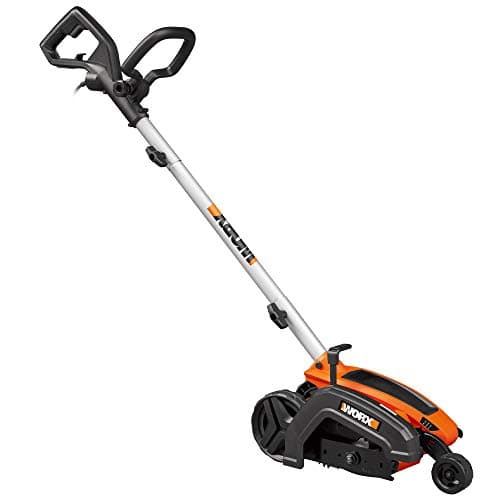
WORX WORX 12 A Electric Lawn Edger, 7.5" Trencher (WG896)
WORX 12 A Electric Lawn Edger, 7.5" Trencher (WG896)

A proper wheeled edger with a 7.5-inch blade, not a trimmer held sideways. The difference is a straight, consistent, vertical edge instead of a wobbly scallop.

Best dedicated lawn edger
8.4
$89.99Amazon
02
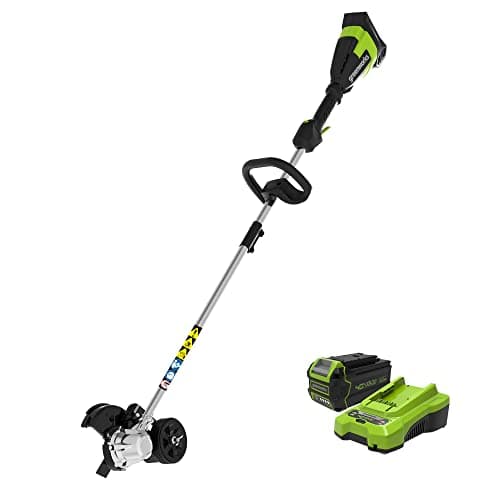
Greenworks Greenworks 40V 8" Cordless Lawn Edger
Greenworks 40V 8" Cordless Lawn Edger

The only cordless dedicated edger here, with the biggest blade at 8 inches. No cord to drag around the lawn perimeter — which, for edging specifically, is the right answer.

Cordless edging, no cord to snag
7.8
$179.98Amazon
03
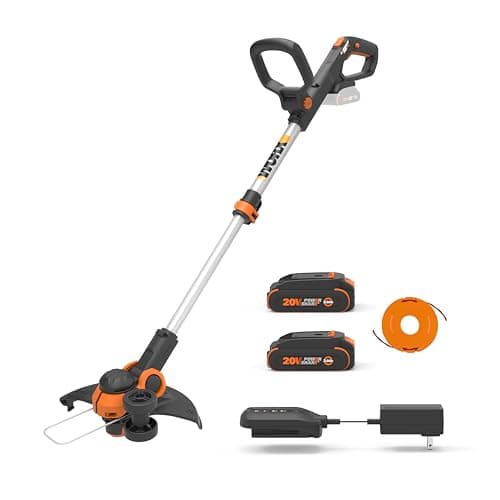
WORX WORX 20V 12" 2-in-1 String Trimmer & Edger (WG163)
WORX 20V 12" 2-in-1 String Trimmer & Edger (WG163)

A trimmer that rotates into an edger, which means one tool and one battery does both jobs. The cheapest sensible way to get a clean edge on a small lawn.

Trimming and edging from one tool
7.8
$103.91Amazon

#ad · Live prices from the Amazon Product API, as of October 21, 2026. Where we have no verified live price, we show none — we would rather leave a gap than print a number that has rotted.

In detail

The picks, in full

01
WORX WORX 12 A Electric Lawn Edger, 7.5" Trencher (WG896)

Best dedicated lawn edger

WORX 12 A Electric Lawn Edger, 7.5" Trencher (WG896)

7.5" blade12 A corded motorWheeled with depth controlAlso cuts trenches
8.4/10

A proper wheeled edger with a 7.5-inch blade, not a trimmer held sideways. The difference is a straight, consistent, vertical edge instead of a wobbly scallop.

Edge quality
10
Depth control
9
Versatility
6
Ergonomics
8
Price
9

Pros

  • A wheeled edger with a depth stop cuts the same depth the whole way, which is the entire reason an edge looks professional
  • The 7.5-inch blade also cuts a trench for cable or irrigation line
  • Corded, so no runtime limit on a long edging session

Cons

  • Corded, and edging follows the lawn perimeter — which is exactly where the cord wants to snag
  • One job only: it does not trim

Skip this if…

…you edge twice a year. A trimmer with a rotating head like the WORX WG163 handles occasional edging and does the weekly trimming too.

$89.99View on Amazon

$129.9931% off

Price as of October 21, 2026. Prices change — Amazon's is the one that counts.

#ad · we may earn a commission from this link to WORX 12 A Electric Lawn Edger, 7.5" Trencher (WG896)

02
Greenworks Greenworks 40V 8" Cordless Lawn Edger

Cordless edging, no cord to snag

Greenworks 40V 8" Cordless Lawn Edger

8" blade40V Greenworks platformCordless4.0 Ah battery + charger
7.8/10

The only cordless dedicated edger here, with the biggest blade at 8 inches. No cord to drag around the lawn perimeter — which, for edging specifically, is the right answer.

Edge quality
9
Depth control
8
Versatility
6
Ergonomics
10
Price
6

Pros

  • Edging traces the whole lawn perimeter, so being cordless removes the single most annoying part of the job
  • An 8-inch blade is the largest on this page
  • Shares batteries with the Greenworks 40V trimmer and 17-inch mower

Cons

  • Twice the price of the corded edgers
  • Battery-powered edging through hard, dry soil drains a pack quickly

Skip this if…

…your lawn perimeter is short and near an outlet. The corded WORX does the same job for half the money and never runs out.

$179.98View on Amazon

$299.9940% off

Price as of October 21, 2026. Prices change — Amazon's is the one that counts.

#ad · we may earn a commission from this link to Greenworks 40V 8" Cordless Lawn Edger

03
WORX WORX 20V 12" 2-in-1 String Trimmer & Edger (WG163)

Trimming and edging from one tool

WORX 20V 12" 2-in-1 String Trimmer & Edger (WG163)

12" cutting swath20V WORX platformRotating head for edgingIncludes wheel guide
7.8/10

A trimmer that rotates into an edger, which means one tool and one battery does both jobs. The cheapest sensible way to get a clean edge on a small lawn.

Cut swath
6
Line handling
7
Ergonomics
8
Platform value
8
Price
10

Pros

  • The rotating head converts it to an edger in seconds — genuinely two tools, not a marketing claim
  • Light enough to use one-handed around beds
  • By far the cheapest entry on this page

Cons

  • A 12-inch swath means noticeably more passes than the 16-inch trimmers
  • 20V has limited power for anything thicker than grass

Skip this if…

…you have long fence lines or a big lawn. A 12-inch swath on 20V turns a half-hour job into an hour, and the Greenworks 16-inch costs only a little more.

$103.91View on Amazon

$119.9913% off

Price as of October 21, 2026. Prices change — Amazon's is the one that counts.

#ad · we may earn a commission from this link to WORX 20V 12" 2-in-1 String Trimmer & Edger (WG163)

The order of operations, and why it is that order

1. Edge first. Cutting a vertical edge throws soil and severed roots onto the lawn and the path. If you mow afterwards, the mower picks most of that up for you. Edge after mowing and you have made a mess on a lawn you just finished.

2. Trim second.With the hard edge cut, trim the grass the mower deck cannot reach — around posts, against walls, along the bed line you just defined.

3. Mow third. The mower collects the debris from steps one and two and leaves the finish you actually see.

4. Blow last. Clippings and soil on the drive make a sharp edge look scruffy. Thirty seconds with a blower is the difference between a tidy lawn and a finished one. The blower rankings cover which machines move debris rather than just lifting it.

How deep, and how often

JobDepthFrequencyTool
Cutting a new edge for the first timeAbout 2 inchesOnce, then maintainWheeled blade edger, or a spade for short runs
Maintaining an existing edge1 to 2 inchesEvery second or third mowWheeled blade edger
Tidying an edge between cutsSurface onlyWeekly, with the trimmingTrimmer turned vertically, or a 2-in-1 head
Trenching for cable or irrigationFull blade depthAs neededEdger in trencher mode

Depths are the working range these 7.5 and 8 inch blades are built for. Blade sizes, amperages and the presence of a depth stop are published specs; live prices with an “as of” date are above.

Cutting a first edge where there is none

A lawn that has never been edged has grass growing over the path by an inch or two, and the boundary is buried. Find the real line first: the hard surface has a straight edge under there, and you want to cut along it, not along where the grass currently stops.

Run a string line or lay a hose for a curve, then make one slow pass at full depth. Do not try to lift the turf with the edger — cut the line, then come back with a spade or a stiff rake and remove the strip of sod the blade has freed. The first edge is the hard one; every maintenance pass after it is quick.

For curves, a hose gives you a shape your eye accepts. Straight-line edges want a string line, because a human walking freehand drifts and a shallow curve in a line that should be straight is far more obvious than a wobble in a curve.

Technique: four things that matter more than the tool

Let the wheel ride the hard surface. A wheeled edger with its wheel on the path cuts the same depth the whole way. That consistency is the entire reason a professional edge looks professional, and it is a mechanical property rather than a skill.

Walk slower than feels necessary. At speed the blade skips and the line scallops. Slow enough that the blade is cutting continuously costs you a minute on a suburban perimeter.

Do not fight roots. If the blade stalls on a tree root, lift out, shorten the depth, and come back. Forcing a blade through a root damages the tree and the tool.

Cut away from the bed, not into it. On a bed edge, the vertical face belongs on the lawn side so the mulch has something to sit against.

The tools, honestly ranked for this job

A wheeled blade edgeris the right tool and there is no real argument. A steel blade on a wheel with a depth stop cuts a vertical wall; nylon line cannot. Corded if your perimeter is short or near an outlet, cordless if it is long — and edging traces the whole perimeter by definition, which is why cordless is worth more here than on most tools. The full edger rankings go deeper.

A 2-in-1 trimmer with a rotating headis the sensible compromise if you edge twice a year rather than twice a month. It gives a tidy line, not a sharp one, and it also does your weekly trimming — see trimmer-edger combos.

A half-moon edging iron— a hand tool — is genuinely good for short bed edges and costs very little. For a whole perimeter it is a long afternoon.

A string trimmer held sideways works and is what most people do. Accept that it scuffs rather than slices, and that the line will wander; the trimmer vs edger comparison sets out exactly what you are giving up.

Safety, briefly

An edger throws soil, grit and stone chips at speed along a hard surface. Eye protection is not optional, closed shoes are sensible, and check the run for sprinkler heads, low-voltage lighting cable and irrigation line before you cut — a blade at two inches finds all three. Call before you dig if you are trenching rather than edging.
How we picked this

We haven't run this gear through a lab — and we say so

We compiled the published manufacturer specifications — deck width and gauge, drive type, blower CFM, fertilizer NPK, seed species — did the deck-width and nitrogen arithmetic, cross-read the owner manuals, and scored each pick against a published rubric. The scores are judgments from documented research — they are notlab measurements we took, because we don't have a lab and we're not going to pretend we do. Where somebody has genuinely measured this, we link them. You can check every number we publish.

Questions

Frequently asked

Should you edge before or after mowing?
Before. Edging throws soil and severed roots onto the lawn and the path, and mowing afterwards collects most of it. Edge, trim, mow, then blow the hard surfaces clean.
How deep should you edge a lawn?
About two inches for a first edge, and one to two inches to maintain it. Deeper does not look better and it finds tree roots, sprinkler heads and cable.
How often should you edge a lawn?
A blade edge every second or third mow keeps the line crisp through the growing season. Between those, a trimmer turned vertically tidies it in a minute as part of the weekly cut.
Can I edge a lawn with a string trimmer?
Yes - turn it vertically and it will cut a line. Nylon line scuffs rather than slices, so the result is tidy rather than sharp, and keeping the depth even is down to you. A 2-in-1 trimmer with a rotating head and a wheel guide does it noticeably better.
How do I get a straight edge?
Use a string line for straight runs and a laid-out hose for curves, let the edger's wheel ride the hard surface so the depth stays constant, and walk slowly enough that the blade cuts continuously instead of skipping.
What tool cuts the cleanest lawn edge?
A wheeled edger with a steel blade and a depth stop. The depth stop is the important part - it is what makes the whole run the same depth, which is what reads as professional.

Keep reading

Receipts

Sources

We do not run a testing lab, and we do not pretend to. Every spec number here comes from a manufacturer's published sheet or an official standard, cited above. Where we could not verify something, we say so on the page rather than quietly leaving it out. Read our full method.