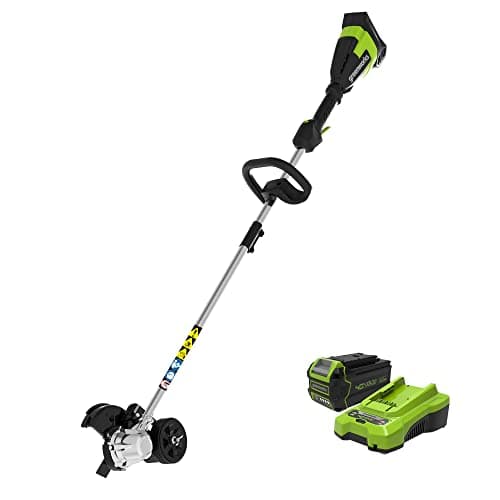
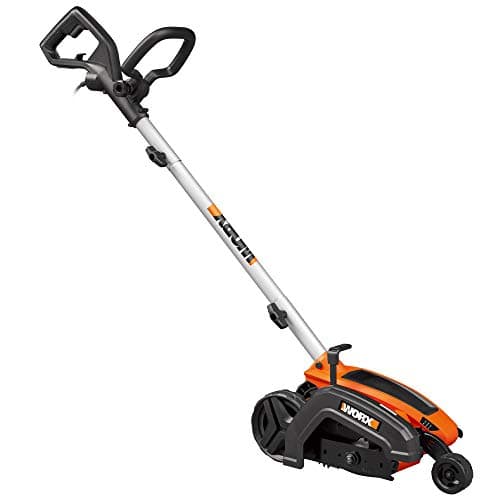
The best lawn edger is the WORX WG896: a 12-amp wheeled edger with a 7.5-inch blade and a continuous depth stop, which cuts the same depth the whole way along. That consistency is the entire reason a professional edge looks professional. If you would rather not drag a cord around the whole lawn perimeter — and edging is the one job where that genuinely grates — the Greenworks 40V 8" Cordless Edger is the pick, with the biggest blade here.
The thing worth understanding is why a wheeled edger beats a trimmer turned on its side. When you edge freehand with a trimmer, the cutting depth is set by your arm, and your arm is not a depth gauge — so you get a scalloped line that wanders. A wheeled edger runs on a guide wheel against a depth stop, so every inch of the run is cut to the same depth. That is a mechanical difference, not a quality-of-tool difference.
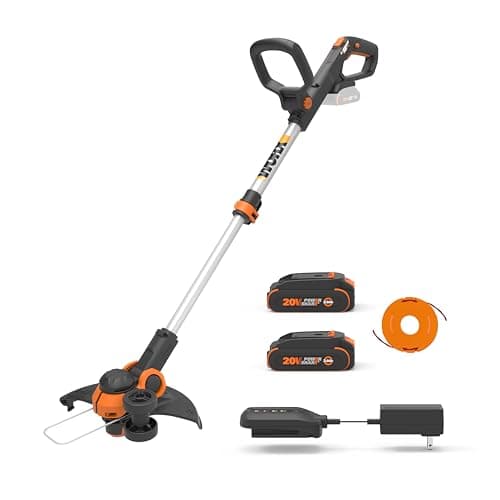
We have not edged a lawn with any of these. The ranking reads published blade diameters, motor amperage or battery platform, and the depth-adjustment mechanism each maker documents — see how we pick. The WORX WG163 2-in-1 trimmer is included deliberately, because for a lot of people it is the right answer and we would rather say so than sell a second tool.
How to choose a lawn edger
First, decide whether you need one at all. If you edge twice a year, a trimmer with a rotating head like the WORX WG163 is enough, and it does your weekly trimming as well. If you edge every few weeks and care how the line looks, a dedicated wheeled edger is a genuinely different result. Be honest about which of those you are.
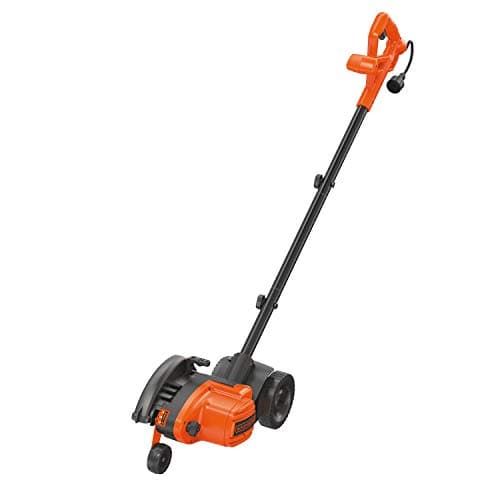
Depth control is the spec that matters. Continuous adjustment, as on the WORX, lets you match an existing bed line exactly. Fixed steps, as on the BLACK+DECKER's three height settings, are easier to repeat precisely next time. Both beat freehand by a wide margin; which you prefer depends on whether you are matching an existing edge or establishing a new one.
Blade size sets depth capacity.A 7.5-inch blade handles normal bed and path edging with room to spare; the Greenworks' 8-inch blade is the largest here. Bigger blades also cut trenches, which the corded edgers here are explicitly rated for — useful if you are laying irrigation or lighting cable.
Corded or cordless matters more here than elsewhere. Edging traces the entire lawn perimeter, which is exactly the path a cord most wants to snag on. That is an unusually strong argument for cordless on this specific tool, and the main reason the Greenworks earns its price premium over the two corded machines.
Expect dry soil to be hard work. An edger cuts into soil, not grass. In hard dry ground any of these will struggle and a battery will drain fast. Edge after rain or after watering, which costs nothing and changes the job completely.
Blow the spoil off afterwards. Edging throws soil and clippings across the path, and an edge is not finished until that is cleared. A cordless blower is the natural companion tool, which is another argument for keeping both on one battery platform.
Who should skip these
Skip the dedicated edgers entirely if your lawn perimeter is short or you edge rarely. The WORX WG163 trimmer rotates to edge and costs less than any wheeled machine here, and it earns its place by doing the weekly job too.
Skip the Greenworks cordless if your perimeter is short and near an outlet: it is twice the price of the corded WORX for freedom from a cord you would barely notice. And skip all of them if what is bothering you is the lawn's condition rather than its outline — a crisp edge around a thin lawn just frames the problem. Start at fertilizer and seed instead.
How we picked this
We haven't hit this gear — and we say so
We compiled the published manufacturer specifications — shaft weight and flex, loft, deck width, blower CFM, fertilizer NPK, seed species — did the deck-width and nitrogen arithmetic, cross-read the owner manuals, and scored each pick against a published rubric. The scores are judgments from documented research — they are notlab measurements we took, because we don't have a lab and we're not going to pretend we do. Where somebody has genuinely measured this, we link them. You can check every number we publish.