Skip to content
Fairway&Fescue

The Feed · Fertilizer, Weed Control & Spreaders

Is Weed and Feed Safe for Dogs?

The direct answer first, then what the labels actually require of you - and the feeds that take the question off the table entirely.

By Stephen V.Updated How we pick
#ad

We earn a commission when you buy through our Amazon links, at no extra cost to you. It never changes our rankings — and we'll tell you when the cheaper bag or machine is the better buy. How this works.

Weed and feed is not safe for a dog while it is on the lawn, and is considered safe to walk on once the label condition has been met — for granular products that means watered in and the grass dry again, typically a few hours. The risk is the herbicide half, not the fertilizer half. If you would rather not manage that at all, the straightforward answer is to split the two jobs: feed the lawn with a fertilizer that has no herbicide in it, like Espoma Organic All-Season Lawn Food, and deal with weeds separately by spot-treating the ones you actually have.

The same answer applies to the other way people ask this. Is lawn fertilizer safe for dogs? A plain fertilizer with no pesticide in it is low risk once watered in, and the thing to actually guard against is a dog eating granules straight off the lawn or out of the bag, which causes gut upset and, in quantity, worse. Is weed and feed toxic to dogs? The herbicide in it is a pesticide with a label-mandated re-entry condition, which is exactly what that condition is for.

We are not veterinarians and this is not veterinary advice. What follows reads the published active ingredients, formulation types and label directions — see how we pick. The instructions that legally apply are the ones on the container in your hand. If your dog has eaten a lawn product, call your vet or a pet poison control line now, with the container in your hand.

The short answer

Quick picks

#ProductBest forScorePrice
01
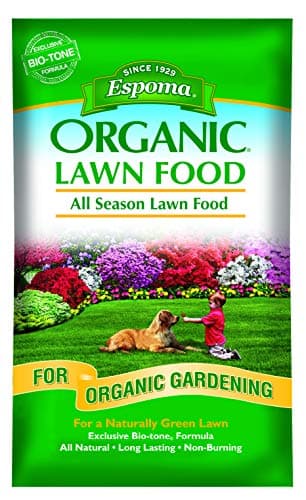
Espoma Espoma Organic All-Season Lawn Food (14 lb)
Espoma Organic All-Season Lawn Food (14 lb)

An organic granular feed with no herbicide in the bag, which is the whole point: nothing to keep a dog off beyond watering it in. It feeds slowly and it will not burn.

Best pet-safe lawn fertilizer
7.6
Check price →
02
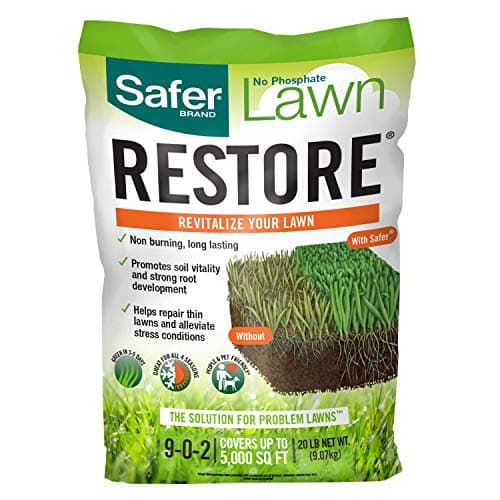
Safer Brand Safer Brand Lawn Restore 9-0-2 (5,000 sq ft)
Safer Brand Lawn Restore 9-0-2 (5,000 sq ft)

A 9-0-2 natural feed published as non-burning, covering 5,000 square feet. The best coverage-per-dollar of the organic feeds here.

Best coverage among pet-safe feeds
8.0
$34.99Amazon
03
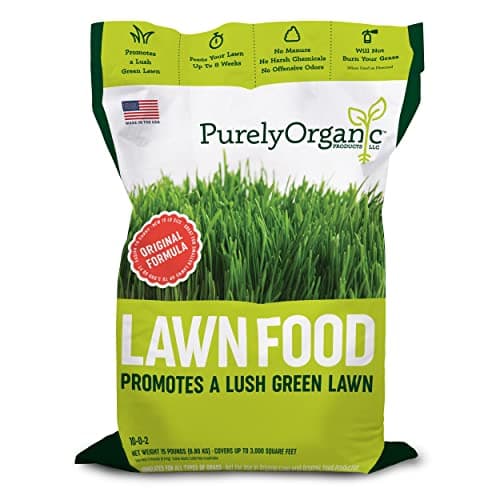
Purely Organic Products Purely Organic Products Lawn Food 10-0-2 (15 lb, 3,000 sq ft)
Purely Organic Products Lawn Food 10-0-2 (15 lb, 3,000 sq ft)

A plant-based 10-0-2 with the phosphorus taken out, which is what a lot of states now require anyway. Ten percent nitrogen is a real feeding rate for an organic bag.

Strongest analysis among the organic feeds
7.4
$47.00Amazon
04
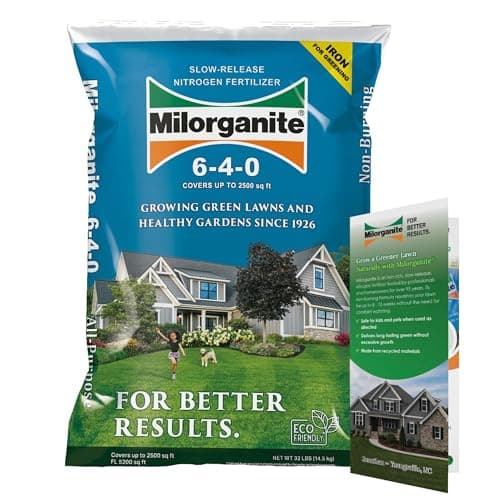
Milorganite Milorganite 6-4-0 Slow-Release Nitrogen (32 lb)
Milorganite 6-4-0 Slow-Release Nitrogen (32 lb)

The one fertilizer you genuinely cannot burn a lawn with. A 6-4-0 organic nitrogen source that releases slowly with soil temperature rather than all at once with the first watering.

The no-burn fertilizer
7.8
$35.01Amazon

#ad · Live prices from the Amazon Product API, as of October 21, 2026. Where we have no verified live price, we show none — we would rather leave a gap than print a number that has rotted.

In detail

The picks, in full

01
Espoma Espoma Organic All-Season Lawn Food (14 lb)

Best pet-safe lawn fertilizer

Espoma Organic All-Season Lawn Food (14 lb)

Organic granularNo herbicideSlow release14 lb bag
7.6/10

An organic granular feed with no herbicide in the bag, which is the whole point: nothing to keep a dog off beyond watering it in. It feeds slowly and it will not burn.

Lawn safety
10
Analysis quality
7
Feeding value
7
Coverage per bag
6
Value
8

Pros

  • There is no weed killer in it, so the only thing on the lawn is plant nutrition - the usual reason to keep pets off a treated lawn is the herbicide, not the fertilizer
  • Organic nitrogen releases as soil microbes break it down, so it cannot dump a salt load onto roots and scorch them
  • Granular, so there is no spray and nothing airborne

Cons

  • Slower and less dramatic than a synthetic high-nitrogen feed - organic feeds green a lawn over weeks, not days
  • Costs more per pound of actual nitrogen than a synthetic bag

Skip this if…

…you want a visible color change this week. Organic nitrogen has to be mineralized by soil biology first, and in cold soil that is slow; a liquid synthetic greens up in days.

Check price on Amazon →

No buyable offer at the last price check (October 21, 2026). We show nothing rather than a stale number.

#ad · we may earn a commission from this link to Espoma Organic All-Season Lawn Food (14 lb)

02
Safer Brand Safer Brand Lawn Restore 9-0-2 (5,000 sq ft)

Best coverage among pet-safe feeds

Safer Brand Lawn Restore 9-0-2 (5,000 sq ft)

9-0-2 NPKPublished non-burningCovers 5,000 sq ftPhosphorus-free
8.0/10

A 9-0-2 natural feed published as non-burning, covering 5,000 square feet. The best coverage-per-dollar of the organic feeds here.

Lawn safety
9
Analysis quality
7
Feeding value
7
Coverage per bag
9
Value
8

Pros

  • 5,000 square feet is a whole suburban lawn from one bag, which is unusual at an organic feeding rate
  • Non-burning by formulation, so an overlap on a spreader pass does not leave a scorched stripe - the most common fertilizer mistake there is
  • No herbicide component, so the lawn is usable as soon as the granules are watered in

Cons

  • 9-0-2 is a moderate analysis, so a badly depleted lawn needs a second application rather than one heavy one
  • Stock on this one moves around; the price layer will show whichever listing is buyable

Skip this if…

…you need to correct a phosphorus deficiency or you are seeding. There is no phosphorus in the bag.

$34.99View on Amazon

Price as of October 21, 2026. Prices change — Amazon's is the one that counts.

#ad · we may earn a commission from this link to Safer Brand Lawn Restore 9-0-2 (5,000 sq ft)

03
Purely Organic Products Purely Organic Products Lawn Food 10-0-2 (15 lb, 3,000 sq ft)

Strongest analysis among the organic feeds

Purely Organic Products Lawn Food 10-0-2 (15 lb, 3,000 sq ft)

10-0-2 NPKPhosphorus-freeCovers 3,000 sq ft15 lb bag
7.4/10

A plant-based 10-0-2 with the phosphorus taken out, which is what a lot of states now require anyway. Ten percent nitrogen is a real feeding rate for an organic bag.

Lawn safety
9
Analysis quality
8
Feeding value
8
Coverage per bag
6
Value
6

Pros

  • Ten percent nitrogen is at the top of the organic range, so a bag goes further than most plant-based feeds and the lawn responds more visibly
  • Zero phosphorus, which matters where runoff rules restrict phosphorus fertilizer and on any lawn near water
  • No herbicide, no insecticide - nothing in the bag with a re-entry interval

Cons

  • No phosphorus at all, so it is the wrong bag for seeding - new grass needs phosphorus to build roots
  • 3,000 square feet per bag is less coverage than the big-box synthetic bags at a similar price

Skip this if…

…you are sowing or overseeding. A new seedbed wants a starter fertilizer with phosphorus in it; this has none by design.

$47.00View on Amazon

Price as of October 21, 2026. Prices change — Amazon's is the one that counts.

#ad · we may earn a commission from this link to Purely Organic Products Lawn Food 10-0-2 (15 lb, 3,000 sq ft)

04
Milorganite Milorganite 6-4-0 Slow-Release Nitrogen (32 lb)

The no-burn fertilizer

Milorganite 6-4-0 Slow-Release Nitrogen (32 lb)

6-4-0 NPKSlow-release organic nitrogen32 lb bagNon-burning
7.8/10

The one fertilizer you genuinely cannot burn a lawn with. A 6-4-0 organic nitrogen source that releases slowly with soil temperature rather than all at once with the first watering.

Analysis quality
6
Spread evenness
8
Coverage per bag
7
Ease of use
10
Value
8

Pros

  • Slow-release organic nitrogen will not scorch a lawn even if you double-pass a strip — the single most forgiving fertilizer sold
  • Also contains iron, which is where the deep green color response comes from
  • A 32 lb bag at this price is good value per pound of product

Cons

  • Only 6 percent nitrogen, so you spread four to five times the weight for the same nitrogen as a 16-4-8
  • No potassium at all — on a stressed or sandy lawn you will need a second product for that

Skip this if…

…you want a fast green-up before an event. Slow release means slow: the response takes weeks, not days, and a liquid feed is what you actually want.

$35.01View on Amazon

Price as of October 21, 2026. Prices change — Amazon's is the one that counts.

#ad · we may earn a commission from this link to Milorganite 6-4-0 Slow-Release Nitrogen (32 lb)

What to look for on the label, in thirty seconds

Is there a pesticide in it at all?Turn the bag over. If there is an “Active Ingredients” panel naming a herbicide, it is a pesticide product and it has a re-entry condition. If the panel is just a guaranteed analysis — nitrogen, phosphate, potash — it is a fertilizer, and the only real hazard is a dog eating it.

Find the re-entry sentence.Every lawn pesticide label has one. For granular weed-and-feed it is normally “water in after application and keep pets and people off until dry”; for sprays it is “until dry.” That sentence is the answer to the question this page is named after.

Granular or spray? Granular cannot drift. A spray can carry on a breeze onto a water bowl, a dog bed on the deck, or the vegetable bed. For a lawn a dog uses, granular is the lower-risk formulation.

Watch the iron. Iron-fortified feeds are fine on turf but they stain, and an excited dog that rolls on a freshly spread lawn carries the stain indoors. Water it in before letting anyone out.

The approach that removes the question

Split the jobs. Weed-and-feed products exist because doing two passes is more work, not because combining them works better — and in fact the ideal timing for a pre-emergent and the ideal timing for nitrogen rarely coincide, which our weed-and-feed page is honest about.

So: feed the whole lawn with a plain fertilizer, on the schedule in the lawn fertilizer schedule. Then treat only the weeds you have, with a pump sprayer and a coarse stream, on a still evening. A spot treatment puts a tiny fraction of the chemical onto the lawn that a blanket pass does — the full reasoning is on the safest weed killer page.

That is it. No special product required, and the dog is off the lawn for an hour instead of a day.

The Milorganite warning nobody prints on the bag

Milorganite is a genuinely excellent fertilizer and it appears across this site. It also happens to smell, to a dog, like something worth eating. Dogs do eat it off the lawn, and a dog that eats a quantity of any organic fertilizer can end up with vomiting, diarrhea or worse.

So if you use it on a lawn a dog has access to: spread it, water it in thoroughly so it is off the surface, and keep the dog off until the grass is dry. Store the bag closed and out of reach, which is the part people forget — a chewed bag in the garage is a bigger problem than a treated lawn. This applies to bone-meal and blood-meal garden fertilizers too, and more strongly.

What the picks here actually are

All four are fertilizers with no herbicide component. That is the whole point: there is no pesticide re-entry interval to manage, only the ordinary sense of watering granules in and not letting a dog eat them.

Espoma Organic All-Season Lawn Foodis the straightforward pick — organic granular, slow release, no burn risk. Safer Brand Lawn Restore covers the most ground per bag at 5,000 square feet and is published as non-burning. Purely Organic 10-0-2 has the strongest nitrogen number of the organics and no phosphorus, which matters near water. Milorganite is here because it is the best-value slow-release nitrogen on the market, with the caveat above attached.

They are all slower than a synthetic feed. Organic nitrogen has to be mineralized by soil microbes before grass can use it, so the lawn greens over weeks rather than days. That is the trade, and on a lawn with a dog on it most people take it.

What about the yellow patches the dog causes?

Those are not a fertilizer problem and no product on this page fixes them. Dog urine is concentrated nitrogen and salts, which scorches turf in a spot and often leaves a greener ring around the edge where it is diluted. The only things that genuinely help are watering the spot immediately, encouraging the dog to use one area, and overseeding the dead patches each autumn — see how to reseed a lawn. Tall fescue is a bunch-type grass and will not fill those spots in on its own, which is one argument for a blend with some self-repair in it.

Who should skip these

Skip the organic feeds if you need a fast color response before an event — they are too slow for that, and a liquid synthetic is the honest answer. Skip the phosphorus-free bags if you are seeding, because new grass needs phosphorus for roots. And skip the whole category if your lawn is mostly weeds: feeding a weed-dominated lawn feeds the weeds, and that lawn needs weed control and overseeding first.
How we picked this

We haven't run this gear through a lab — and we say so

We compiled the published manufacturer specifications — deck width and gauge, drive type, blower CFM, fertilizer NPK, seed species — did the deck-width and nitrogen arithmetic, cross-read the owner manuals, and scored each pick against a published rubric. The scores are judgments from documented research — they are notlab measurements we took, because we don't have a lab and we're not going to pretend we do. Where somebody has genuinely measured this, we link them. You can check every number we publish.

Questions

Frequently asked

Is weed and feed safe for dogs?
Not while it is on the lawn. Follow the label: for granular products that means watering in after application and keeping pets off until the grass is dry, typically a few hours. The herbicide is the reason for that condition, not the fertilizer.
Is lawn fertilizer safe for dogs?
A plain fertilizer with no pesticide in it is low risk once it has been watered in and the lawn is dry. The real hazard is a dog eating granules off the lawn or out of the bag — organic fertilizers in particular are palatable to dogs.
How long after weed and feed can dogs go on the lawn?
Until the label condition is met — granules watered in and the grass dry again, which is usually a few hours. Waiting a full day costs nothing and removes the guesswork entirely.
Is Milorganite safe for dogs?
It is a fertilizer with no pesticide in it, but dogs find it palatable and eating a quantity of it causes gut upset. Water it in thoroughly so it is off the surface, keep the dog off until dry, and store the bag closed and out of reach.

Keep reading

Receipts

Sources

We do not run a testing lab, and we do not pretend to. Every spec number here comes from a manufacturer's published sheet or an official standard, cited above. Where we could not verify something, we say so on the page rather than quietly leaving it out. Read our full method.