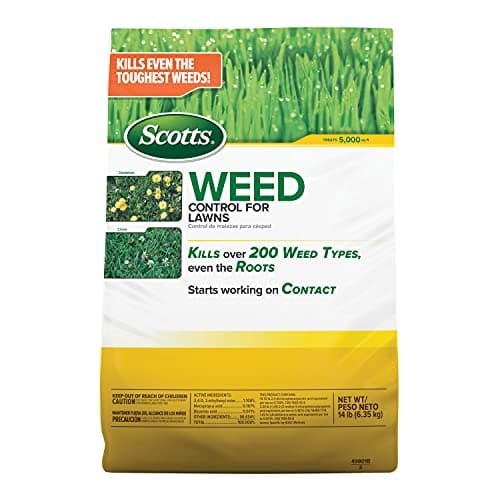
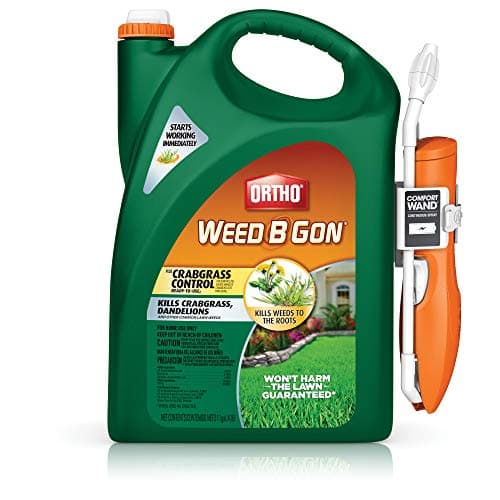
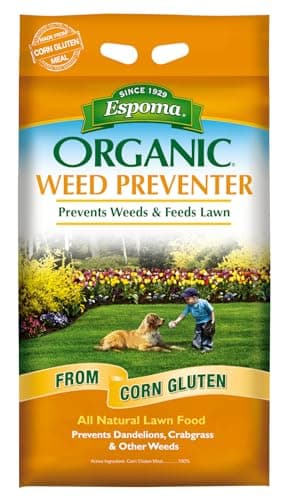
If children and a dog use your lawn, the safest weed killer is Espoma Organic Weed Preventer— 100 percent corn gluten meal, which is an animal-feed ingredient, applied before weeds germinate. There is no synthetic herbicide on the grass at all. If the weeds are already up and corn gluten is too late, the safest effective option is a granular selective control like Scotts Weed Control for Lawns, because granules physically cannot drift the way a spray can. And for the dandelions in the middle of an otherwise clean lawn, spot-spraying a selective product like Ortho Weed B Gon puts a few milliliters on a few weeds instead of treating 5,000 square feet.
That last point is the one that matters most, and no product can do it for you: how much you apply and where matters more than which bottle you buy. A spot treatment of a conventional selective herbicide puts a tiny fraction of the chemical on your lawn that a blanket weed-and-feed pass does. Choosing a gentler product and then spraying the whole lawn with it is the worse decision of the two.
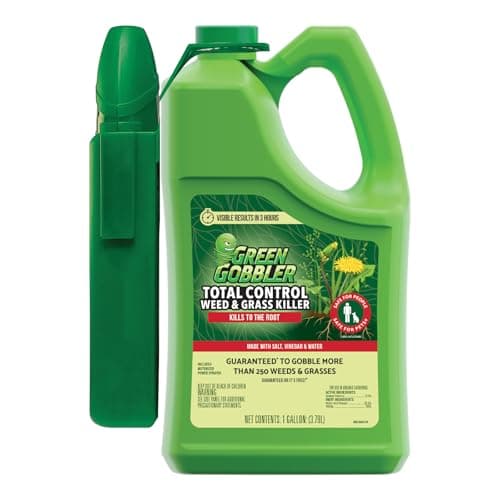
And the warning this page exists to give: the thing most people reach for when they search for a safe weed killer — vinegar — kills grass. Every vinegar, salt and fatty-acid product is non-selective. On a path it is a sensible low-risk choice; on a lawn it leaves dead patches. We rank one here, clearly labeled for hardscape only.
We are not toxicologists and this is not medical or veterinary advice. Everything below reads the published active ingredients, formulation type and the directions on each label — see how we pick. The legally binding instructions are the ones on the container in your hand, and the EPA requires you to follow them.
What “safest” actually means on a lawn
Four things, in this order, and only one of them is about the product:
1. How much goes down. Spot-treating fifty dandelions uses a fraction of the herbicide a whole-lawn pass does. This is the biggest lever available to you and it costs nothing.
2. Whether it can drift. A granular product falls where the spreader throws it. A spray can carry on a breeze onto a vegetable bed, a child's sandpit or a neighbor's garden. Granular is the lower-risk formulation for exactly this reason, and it is why it ranks above the liquids here for whole-lawn use.
3. What the active ingredient is. Corn gluten meal is food. Iron-based and fatty-acid products are a step up in hazard. Conventional selective herbicides for lawns are a step beyond that, and their labels carry specific re-entry instructions. Read the active ingredient panel, not the front of the bottle.
4. The re-entry interval.Almost every lawn herbicide label says the same thing: keep people and pets off until the treated area is dry, or until watered in and dry for granules. That is typically a few hours. Following it is most of what “pet safe” means in practice.
The honest hierarchy, lowest risk first
Pull them. Free, instant, zero risk, and genuinely the right answer for a handful of dandelions in a small lawn. A long-handled weed puller takes the taproot out.
Out-compete them. This is the real long game and it is the one most people skip. Thick turf leaves no bare soil for a weed seed to land on. Mow high (three and a half to four inches), feed on a schedule, and overseed every autumn, and the weed pressure drops year after year without any chemical at all. The fertilizer schedule and how to reseed a lawn are the two pages that do more for weed control than anything in a bottle.
Prevent them with corn gluten. A pre-emergent that is a food ingredient. It stops seedlings as they germinate and feeds the lawn at the same time. Its limitation is absolute, though: it does nothing to a weed that is already growing, and it will also suppress grass seed, so it cannot share a window with overseeding.
Spot-treat what is left, with a selective product. Selective means formulated to kill broadleaf weeds and leave grass. A pump sprayer with the nozzle set to a coarse stream rather than a fine mist, on a still day, is the low-drift way to do it.
Blanket-treat only if the lawn is more weed than grass. And then granular, watered in, with the lawn off limits until dry.
Why vinegar is the wrong answer for a lawn
Horticultural vinegar, salt-and-vinegar mixes and fatty-acid sprays are genuinely lower-hazard chemistry, and they are completely non-selective. They are contact desiccants: they burn whatever green tissue they land on, grass included. They also only top-kill, so a dandelion with a taproot regrows in a fortnight.
That makes them a good choice for driveway cracks, patio joints, gravel and fence lines, and a bad choice for a lawn. The Green Gobbler product is ranked here with that label on it, because a lot of people buy one of these expecting a lawn-safe product and get a brown stripe. If you want it for hardscape, it is a sensible buy.
Specific answers for pets and children
Dogs.Keep them off until a spray has dried, or until granules have been watered in and the lawn has dried. Store containers where a dog cannot chew them. Be aware that some fertilizers — Milorganite in particular — are palatable to dogs and can cause gut upset if eaten off the lawn in quantity, which is a fertilizer issue rather than a herbicide one. The pet-safe fertilizer page covers that side.
Children.Same rule, plus a practical one: treat on a day nobody is playing out, in the evening, and water in. The interval the label gives is a minimum, not a target — waiting a day costs nothing.
If an animal or a child has ingested a product, call your vet or a poison control center with the container in your hand. Do not look it up on a buying guide, including this one.
Who should skip all of this
Skip every product here if your “weed problem” is clover. Clover fixes nitrogen, stays green in drought, feeds bees and is only a weed because mid-century lawn advertising said so. Leaving it is a legitimate choice, and a cheaper one.
Skip corn gluten if you are overseeding this autumn — it suppresses your grass seed too. And skip any blanket application in summer heat; it stresses turf that is already struggling, as the weed control roundup explains.