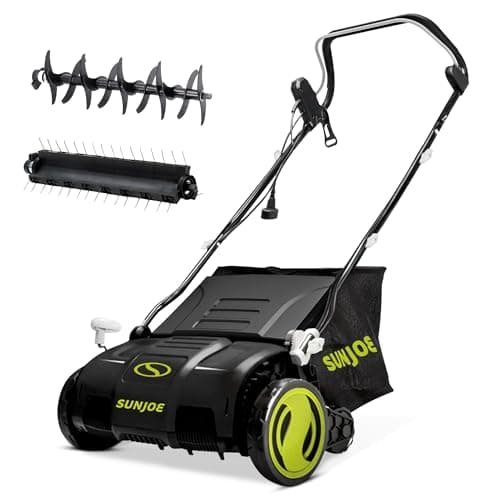
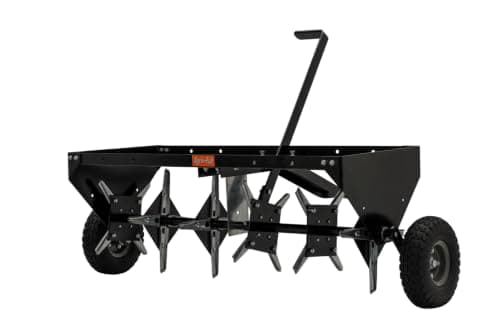
Aerate if the soil is hard; dethatch if there is a spongy brown layer. Two tests tell you which, and both take under five minutes. Push a screwdriver into the lawn — if you have to lean on it, you have compaction, and you want a core aerator like the Agri-Fab 40" plug aerator. Cut a wedge out with a spade and look at the profile — if the brown fibrous layer between grass and soil is over half an inch, you have thatch, and you want a scarifier like the Sun Joe AJ805E.
These two words get used interchangeably and they describe completely different jobs. Aerating addresses the soil: it removes plugs to create air space where particles have been pressed together. Dethatching addresses a layer above the soil: it cuts out accumulated dead stems that are shedding water. Doing the wrong one wastes an afternoon; doing an unnecessary one damages the lawn.
We have done neither job on a test lawn, and the agronomy here is standard turf management practice rather than our observation — see how we pick. There is also a third possibility this page covers, because a lot of people arrive at these two words when what they actually have is an uneven lawn, which neither job fixes.
Test one: the screwdriver test for compaction
Take an ordinary screwdriver and push it into the lawn with one hand. In healthy soil it slides in six inches without much effort. If you have to lean your weight on it, or it stops after an inch or two, the soil is compacted. Try it in several places — compaction is usually worst along paths, by gates, and wherever vehicles or machinery have been.
Compacted soil has no pore space, which means roots cannot get air and water runs off rather than soaking in. This is why feeding a compacted lawn does so little: the fertilizer is fine, it simply cannot reach anything. Core-aerate it and feed afterwards and the same bag suddenly works — see best lawn fertilizer.
Test two: the spade test for thatch
Push a spade in and cut out a small wedge of lawn about three inches deep. Look at the cut face. You will see green grass on top, then a brown fibrous layer, then soil. That brown layer is thatch, and the measurement that matters is its thickness.
Under half an inch: leave it. It insulates the crowns, cushions foot traffic and holds moisture. This is a healthy lawn and dethatching it is damage for no reason.
Over half an inch: dethatch. At this thickness it starts shedding water before it reaches the soil, holds humidity against the crowns and invites disease, and stops any seed you sow from reaching soil at all.
What each job actually does
Core aeration pulls plugs of soil out, leaving open holes. Roots grow into the air space, water and nutrient reach depth, and the surface decompacts over time as the holes collapse inward rather than being pressed outward. It is a soil fix. Note that spikeaeration does not do this — it displaces soil sideways and compresses the hole walls, which is why our aerator roundup ranks coring first.
Dethatching or scarifying cuts down through the thatch mat with blades or rakes it with spring tines, and pulls the material out. Water and air reach the soil again, and the lawn has a genuine seedbed for the first time in years. It is a surface fix, and it looks brutal for a fortnight.
Can you do both? Yes, and here is the order
Plenty of tired lawns have both problems, and the order matters. Dethatch first, because a thatch mat will clog and deflect aerator tines. Then core-aerate through the cleared surface. Then overseed, because seed now falls into open holes in bare soil — the best germination conditions you will get on an established lawn. Then feed with a starter fertilizer at the rate from how much fertilizer do I need.
Do all four in one early-autumn weekend and it is comfortably the most effective thing anyone can do to a neglected lawn. Do them in July and you will kill it.
The third possibility: your lawn is just bumpy
A lot of people searching these two terms do not have either problem. They have a lawn that is uneven — hollows, settling, old worn routes — which makes a mower scalp the high spots and miss the low ones. Neither aerating nor dethatching fixes that.
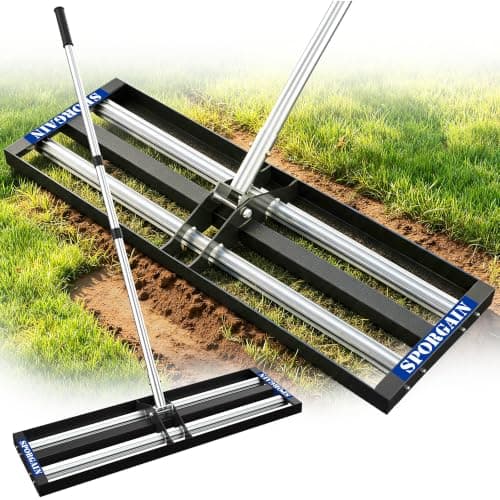
The fix is topdressing: spread a thin layer of sand or topdressing soil and work it into the canopy with a levelling rake, repeatedly, over a season or two. The SporGain rake is here for that job. It is slow work and it is the only thing that genuinely levels a lawn. One caveat: if the bumps are tree roots, nothing works, because roots keep growing. And if a mower is scalping your high spots, raise the deck first — see the best lawn mower.
The verdict
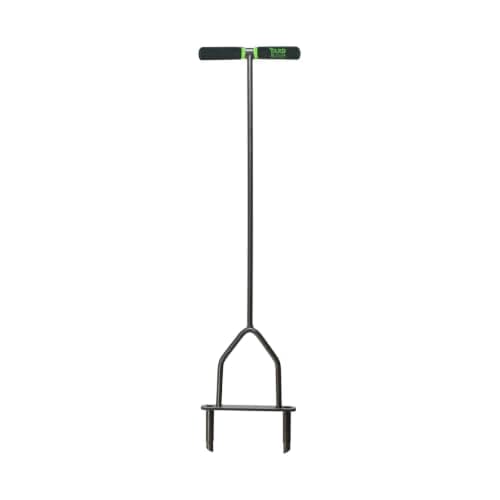
Hard underfoot, water runs off, screwdriver will not go in: aerate. Core, not spike. Rent a powered machine or buy a tow-behind corer if you have a ride-on; the Yard Butler ID-6C for spot work.
Spongy, water sits on the surface, over half an inch of brown layer: dethatch. With a blade reel, in early autumn, and have a plan for the debris — see best dethatcher.
Both: dethatch, aerate, seed, feed, in that order, one autumn weekend.
Neither, just uneven: topdress and level. Slowly, over seasons.