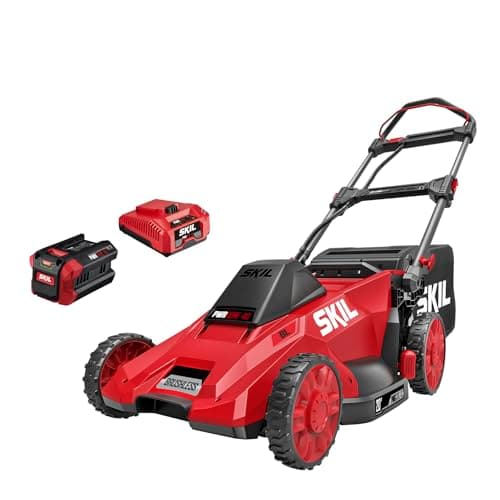
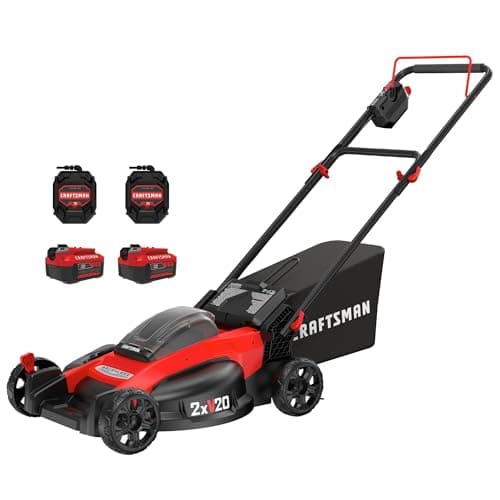
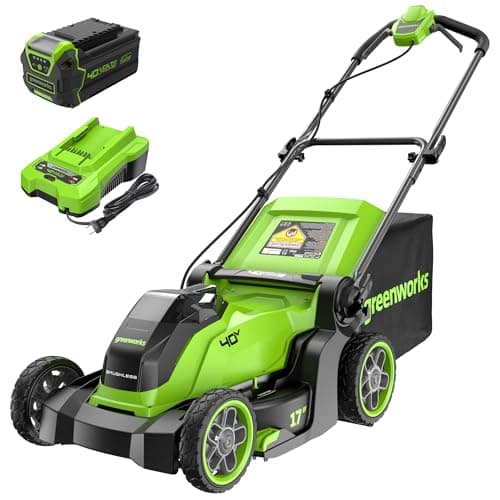
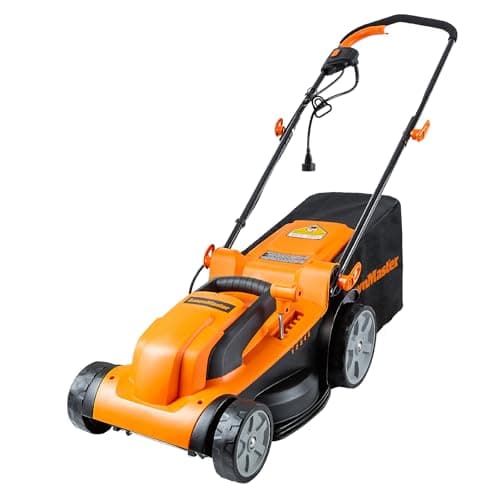
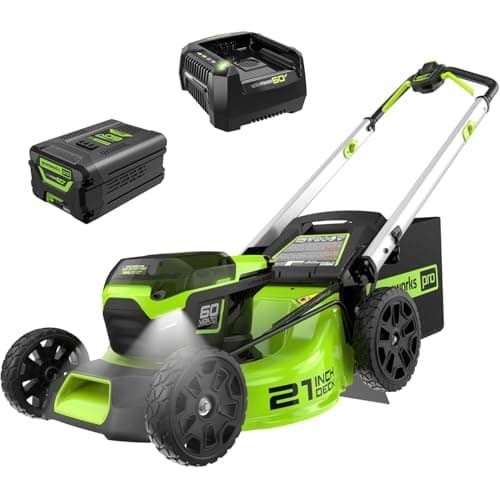
The best push lawn mower for most lawns is the Greenworks 60V 21". It is a full-size 21-inch deck on a battery platform with a 5.0 Ah pack, which means it covers a normal suburban lawn in one go and then asks nothing of you until the next cut — no oil, no fuel, no spring service. The SKIL PWR CORE 40 20" is the value pick and arrives with a 6.0 Ah battery, and the Craftsman V20 20"ships with two packs and two chargers, which is the right answer if your lawn sits at the edge of a single battery’s range. If the lawn is small, drop to the Greenworks 40V 17" and enjoy how much easier a narrow deck is to turn.
A push mower, in the sense this page means it, is one with no drive to the wheels: the engine or motor spins the blade and you supply the forward motion. That is the whole distinction, and it has three consequences worth being clear-eyed about. Push mowers are lighter, cheaper and simpler than self-propelled mowers, and there is one less drive system to fail. Against that, on any real gradient you are the drive system, and a 21-inch mower full of wet clippings on a slope is genuinely hard work.
So the honest framing is not “which push mower is best” but “is a push mower right for your lawn, and then which one”. Flat or gently sloping, up to about half an acre: yes, comfortably, and you save money and weight. Steep, or much bigger than that: the drive is worth paying for and we would rather tell you so.
We have not mown a lawn with any of these machines. The ranking reasons from published deck widths, battery platform and capacity, engine displacement, cutting-height range and weight — see how we pick. Every pick carries a real “don’t buy if”.
Push mowers compared
| Mower | Deck | Power | Best for |
|---|
| Greenworks 60V 21" | 21 in | Battery, 5.0 Ah | Most suburban lawns |
| SKIL PWR CORE 40 20" | 20 in | Battery, 6.0 Ah | Best value |
| Craftsman V20 20" | 20 in | Battery, 2 x 5.0 Ah | Two packs, longer runtime |
| Greenworks 40V 17" | 17 in | Battery, 4.0 Ah | Small lawns, easy turning |
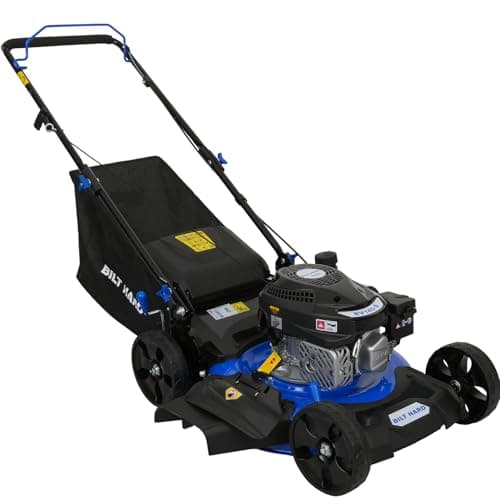
| BILT HARD 21" gas | 21 in | 144cc gas, 3-in-1 | No battery, no charging |
| LawnMaster 15" corded | 15 in | 11A corded electric | Cheapest motorised option |
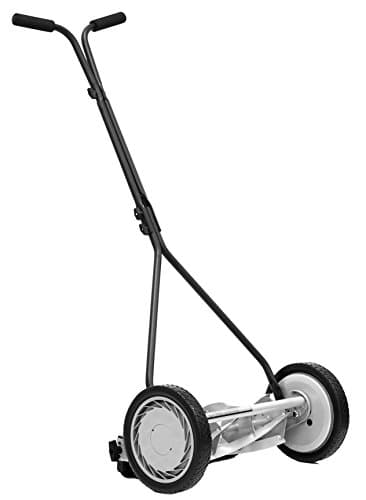
| Great States 16" reel | 16 in | Manual reel | Small flat lawns, no power at all |
Deck widths, battery capacities and engine displacements above are the figures the listings publish. Prices are live from the price layer with their own “as of” date beside each mower.
How to choose a push lawn mower
Be honest about the slope first. This is the one decision a push mower can genuinely get wrong for you. On flat ground the difference between push and self-propelled is a convenience you can live without and a few hundred dollars you keep. On a real gradient, pushing a loaded 21-inch mower uphill thirty times a season stops being exercise and starts being the reason the mower lives in the shed. If your lawn slopes meaningfully, read the self-propelled roundup before you buy here.
Then size the deck to the lawn.Under about 4,000 square feet, a 16–17 inch deck turns more easily, weighs less to push and costs less. From 4,000 square feet up, a 20–21 inch deck removes enough passes to be worth the extra weight. The arithmetic behind those thresholds is worked through in the best lawn mower for a large yard, and it applies unchanged here.
Weight matters more on a push mower than on any other kind.You are the drive system, so every pound is a pound you move. It also decides whether the mower goes up the step into the shed, or into a car to visit a relative’s lawn. A narrower deck is usually a lighter machine, which compounds the small-lawn case for the 17-inch.
Pick the power source on lawn size, not on principle.Battery is the default now and deservedly so: instant start, no fuel, no annual service. The constraint is runtime, so check the amp-hours against your lawn and prefer a two-battery kit if you are near the limit — that is exactly what the Craftsman is for. Corded is the cheapest motorised option and makes sense on a small lawn near an outlet, as long as you accept managing a cable around obstacles. Gas removes the runtime question entirely and replaces it with oil, filters, fuel and spring starting. The full comparison is in electric vs gas.
Check the cutting-height range, not just the number of positions. The single most useful thing you can do for a lawn is raise the deck in summer heat, which shades the soil and crowds out weed seedlings. A mower whose top setting is low takes that option away from you. This is also why a lawn mown short in July is the usual reason people end up shopping for weed control in August.
Look for 3-in-1 if you care about the lawn itself.Mulch, bag and side discharge in one deck means you can return clippings in summer — which is free nitrogen and genuinely reduces how much fertilizer the lawn needs — and bag in autumn when you are clearing leaves with the grass.
Where the reel mower still makes sense
A manual reel mower is not a novelty, but it is a specialist. It cuts with a scissor action rather than tearing with a rotating blade, which is why golf greens and bowling lawns are cut this way; the finish is better than any rotary mower produces. It needs no power of any kind, makes almost no noise, and costs very little to own.
The conditions are strict, though, and worth stating plainly: a small lawn, a flat one, no sticks or twigs on it, and cutting often enough that you are never taking much off at once. Let a reel-mown lawn get long and the mower simply pushes the grass over instead of cutting it. On the right lawn it is the best finish on this page; on the wrong one it is a frustration.
Who should skip a push mower
Skip it if your lawn has a real slope. You will not enjoy the mower and you will put off mowing, which costs you more in lawn quality than the drive system would have cost in money — buy self-propelled instead.
Skip it if your lawn is over about half an acre. A push mower will do it, and you will be out there a long time; past three quarters of an acre, look at a riding lawn mower instead. And skip the corded mower if your lawn wraps around the house or has beds in the middle of it — the cable finds every one of them.