If you need a small riding lawn mower, the question that decides your purchase is not how big your lawn is — it is how wide your narrowest gate is. Measure that before you read anything else. For most people the answer is a standard 36-inch gate, and the best small rider you can buy with a verified price is the Husqvarna TS 120: a 42-inch tractor, which is the smallest deck the mainstream riding market actually stocks. If your access is genuinely tight — a 30-inch side gate, a shed instead of a garage bay — then you need a 30-inch rear-engine rider like the Cub Cadet CC30 or Troy-Bilt TB30R, and those are dealer purchases we link you to check rather than price. And if the lawn is small but full of obstacles rather than hard to get into, the EGO Z6 ZT4214L zero-turn will save you more time than any narrow deck.
This page exists because “small riding lawn mower” is two different searches wearing one phrase, and the advice diverges completely.
Search one is about access.The lawn is a quarter to half an acre, it is behind the house, and getting to it means a side passage or a gate. Here deck width is a constraint to be minimized, not a spec to maximize, and the 30-inch rear-engine rider is a genuinely distinct category of machine: short, narrow, tight-turning, cheap, and small enough to store in a shed. Amazon does not list them — our 13 October 2026 catalog pass returned their 30-inch blades and deck belts, never the machines — so they are carried here with check-price links.
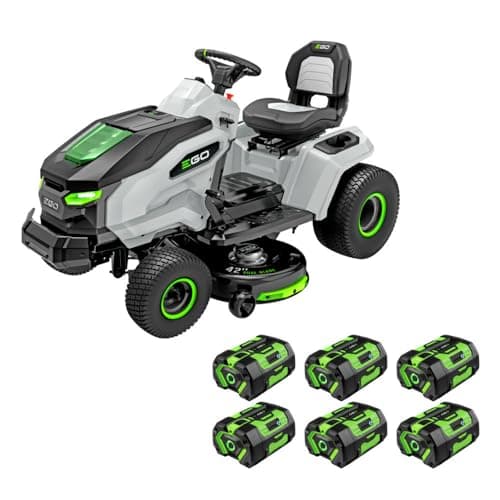
Search two is about the small end of normal. The lawn is three-quarters of an acre to an acre and a half, the access is fine, and what you want is the smallest sensible full-size rider rather than something that will dominate the garage. Here a 42-inch deck is the small option, and the Husqvarna TS 120 and the electric EGO TR4204 both have live verified prices.
Everything below is ranked on published specifications — deck width, chassis layout, turning type — and we have driven none of them. See how we pick.
Small riding mowers compared
| Mower | Deck | Layout | Gate-friendly | Price source | Best for |
|---|
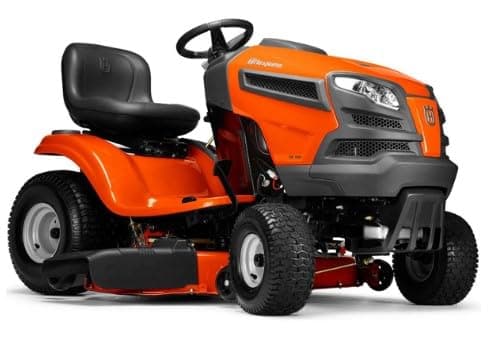
| Husqvarna TS 120 | 42 in | Lawn tractor | Standard double gate | Live price | Smallest full-size rider |
| EGO TR4204 | 42 in | Electric tractor | Standard double gate | Live price | No engine upkeep |
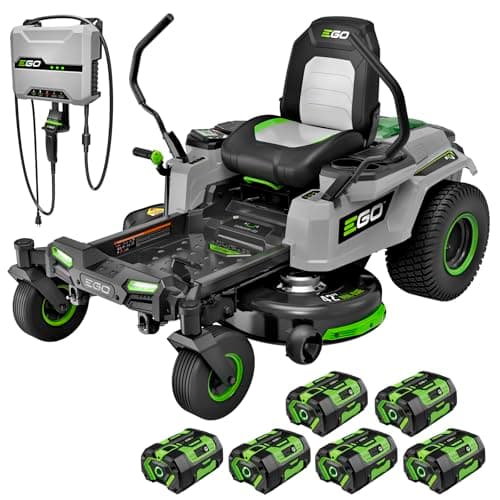
| EGO Z6 ZT4214L | 42 in | Electric zero-turn | Standard double gate | Live price | Small lawns full of obstacles |
| Cub Cadet CC30 | 30 in | Rear-engine rider | Standard side gate | Dealer — check price | Genuinely tight access |
| Troy-Bilt TB30R | 30 in | Rear-engine rider | Standard side gate | Dealer — check price | Cheapest seat available |
| Snapper rear-engine | Compact | Rear-engine rider | Standard side gate | Dealer — check price | The original compact rider |
Deck widths and layouts above are the figures the listings and manufacturer specifications publish. The three 30-inch-class riders carry no price because no verified live listing exists for them.
Best riding lawn mower for a small yard: the access arithmetic
Nothing on a riding mower matters more than whether it reaches the lawn. The numbers to take with a tape measure, in this order:
Your narrowest gate or passage. A standard pedestrian side gate is around 32 to 36 inches. A 30-inch rear-engine rider passes it. A 42-inch tractor does not, and no amount of deck width helps a machine that cannot get to the back lawn. A double or vehicle gate is usually 48 inches or more, which opens up the 42-inch machines.
Your storage. A 30-inch rider fits in a garden shed. A 42-inch tractor needs a garage bay or a dedicated store, and a 42-inch zero-turn needs the same footprint plus room to maneuver it in. This is the constraint people discover after buying.
Then, and only then, deck width against lawn size. A 30-inch deck on a quarter acre is comfortable. On half an acre it is slow but tolerable. On an acre it is a genuinely long afternoon, and you would have been better off with the 42-inch machine and a wider gate. Roughly: 30 inches suits up to half an acre, 42 inches suits up to an acre and a half. The full arithmetic is in the best mower for a large yard, and it applies to riders too.
Is a 30-inch rear-engine rider actually any good?
For the job it is built for, yes. The layout — engine behind the seat, short wheelbase, narrow deck — turns far tighter than a full tractor, fits access that defeats everything else, and is consistently the cheapest new riding mower on the market. For a quarter-acre lawn behind a gate, nothing else is the right shape of tool.
The honest limits: these are entry-grade machines. The build is bought on price and it shows in the components. The narrow deck means the pass count climbs fast with lawn size. And the short wheelbase that makes them nimble also makes them less stable across a side slope, so a real gradient is a reason to look at a tractor instead.
One alternative worth knowing: a 30-inch walk-behind. The Toro eTimeMaster and the gas TimeMaster put a 30-inch deck on a self-propelled walk-behind, which cuts a three-quarter-acre lawn in a time that used to need a seat, costs less than any rider, fits through any gate a person fits through, and stores against a wall. If the reason you want a rider is lawn size rather than wanting to sit down, read the best Toro lawn mowers before you spend rider money.
Small lawn, lots of obstacles: take the zero-turn instead
There is a third case worth separating out. If the lawn is not large but it is complicated — island beds, mature trees, a swing set, fence lines on three sides — then your time is being eaten by turning, not by passes. A zero-turn pivots inside its own width and simply deletes that problem, which is why the 42-inch EGO Z6 ZT4214L is on this page despite not being small by deck width. It is also electric, so there is no engine to service and no noise argument with neighbors on a small lot where everybody is close.
The trade is price and access: it needs the double gate and the garage bay. Compare it against the rest of the field in the best zero-turn mower.
Who should skip a small rider
Skip any rider under about a third of an acre. At that size a 21-inch self-propelled walk-behind finishes faster than you can get a rider out of the shed, and costs a tenth as much. See the best mower for a small yard.
Skip the 30-inch riders if your lawn slopes. Short wheelbase plus narrow track is the least stable configuration here, and a 42-inch tractor is both safer and faster on a gradient.
And skip all of them if the gate measurement does not work. That is not a preference, it is arithmetic, and it is the single most common expensive mistake in this category.