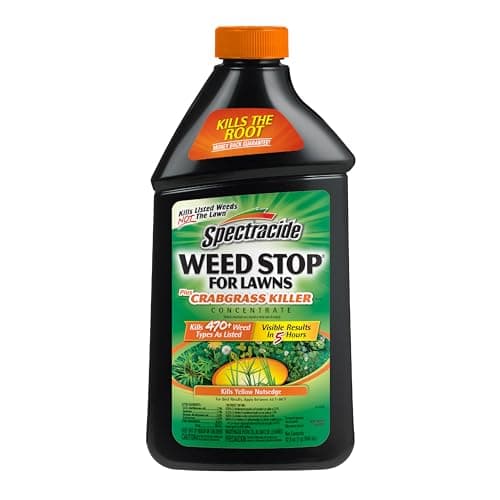
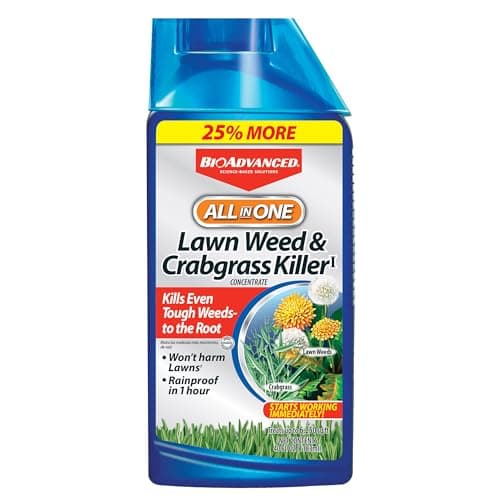
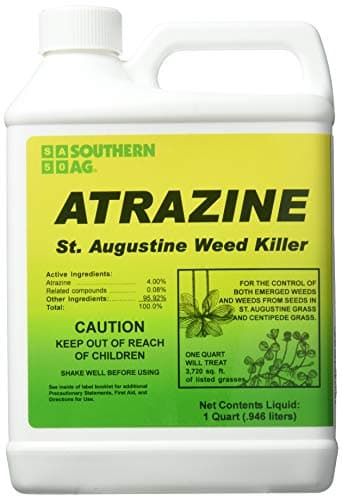
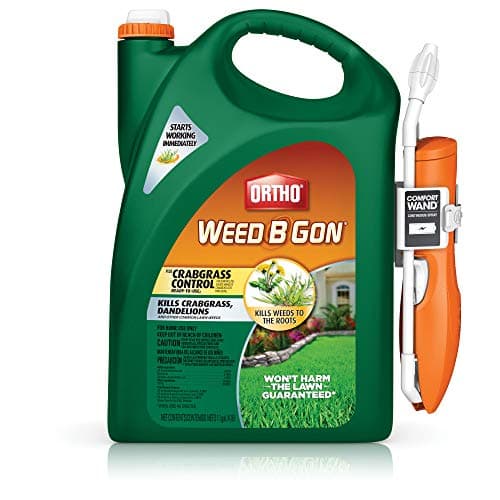
For most lawns the best weed control is Ortho Weed B Gon Plus Crabgrass Controlin the ready-to-use bottle: it handles both broadleaf weeds and crabgrass, and because it comes with a wand there is nothing to mix, measure or store half-used. If you are treating a whole lawn rather than spots, buy a concentrate instead and save most of the money — Spectracide Weed Stop for Lawns at 32 oz or BioAdvanced All-in-One at 40 oz. And if your lawn is St. Augustine or centipede, none of those three is your bottle: you want the Southern Ag atrazine, because southern grasses do not tolerate what northern lawns use.
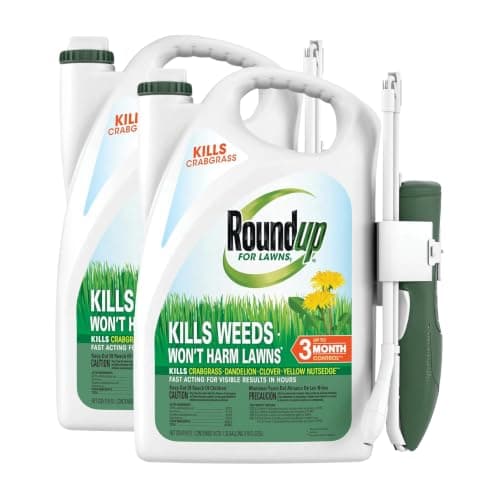
The word that matters on every product here is selective. A selective herbicide is labelled to kill weeds growing in turf while leaving the turf standing. A non-selective one — the original glyphosate Roundup, for instance — kills whatever it lands on, grass included. The two are sold a shelf apart and the names are confusingly similar: “Roundup for Lawns” on this page is the selective product, not the one that will leave you with a brown stripe you reseed in autumn.
The second thing that matters is your grass species, and it is the single most common way people kill a lawn trying to improve it. Cool-season turf — fescue, bluegrass, ryegrass — tolerates a different chemistry from warm-season turf like St. Augustine, centipede, bermuda and zoysia. Every bottle states which it is for. Read that line before you read the price.
We have not applied any of these products to a test plot and we are not going to imply otherwise. The ranking reasons from what each label and listing states: the form, container size, the weed groups the product names, and the grass-type restriction — see how we pick. Follow the label on the bottle you buy, not our summary of it; the label is the legal document and it is specific to your product and your state.
Lawn weed control compared
| Product | Form | Size | Grass type | Best for |
|---|
| Ortho Weed B Gon Plus | Ready-to-use + wand | 1 gal | Cool-season | Spot-treating, no mixing |
| Spectracide Weed Stop | Concentrate | 32 oz | Cool-season | Whole lawn, best value |
| BioAdvanced All-in-One | Concentrate | 40 oz | Cool-season | Large lawns |
| Roundup for Lawns | Ready-to-use + wand | 1.33 gal x 2 | Northern grasses | Tough weeds |
| Southern Ag Atrazine | Concentrate | 32 oz | St. Augustine / centipede | Southern lawns |
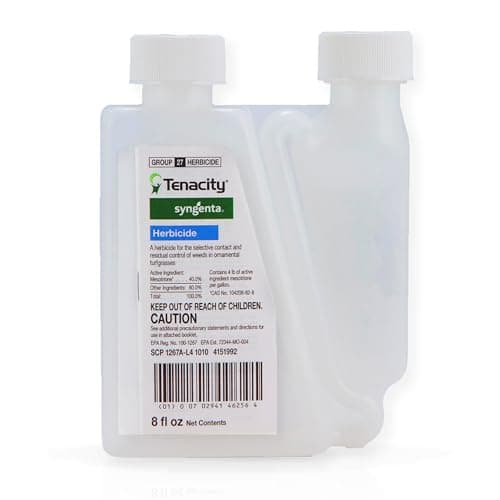
| Tenacity | Concentrate | 8 oz | Turf, incl. at seeding | Weeds around new seed |
Forms, sizes and grass-type restrictions in that table are what the products and their listings state. Prices are live from the price layer, with an “as of” date beside each product above.
How to choose weed control for your lawn
Start with your grass species, not the weeds.This is the step people skip and it is the one that ruins lawns. Cool-season grass takes the Ortho, Spectracide, BioAdvanced or Roundup for Lawns. St. Augustine and centipede take the atrazine. If you do not know what you have, that is worth establishing before you spray anything — our fescue vs bermuda comparison is the fastest way to tell the two big families apart.
Then count the weeds.Patches of weeds in an otherwise decent lawn is a spot-treatment job, and a ready-to-use wand is worth the premium because you will actually use it — a concentrate that needs mixing tends to sit in the shed while the dandelions set seed. A lawn that is more weed than grass is a whole-lawn job, and then the concentrate is the only sensible purchase: you are buying chemical rather than water, and the difference in cost per treated square foot is several-fold.
Match the product to the weed group.Broadleaf weeds — dandelion, clover, plantain, chickweed — are what most lawn products target. Grassy weeds like crabgrass are a harder problem, because killing a grass inside a grass is chemically fiddly; that is why “plus crabgrass” appears in so many product names and why it is worth looking for. Tenacity is the one here that targets both groups seriously.
Decide whether you are seeding this season. If you intend to sow seed or overseed, most weed products put a waiting period between spraying and seeding, and a crabgrass pre-emergent will stop your new grass germinating just as effectively as it stops crabgrass. Tenacity is the exception on this page — it is labelled for use at seeding, which is precisely why it is here despite being the least beginner-friendly bottle.
Get the timing right, because it matters more than the brand. Perennial broadleaf weeds are most vulnerable in autumn, when they are moving carbohydrate down to their roots and will carry the herbicide with it. Crabgrass is an annual and is best stopped before it germinates with a pre-emergent in early spring, not killed after it has established. Spraying a mature crabgrass plant in July is the hardest version of the job. The season-by-season version of this is in our lawn fertilizer schedule.
Do not spray a stressed lawn.Heat, drought and a lawn mown too short all make turf less able to shrug off a herbicide, and that is when “selective” products start damaging grass. Raise your mower deck in summer, water first if the lawn is dry, and spray in mild weather.
Weed control or weed and feed?
They are different products for different situations and the distinction is worth two minutes. A weed and feed is a granular fertilizer with a herbicide mixed in, spread dry across the whole lawn with a spreader. It is efficient when the lawn needs feeding anyway and has weeds throughout.
A dedicated weed control — everything on this page — is a liquid you apply where the weeds are, at the time the weeds are vulnerable, without also forcing a flush of growth. It is the better tool when the weeds are in patches, when the lawn does not need feeding, when the weeds are tough, or when the timing that suits the herbicide does not suit a fertilizer application. Most people with a real weed problem need the liquid.
Who should skip these
If your lawn is thin and weedy because it is thin, skip the herbicide for now. Weeds colonise bare soil, and the permanent fix is a dense stand of grass that leaves them nowhere to germinate — which means overseeding, feeding on a schedule and relieving the compaction underneath. Spraying a thin lawn clears the weeds and leaves you with bare soil for the next batch.
Skip Tenacity unless you are seeding or you have grassy weeds you have already failed to beat. It is a precise product that rewards precision. And skip the atrazine entirely unless you have a southern lawn and have checked your state rules — it is restricted in some places, which is a reason to read before ordering rather than after.